A raised bed and a frost cloth will get you a few extra weeks. A large walk-in greenhouse gets you months. Once you can stand up inside, carry a flat of seedlings down a center aisle and close a zippered door behind you, the growing season stops being something the weather decides. Tomatoes go in a month earlier, peppers keep producing into October, and the lettuce you start in February is ready before the outdoor beds have even thawed.
We rebuilt this guide around VEVOR’s US range of walk-in tunnel greenhouses: galvanized steel hoops covered in heavy PE plastic, sized from about 10 feet long up to 15. These are the hoop houses most backyard growers can actually put up in a weekend without a concrete foundation or a building permit.
If you need something more permanent, our guides to large wooden greenhouses and heavy duty greenhouses for winter cover rigid polycarbonate builds. For the longest tunnels VEVOR sells, see our high tunnel greenhouse picks. Every product on this page is different from the ones on those pages.
Our Quick Picks
Best Overall
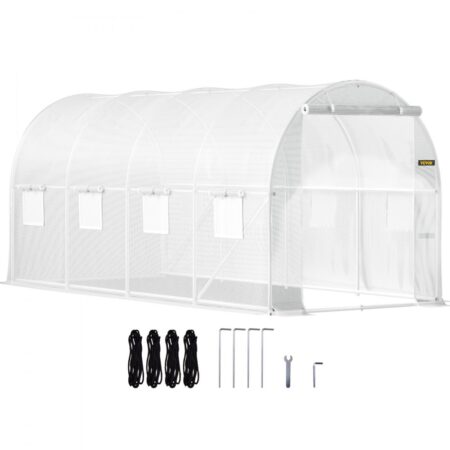
VEVOR 15 x 6.5 x 7 ft Walk-In Tunnel Greenhouse (White)
15 x 6.5 x 7 ft · About 98 sq ft · 0.8 in galvanized hoops, 1 top beam
Check Price at VEVORRead the reviewBest with Built-In Watering
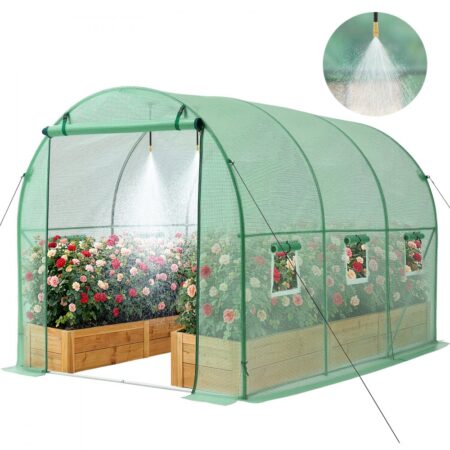
VEVOR 10 x 7 x 7 ft Tunnel Greenhouse with 4 Nozzles
10 x 7 x 7 ft · About 70 sq ft · Q195 steel, 0.5 mm, center bar
Check Price at VEVORRead the reviewBest for Smaller Yards
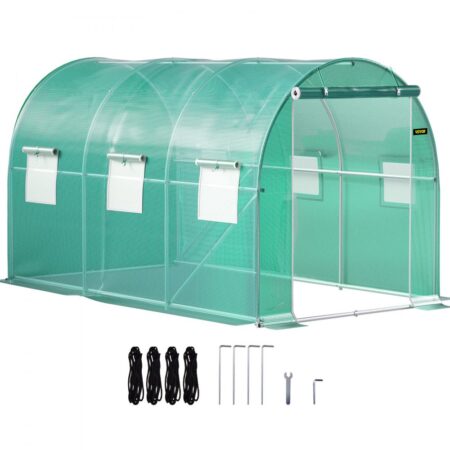
VEVOR 12 x 7 x 7 ft Walk-In Tunnel Greenhouse
11.48 x 6.56 x 6.56 ft · About 75 sq ft · 0.8 in galvanized hoops, 1 top beam
Check Price at VEVORRead the reviewBest Large Walk-In Greenhouses: Full Reviews
At a glance
- Actual Size
- 15 x 6.5 x 7 ft
- Floor Area
- About 98 sq ft
- Frame
- 0.8 in galvanized hoops, 1 top beam
- Windows
- 8
1. VEVOR 15 x 6.5 x 7 ft Walk-In Tunnel Greenhouse (White): Best Overall
This is the size most people mean when they say “walk-in greenhouse.” At 15 feet long and 6.5 feet wide it gives you close to 100 square feet of floor, which is enough for a bench or row of grow bags down each long wall and a center aisle you can walk without turning sideways. The peak is 7 feet, so most adults can stand upright through the middle, and the whole kit weighs just 37.3 pounds, which means one person can carry the boxes to the back of the yard.
The frame is galvanized steel tubing, listed at 0.8 inches in diameter with a 0.02 inch wall. Hoops are tied together by a top beam along the ridge and two diagonal poles that brace the structure against racking, the side-to-side sway that folds cheap hoop houses in a gust. The cover is a heavy 140 gram PE plastic with 8 roll-up mesh windows and a zippered roll-up door. VEVOR’s Q&A on the same model in green lists the door at about 1.2 x 1.78 meters, roughly 47 x 70 inches, wide enough for a wheelbarrow.
We picked the white version on purpose. A white cover diffuses sunlight instead of letting it beam straight through, which tends to mean fewer scorched leaves and a less brutal afternoon temperature spike in summer. Green covers look tidier in a yard but block more light. One thing to know: the spec sheet lists 1 top beam, while one feature bullet on the same page mentions 3. Plan around the spec sheet.
Key Features
- Model VV-TG-1577WHITE, 15 x 6.5 x 7 ft (4.6 x 2 x 2.1 m)
- Galvanized steel hoops, 0.8 in diameter, 0.02 in wall
- 1 top beam and 2 diagonal poles for bracing
- 140 gram PE cover in white for diffused light
- 8 roll-up mesh windows and a zippered roll-up door
- Ships with 4 stakes, 4 guy ropes and 2 spanners
- 37.3 lb total weight
What We Like
- Close to 100 square feet of floor for a modest footprint
- 7 ft center height lets most people stand upright
- White cover softens harsh midsummer sun
- Eight windows give real cross ventilation
- Light enough to set up and move without help
What We Don’t Like
- Only 4 stakes and 4 guy ropes ship with a 15 ft structure, so budget for extra anchors before the first windy day.
Overall
For most backyards this is the right balance of growing space, height and ease of setup. Add more anchors than VEVOR includes, bury the cover skirt, and it makes a very capable three-season greenhouse.
VEVOR Black Friday Pre-Sale
Up to 50% off, plus an extra 8% with code VVOTD (Nov 9 to Nov 18).
At a glance
- Actual Size
- 10 x 7 x 7 ft
- Floor Area
- About 70 sq ft
- Frame
- Q195 steel, 0.5 mm, center bar
- Windows
- 6
2. VEVOR 10 x 7 x 7 ft Tunnel Greenhouse with 4 Nozzles: Best with Built-In Watering
Watering is the chore that breaks most greenhouse habits. In July a closed tunnel can dry out pots in a day, and hauling a hose through a narrow door twice a day gets old fast. This 10 x 7 x 7 foot tunnel comes with the watering system built in: four brass misting nozzles mounted overhead, a 26.25 foot hose, and three irrigation modes. Hook it to a garden spigot, add a cheap hose timer, and you have a greenhouse that waters itself while you are at work.
The frame is a step up from VEVOR’s basic tunnels. It uses Q195 galvanized steel tubes listed at 0.5 mm thick, bolt-fixed connections that cut down on wobble, end caps on the tubes so they do not tear the cover, and a center support bar running the length of the tunnel to stiffen the arches. The cover is 140 g/m² double-sided coated PE with a UV6 rating, and six vent windows measuring 11.8 x 11.8 inches tie open with straps. Stakes and guy ropes are included, and the extended bottom edge of the cover can be weighed down with soil, bricks or sandbags.
At 10 x 7 feet the floor is about 70 square feet, a good fit for a single bench down one side and a row of pots or grow bags down the other. The kit weighs 33.5 pounds. VEVOR is refreshingly direct in its Q&A: asked whether it would survive a five foot snowstorm, the answer was no, it is not built for blizzards. That is true of every PE tunnel on this page, but it is good to see a brand say it plainly.
Key Features
- Model 2x3x2m(3)G-D, 10 x 7 x 7 ft (2.93 x 1.97 x 1.94 m)
- 4 brass misting nozzles, 26.25 ft hose, 3 irrigation modes
- Q195 galvanized steel tubes, 0.5 mm wall, center support bar
- Bolt-fixed joints and tube end caps
- 140 g/m² double-sided coated PE cover, UV6 rated
- 6 vent windows (11.8 x 11.8 in) and a roll-up zipper door
- 33.5 lb, stakes and guy ropes included
What We Like
- Watering system is included, not an add-on
- Center support bar stiffens the arches
- Bolted connections wobble less than push-fit joints
- UV6 cover protects seedlings in strong sun
- Compact enough for a typical suburban yard
What We Don’t Like
- The door frame is only 63 inches tall, so most adults will duck to get in even though the center peak is 7 feet.
Overall
Pick this one if you travel, work long days or simply hate hand watering. It is the smallest greenhouse here, but it is the one most likely to keep plants alive through a heat wave while you are not home.
At a glance
- Actual Size
- 11.48 x 6.56 x 6.56 ft
- Floor Area
- About 75 sq ft
- Frame
- 0.8 in galvanized hoops, 1 top beam
- Windows
- 6
3. VEVOR 12 x 7 x 7 ft Walk-In Tunnel Greenhouse: Best for Smaller Yards
Not every yard has room for a 15 or 30 foot tunnel, and not every grower needs it. This green tunnel is sold as 12 x 7 x 7 feet, but the spec sheet lists the real dimensions as 11.48 x 6.56 x 6.56 feet, or 3.5 x 2 x 2 meters. Plan your site around the smaller numbers. That still gives you about 75 square feet of floor, enough for two narrow benches and an aisle, or a winter home for a dozen large patio pots.
Construction matches the 15 foot model: galvanized steel hoops 0.8 inches in diameter with a 0.02 inch wall, one top beam and two diagonal poles, all under a 140 gram PE cover. You get six roll-up mesh windows, a zippered roll-up door, four stakes, four guy ropes and two spanners. At 28.2 pounds it is the lightest kit here and the easiest to take down and store for the off season.
VEVOR’s own Q&A says the product lasts two to three years outdoors in cold weather, which is an honest benchmark for PE tunnels in general. A simple 2×4 base frame screwed to the bottom of the hoops makes a tunnel this size far sturdier in wind, and framing a proper wooden door at one end makes daily trips in and out easier. Both are smart upgrades for any tunnel on this page.
Key Features
- Listed as 12 x 7 x 7 ft; spec sheet 11.48 x 6.56 x 6.56 ft (3.5 x 2 x 2 m)
- Galvanized steel hoops, 0.8 in diameter, 0.02 in wall
- 1 top beam and 2 diagonal poles
- 140 gram PE cover in green
- 6 roll-up mesh windows and a zippered roll-up door
- 4 stakes, 4 guy ropes and 2 spanners included
- 28.2 lb, the lightest kit in this guide
What We Like
- Fits yards where a 15 ft tunnel will not
- Lightest and easiest to take down for winter storage
- Same bracing layout as the larger VEVOR tunnels
- Six windows are plenty for a structure this size
- Works well on a simple wooden base frame
What We Don’t Like
- The product title says 12 x 7 x 7 ft but the actual size is closer to 11.5 x 6.5 x 6.5 ft, so taller growers may brush the ridge.
Overall
A sensible first walk-in greenhouse for a smaller lot. Measure for the real dimensions, add a base frame if you get wind, and it will extend your season on both ends.
Side-by-Side Comparison
| Model | Actual Size | Floor Area | Frame | Windows | Weight | Best For | Price |
|---|---|---|---|---|---|---|---|
| VEVOR 15 ft white | 15 x 6.5 x 7 ft | About 98 sq ft | 0.8 in galvanized hoops, 1 top beam | 8 | 37.3 lb | Most backyards | Check price |
| VEVOR 10 ft with nozzles | 10 x 7 x 7 ft | About 70 sq ft | Q195 steel, 0.5 mm, center bar | 6 | 33.5 lb | Automatic watering | Check price |
| VEVOR 12 ft green | 11.48 x 6.56 x 6.56 ft | About 75 sq ft | 0.8 in galvanized hoops, 1 top beam | 6 | 28.2 lb | Smaller yards | Check price |
Specs come from VEVOR’s US product listings and product Q&A. Floor area is calculated from listed length and width.
How to Choose a Large Walk-In Greenhouse
Size: Start With the Floor, Not the Length
Length gets the headline, but floor area decides what you can grow. A 10 x 7 tunnel gives you about 70 square feet, a 12 x 7 (really closer to 11.5 x 6.5) about 75, and a 15 x 6.5 about 98. A useful rule of thumb is to lay out benches or beds about 2 to 3 feet deep on each long side and keep a center aisle at least 2 feet wide. In a tunnel under 7 feet wide, that means two narrow rows, so the extra length of the 15 foot model is where most of its added growing room comes from. If you need three rows or deep beds, look at a wider high tunnel instead.
Height matters too. Hoop houses are tallest in the center and drop steeply toward the walls, so a 7 foot peak does not mean 7 feet of headroom everywhere. Put tall crops like tomatoes and cucumbers down the middle or on the side that gets the most sun, and save the low edges for lettuce, herbs and seedling trays.
Frame and Cover
Every pick here uses galvanized steel tubing, which resists rust far better than painted steel. The details worth comparing are tube diameter, wall thickness and bracing. Diagonal poles and a top beam stop the hoops from leaning like dominoes in a crosswind. A center support bar, like the one on the 10 foot model, stiffens each arch so it is less likely to bow under wet snow. A peaked roof sheds water and snow better than a smooth curve.
For the cover, 140 gram PE is the standard heavy grade in this class. Expect it to last a few seasons, not a decade. VEVOR itself pegs one model at two to three years in cold weather. UV exposure is what breaks down PE, so taking the cover off for the harshest months, or replacing it with commercial greenhouse film when it gets brittle, is part of owning a hoop house.
Ventilation
A closed plastic tunnel in full sun can climb far above the outside air temperature in an hour, which cooks seedlings faster than frost kills them. More windows and a roll-up door at each end make a big difference. Open the windows on the side away from the wind and roll the door up on hot days. If you grow through summer, a simple thermometer at plant height is the cheapest insurance you can buy.
Anchoring Is Not Optional
A large PE tunnel acts like a sail. The stakes that come in the box are a starting point, not a complete anchoring system. Bury the bottom skirt of the cover in a shallow trench or pile sandbags on it, add heavy duty ground anchors at every hoop if you can, and run the guy ropes out at an angle. Screwing the base to a frame of pressure-treated 2×4 or 2×6 lumber staked into the ground also gives you a clean edge to mow against. A strip of steel landscape edging or weed barrier fabric around the outside keeps grass from creeping under the cover.
Site and Setup
Pick level, well-drained ground with as much sun as possible, ideally with the long side facing south. Avoid low spots where cold air and water collect. Keep the tunnel close enough to a spigot that a hose reel can reach it, and leave room at the door to bring in a wheelbarrow of soil or compost. Assemble on a calm, dry day, and do not put the cover on until the frame is square and fully braced.
Using a Tunnel Greenhouse in Winter
A single-layer PE tunnel gives a few degrees of frost protection and blocks wind, which is enough to overwinter hardy greens and protect potted perennials in many climates. It will not hold heat through a hard freeze the way a polycarbonate greenhouse does. Row covers inside the tunnel, raised beds with covers and dark water barrels to store daytime heat all help. Whatever you do, brush snow off the roof after every storm. None of these structures are rated for a heavy snow load.
A Scenario Worth Knowing About
Picture a 20 foot tunnel set up in April on a breezy hillside, held down with only the four stakes from the box. It does fine for weeks. Then a spring thunderstorm rolls through with gusts pushing 40 miles per hour. The wind gets under the loose skirt on the windward side, the cover balloons, and the whole frame lifts and rolls into the neighbor’s fence. The frame bends, the cover tears, and every tray of seedlings inside is gone in under a minute.
This is the most common way hoop houses fail, and it almost never comes down to the frame being too weak. It comes down to anchoring. A lumber base, a buried skirt or weights make the difference in strong winds, because the stakes in the box are not enough on their own. Spend an extra afternoon and a bit of money on anchoring before you spend a dollar on plants.
Frequently Asked Questions
What size walk-in greenhouse do I need?
For a family growing vegetables and starting seedlings, 10 to 15 feet long is a comfortable range. If you want to grow enough to preserve or sell, or you want space for fruit trees in pots, look at a 20 to 30 foot tunnel. Measure your yard and leave a couple of feet of clearance on every side for staking and guy ropes.
Do walk-in greenhouses need a foundation?
PE tunnel greenhouses do not need a concrete foundation. They do need firm anchoring. A wooden base frame staked into the ground is the most popular upgrade because it adds weight, squares the structure and gives the cover something solid to attach to.
Can a large walk-in greenhouse survive winter?
It can stay up through winter if you anchor it well and clear snow promptly, but VEVOR states that its tunnels are not blizzard resistant. In heavy snow country, removing the cover for the coldest months is the safe choice. For true winter growing, a polycarbonate greenhouse holds heat much better.
How long does the PE cover last?
Typically a few seasons. VEVOR’s own Q&A estimates two to three years outdoors in cold weather for one of these models. Sun exposure, wind flapping and snow load all shorten that. Replacement greenhouse film is widely sold in rolls if the original cover wears out.
How do I keep a tunnel greenhouse from overheating?
Open the mesh windows and roll up the door on any sunny day above about 60°F. Shade cloth over the roof in midsummer and a small fan to move air both help. A white cover, like the one on our top pick, also runs a little cooler than a clear or green one.
Do I need a permit for a hoop house?
Rules vary by town. Many places treat a temporary PE hoop house without a foundation like a garden structure that needs no permit, but some HOAs and municipalities have size or setback limits. Check with your local building office before you set up anything close to 30 feet long.
The Bottom Line
For most people the VEVOR 15 x 6.5 x 7 ft white tunnel is the large walk-in greenhouse to buy: close to 100 square feet of floor, upright headroom, eight windows and a kit light enough to set up alone. Busy growers should look hard at the 10 foot model with built-in misting, and the 12 foot tunnel is the right call for tighter yards. If you need far more room than 15 feet, our high tunnel greenhouse picks cover the longest tunnels.
Whichever you choose, treat the included stakes as a starting point. Anchor generously, ventilate often and clear snow after every storm, and a walk-in hoop house will add months to your growing season for very little money. For smaller setups, see our picks for small outdoor greenhouses and instant pop-up greenhouses.