A floor jack lifts a car. A jack stand is what keeps it up while you are underneath. Hydraulic jacks can bleed down or slip, which is why every safety guide, and every jack manual, says never to work under a vehicle supported only by a jack. A good pair of jack stands is the cheapest piece of life insurance in a home garage.
The best heavy duty jack stands have more capacity than you need, a wide base that will not tip, and a locking system that cannot release by accident. A ratchet bar alone works, but stands with a second lock, a steel pin through the column, add a backup if the ratchet pawl is knocked or fails. We include one ratchet-only pair and say clearly which is which.
We picked three VEVOR pairs: two 3-ton pairs for cars and SUVs, one with dual locking (ratchet plus metal pin) and one with a ratchet lock only, both with nine height positions, and a 6-ton dual locking pair for trucks and RVs. We will add more brands as we review them. To lift the vehicle first, see our heavy duty floor jack guide.
Our Quick Picks
Best Overall
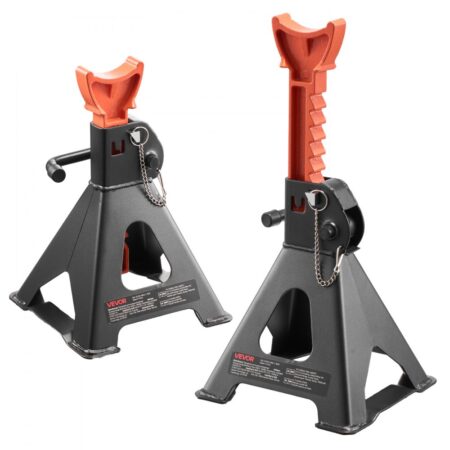
VEVOR 3 Ton Dual Locking Jack Stands, Black and Orange
3 tons · 10.8 to 16.3 in · Ratchet plus pin
Check Price at VEVORRead the reviewBest Single-Lock Pair for Cars
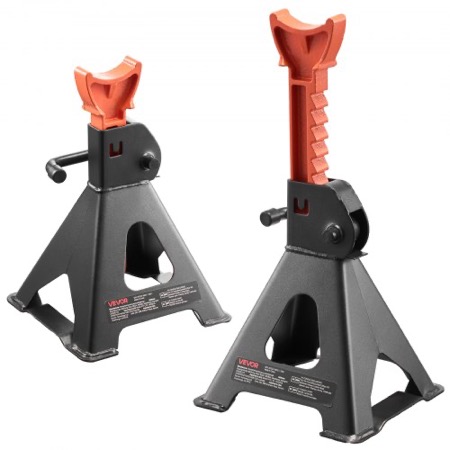
VEVOR 3 Ton Ratchet Jack Stands, Black and Orange
3 tons · 10.8 to 16.3 in · Ratchet only
Check Price at VEVORRead the reviewBest for Trucks and RVs
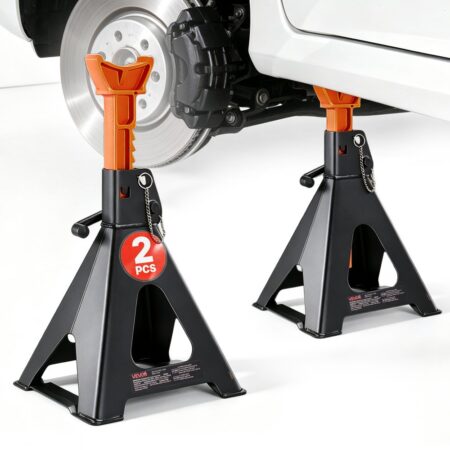
VEVOR 6 Ton Dual Locking Jack Stands, Black and Orange
6 tons · 14.6 to 22.8 in · Ratchet plus pin
Check Price at VEVORRead the reviewBest Heavy Duty Jack Stands: Full Reviews
At a glance
- Rating per stand
- 3 tons
- Height range
- 10.8 to 16.3 in
- Locks
- Ratchet plus pin
- Pair weight
- 11.5 lb
1. VEVOR 3 Ton Dual Locking Jack Stands, Black and Orange: Best Overall
For most home garages working on cars, crossovers and light SUVs, a 3-ton pair is the right size, and this is VEVOR’s newest design. Each stand adjusts across nine positions from 10.8 to 16.3 inches, and locks two ways: the ratchet bar engages a handle-operated pawl, then a metal pin goes through the column as a backup. The handle doubles as a carry handle and as the lever for raising the ratchet bar.
The base is a wide pyramid in carbon steel with enlarged foot pads, and the ratchet bar is cast iron with a rust-resistant coating and a notched saddle that grips pinch welds and frame edges. VEVOR rates each stand at 3 tons and says the design meets CE standards. The pair weighs 11.5 lb, with a footprint of about 7.5 by 7.1 inches per stand.
The minor concerns are weight and occasional issues with the safety pin, so check the pin seats fully every time.
Key Features
- 3 ton capacity per stand (VEVOR rating), 1 pair
- 10.8 to 16.3 in height, 9 positions
- Ratchet lock plus metal locking pin
- Wide pyramid carbon steel base, enlarged foot pads
- Cast iron ratchet bar with notched saddle
- Dual-purpose carry and ratchet handle
- 11.5 lb pair, model HM3141C
What We Like
- Dual locking for a backup
- Handle makes height adjustment easy
- Wide, stable base
- Powder-coated finish
What We Don’t Like
- Safety pin needs checking that it is fully seated
Overall
The best all-round pair for cars, crossovers and light SUVs, with a smart handle design and two locks.
VEVOR Black Friday
Up to 50% off, plus an extra 8% with code VVOTD (Nov 19 to Nov 30).
At a glance
- Rating per stand
- 3 tons
- Height range
- 10.8 to 16.3 in
- Locks
- Ratchet only
- Pair weight
- 11 lb
2. VEVOR 3 Ton Ratchet Jack Stands, Black and Orange: Best Single-Lock Pair for Cars
This is the simpler sibling of the dual locking pair above. It shares the same 10.8 to 16.3 inch height range across nine positions and the same per-stand rating of 3 tons (6,600 lb), but it locks with the ratchet alone. There is no metal backup pin through the column, so the pawl and the cast iron ratchet bar do all the work.
The rest of the build is familiar: a wide pyramid base in carbon steel with enlarged foot pads, a cast iron ratchet bar with a notched saddle that sits against pinch welds and frame points, and a handle that works both as a carry grip and as the lever for raising the bar. The finish is powder coated, VEVOR says the stands are built to CE standards, and the pair weighs 11 lb, the lightest set on this page. Each stand measures about 8.1 by 7.7 inches at the base.
VEVOR rates capacity per stand, not per pair, so choose them with plenty of headroom over the load they will actually carry, and because there is no backup pin, make sure the pawl is fully seated in a notch on both stands before the vehicle comes down onto them.
Key Features
- 3 ton capacity per stand (VEVOR rating), 1 pair
- 10.8 to 16.3 in height, 9 positions
- Single ratchet lock, no backup pin
- Wide pyramid carbon steel base, enlarged foot pads
- Cast iron ratchet bar with notched saddle
- Dual-purpose carry and ratchet handle
- 11 lb pair, model HM3141B
What We Like
- Lightest pair on the page
- Same height range as the dual locking 3-ton pair
- Handle makes height adjustment easy
- Wide, stable base
- Powder-coated finish
What We Don’t Like
- Ratchet lock only, with no backup pin if the pawl is knocked loose
Overall
A light, straightforward pair for cars and crossovers. If you want a second lock, step up to the dual locking black and orange 3-ton pair.
At a glance
- Rating per stand
- 6 tons
- Height range
- 14.6 to 22.8 in
- Locks
- Ratchet plus pin
- Pair weight
- 20.7 lb
3. VEVOR 6 Ton Dual Locking Jack Stands, Black and Orange: Best for Trucks and RVs
VEVOR markets this newer 6-ton design for RVs, small trucks and heavy SUVs. Each stand adjusts from 14.6 to 22.8 inches and uses the dual locking system of the 3-ton black and orange model: a handle-operated ratchet lock and a metal pin, with the handle doubling as a carry grip.
At 20.7 lb for the pair it is the heaviest set here and the tallest, with a wide base and a notched saddle. VEVOR says the saddle groove is about 1.3 inches wide and the V-notch about 3.5 inches long, useful to know when matching it to a frame rail or axle.
The minor concerns are weight and occasional locking mechanism issues.
Key Features
- 6 ton capacity per stand (VEVOR rating), 1 pair
- 14.6 to 22.8 in height
- Ratchet lock plus metal locking pin
- Wide base, notched saddle (about 1.3 in groove)
- Dual-purpose carry and ratchet handle
- 20.7 lb pair, model HM6141C
What We Like
- Heaviest, most solid pair
- Easy handle adjustment
- Saddle dimensions published
- Suits pickups, RVs and heavy SUVs
What We Don’t Like
- Heavy to carry, and too tall for cars
Overall
The choice for pickups, full-size SUVs, RVs and anyone who wants the most stand under a heavy vehicle.
Side-by-Side Comparison
| Pair | Rating per stand | Height range | Locks | Pair weight | Price |
|---|---|---|---|---|---|
| VEVOR 3 Ton, Black and Orange | 3 tons | 10.8 to 16.3 in | Ratchet plus pin | 11.5 lb | Check price |
| VEVOR 3 Ton Ratchet, Black and Orange | 3 tons | 10.8 to 16.3 in | Ratchet only | 11 lb | Check price |
| VEVOR 6 Ton, Black and Orange | 6 tons | 14.6 to 22.8 in | Ratchet plus pin | 20.7 lb | Check price |
Specs and capacity ratings come from VEVOR as of November 2026.
How Much Jack Stand Capacity Do You Need?
Jack stands usually support one end of a vehicle at a time, so each pair carries roughly half to two thirds of the vehicle’s weight. Brands rate capacity differently; some rate per stand and some per pair. VEVOR lists its ratings per stand. Whatever the label, choose stands with plenty of headroom over the load they will actually carry.
- Cars and small crossovers (roughly 2,500 to 4,000 lb): 3-ton stands are plenty.
- Midsize SUVs and light pickups (roughly 4,000 to 6,000 lb): 3-ton stands work, but 6-ton stands give more margin and height.
- Full-size trucks, heavy SUVs, vans and RVs: choose 6-ton stands, both for capacity and for the taller reach.
- Electric vehicles are heavier than they look because of the battery. Check curb weight and lean toward the higher rating.
Choosing the Right Height Range
Capacity gets the attention, but height decides whether a stand works on your vehicle. The stand’s minimum height must fit under the jack point after the car is lifted, and its maximum must reach high enough to give you working room. The 3-ton VEVOR stands start at 10.8 inches, which suits most cars and crossovers. The 6-ton stand starts at 14.6 inches, too tall for many cars but right for trucks. Very low sports cars may need ramps or low-profile stands.
How to Use Jack Stands Safely
- Flat, hard ground only. Use stands on level concrete. Asphalt can soften in heat and stands can sink; never use them on grass, gravel or dirt.
- Chock the wheels. Put the car in park or gear, set the parking brake and chock the wheels that stay on the ground.
- Lift at the right points. Use the jack points in your owner manual, then place stands under the frame, pinch welds or axle as the manual directs.
- Set both stands to the same height. Count the ratchet notches so the vehicle sits level, and check the pawl is fully seated in a notch. On dual locking stands, insert the locking pin on both.
- Lower slowly onto the stands. Let the jack down gently until the weight rests on the stands, then leave the jack lightly in place as a backup.
- Shake test. Give the vehicle a firm push before going underneath. If anything moves, lift it again and reset the stands.
- Never use one stand alone or improvise. Bricks, wood blocks and cinder blocks are not substitutes.
What to Look for in Heavy Duty Jack Stands
- Dual locking. A ratchet plus a pin means two independent locks. The black and orange 3-ton HM3141C and the 6-ton pair here have both; the HM3141B uses the ratchet alone.
- Wide base. A pyramid base with large feet resists tipping and spreads the load on the floor.
- Saddle shape. A notched or V-shaped saddle grips pinch welds and frame rails without slipping.
- Height positions. More positions, like the nine on the 3-ton stands here, let you level the vehicle precisely.
- Build and finish. Solid welds, a cast iron or steel ratchet bar and a rust-resistant coating last for years in a damp garage.
- Certification and inspection. Check which safety standard the stand is built to, and inspect welds and pins before every use.
Ratchet Only or Dual Locking?
A ratchet stand holds height with a spring-loaded pawl that drops into the teeth of the bar. It is quick to set and it works, which is why most jack stands sold for decades used nothing else. The weak point is that the pawl can be knocked or lifted by a stray foot, a creeper wheel or a dropped tool, and some pawls can be released by the same handle you use to adjust height.
A dual locking stand adds a steel pin through the column under the ratchet bar. If the pawl lets go, the pin catches the bar. That second lock costs a little weight and a few seconds per stand, and for many people it is worth both.
If you choose a ratchet-only pair like the VEVOR HM3141B, make the habits do the work of the missing pin: look at the pawl on each stand before lowering the vehicle, keep tools and creepers away from the handles, leave the jack lightly in contact as a backup, and do a firm shake test before you go underneath.
A Scenario Worth Knowing About
Someone lifts their SUV on a warm summer afternoon on their blacktop driveway, sets two stands under the rear axle and slides underneath to change the brake pads. Over the next half hour, the narrow feet of the stands slowly press into the soft asphalt, and one leans a little. Nothing collapses, but when they come out from under the car they see one stand tilted a few degrees.
The stands were rated well above the load. The ground was the problem. Hot asphalt is soft enough for steel feet to sink. The fix is to work on concrete, or to set each stand on a thick steel or plywood plate to spread the load, and always to leave the jack in light contact as a backup. Wide-base stands help, but nothing replaces solid, level ground.
Care and Storage
Wipe off grease and road grime after use, and keep the stands dry. Check the ratchet teeth, pawl, locking pin and welds before each job; replace any stand with bent parts, cracked welds or a pin that no longer fits snugly. Store them upright or hanging, away from where they might be dropped, since a cracked cast iron ratchet bar may not be visible from the outside.
Frequently Asked Questions
What size jack stands do I need?
For cars and crossovers, 3-ton stands are plenty. For full-size trucks, SUVs and RVs, choose 6-ton stands for the extra capacity and height.
Are jack stands rated per stand or per pair?
It varies by brand. VEVOR lists its ratings per stand. Check how each brand rates its stands, and always choose stands with comfortable headroom over the load.
Can I leave a car on jack stands for weeks?
Yes, if they are on flat concrete, properly locked and inspected. Many people use stands for winter storage or long projects.
How many jack stands do I need?
Two for working on one end of a vehicle. Use four if you need all wheels off the ground, and always lift and support one end at a time.
What is the difference between a ratchet and pin jack stand?
A ratchet stand adjusts in notches with a pawl lock. A pin stand uses a steel pin through holes in the column. Dual locking stands, like the VEVOR HM3141C and 6-ton pair here, use both.
Can I use jack stands on asphalt?
It is not ideal, especially in hot weather when asphalt softens. Use concrete, or place steel or thick plywood plates under the stands.
Do I still need jack stands if I use ramps?
Ramps support the vehicle on its wheels, so stands are not required for work you can do on ramps. For jobs that need the wheels off, such as brakes or suspension, you need stands.
How often should I replace jack stands?
There is no fixed schedule. Replace them if a weld cracks, a part bends, the ratchet slips or the pin no longer locks snugly.
Is a ratchet-only jack stand safe?
Yes, when it is used correctly on flat concrete, with the pawl fully seated and the load well under the rating. A second locking pin adds a backup if the pawl is bumped, which is why we list dual locking stands first for anyone who spends a lot of time under a car.
The Bottom Line
For most garages, the VEVOR 3-ton dual locking stands in black and orange are the pair to buy: two locks, an easy handle and a wide, stable base. The 3-ton ratchet pair is the lightest option for cars and crossovers if you are happy with a single lock. For pickups, RVs and heavy SUVs, choose the black and orange 6-ton pair for its capacity and taller reach.
Match capacity and height to your vehicle, work only on flat concrete, and never get under a car held by a jack alone. Pair your stands with a solid jack from our floor jack guide.