Thin landscape fabric from the garden center usually lasts one season. By the second spring, bindweed and nutsedge have pushed straight through it, the edges have frayed into strings and you are pulling weeds through holes in the cloth. A heavy duty weed barrier is thicker, tougher and woven to stop shoots from finding a way up, while still letting rain and air reach the soil underneath.
This guide covers five VEVOR fabrics, each for a different job: a 5.8 oz dual-layer fabric for beds and borders, a 5 oz woven roll long enough for big gardens, an 8 oz non-woven geotextile for driveways, gravel paths and French drains, a 6.5 foot wide roll for large vegetable plots, and a small 3 by 50 foot roll for flower beds. We will add more brands to this page as we review them.
For each fabric you get the size, weight per square yard, construction, roll weight and one honest drawback. After the reviews there is a guide to fabric weight, woven versus non-woven, which fabric goes under mulch, rock or gravel, how to install it so weeds stay out, and where weed fabric does more harm than good.
Our Quick Picks
Best Overall Heavy Duty Weed Barrier
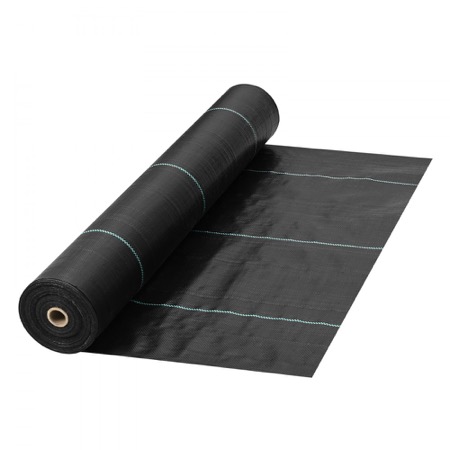
VEVOR 5.8 oz Dual-Layer Weed Barrier, 4 x 100 ft
4 x 100 ft · 400 sq ft · 5.8 oz/sq yd
Check Price at VEVORRead the reviewBest for Big Gardens and Long Beds
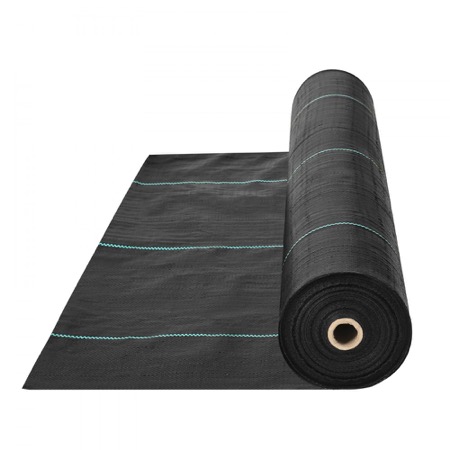
VEVOR 5 oz Woven Weed Barrier, 4 x 250 ft
4 x 250 ft · 1,000 sq ft · 5 oz/sq yd
Check Price at VEVORRead the reviewBest Under Gravel and Driveways
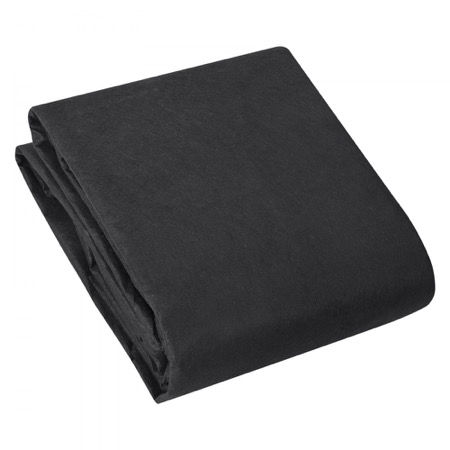
VEVOR 8 oz Non-Woven Geotextile Fabric, 10 x 100 ft
10 x 100 ft · 1,000 sq ft · 8 oz/sq yd
Check Price at VEVORRead the reviewBest for Large Vegetable Plots: VEVOR Woven Weed Barrier, 6.5 x 300 ftBest for Small Flower Beds: VEVOR 5 oz Woven Weed Barrier, 3 x 50 ftCompare all 5 side by side
Best Heavy Duty Weed Barrier Landscape Fabrics: Full Reviews
At a glance
- Size
- 4 x 100 ft
- Coverage
- 400 sq ft
- Weight
- 5.8 oz/sq yd
- Construction
- Woven + needle-punched
1. VEVOR 5.8 oz Dual-Layer Weed Barrier, 4 x 100 ft: Best Overall Heavy Duty Weed Barrier
Most weed fabrics are either woven (strong but with tiny gaps between the strands) or non-woven (a felt-like mat that blocks light but tears more easily). This VEVOR fabric combines both: a woven polypropylene layer with a needle-punched non-woven layer bonded to it, at 5.8 ounces per square yard. That is heavier than typical garden-center fabric and gives it the strength of a woven fabric with the coverage of a felt.
The roll is 4 feet wide and 100 feet long, enough for 400 square feet of beds, borders and paths. Green guide lines woven into the surface help you cut straight and space plants evenly. VEVOR says the fabric lets water and air pass through so soil stays moist and healthy, and it is black for maximum shading of the soil.
It ships half-folded on the roll, weighs 13 lbs and cuts cleanly with sharp scissors or a utility knife. Under 2 to 3 inches of mulch or decorative stone, this is the fabric we would use for permanent shrub beds, foundation plantings and walkways.
Key Features
- 5.8 oz per sq yd
- Dual layer: woven plus needle-punched non-woven
- Polypropylene
- 4 x 100 ft (400 sq ft)
- Green guide lines for cutting and spacing
- Water and air permeable
- 13 lb roll, half-folded
What We Like
- Heaviest woven fabric on this page
- Dual-layer build resists tearing and punctures
- Guide lines make layout easy
- Good size for most home beds
- Light enough to carry and unroll alone
What We Don’t Like
- At 4 feet wide, wider beds need overlapping strips, which means more pins along the seams.
Overall
The best all-round weed fabric for beds, borders and paths under mulch or stone. If you only buy one roll, make it this one.
VEVOR Black Friday
Up to 50% off, plus an extra 8% with code VVOTD (Nov 19 to Nov 30).
At a glance
- Size
- 4 x 250 ft
- Coverage
- 1,000 sq ft
- Weight
- 5 oz/sq yd
- Construction
- Woven PP
2. VEVOR 5 oz Woven Weed Barrier, 4 x 250 ft: Best for Big Gardens and Long Beds
When the project is a long fence line, a row of raised beds or a whole backyard of borders, a 100 foot roll runs out fast. This VEVOR woven fabric comes 4 feet wide and 250 feet long, covering 1,000 square feet in one roll, so there are fewer seams and fewer trips to the store.
It is 5 ounces per square yard (170 g per square meter) of woven polypropylene, and VEVOR lists tensile strength at 850 N lengthwise and 950 N widthwise, which is the kind of number you want for a fabric that will be walked on and covered with rock. VEVOR also confirms it is UV resistant and suitable under gravel, mulch and soil.
The full roll weighs 34.61 lbs and is about 26 inches long when packed, so it is manageable for one person. Like most woven fabrics, the cut edges can fray, so cut with a hot knife or seal the edges where they will show.
Key Features
- 5 oz per sq yd (170 g/m2)
- Woven polypropylene
- 4 x 250 ft (1,000 sq ft)
- Tensile strength 850 N lengthwise, 950 N widthwise
- UV resistant
- Suitable under mulch, gravel and soil
- 34.61 lb roll
What We Like
- Long roll means fewer seams
- Strong woven construction for foot traffic
- Published tensile strength ratings
- Works under gravel as well as mulch
- UV resistance for edges that peek out
What We Don’t Like
- Cut woven edges tend to fray, so they need to be sealed or buried under mulch.
Overall
The value pick for large gardens, long borders and fence lines. Buy this when you have more than a few hundred square feet to cover.
At a glance
- Size
- 10 x 100 ft
- Coverage
- 1,000 sq ft
- Weight
- 8 oz/sq yd
- Construction
- Non-woven geotextile
3. VEVOR 8 oz Non-Woven Geotextile Fabric, 10 x 100 ft: Best Under Gravel and Driveways
Gravel driveways, patios and French drains need a different fabric from flower beds. Under rock, the job is to keep gravel from sinking into the soil, stop soil from washing up into the stone and let water drain freely. A thick non-woven geotextile does that well, and this VEVOR fabric is 8 ounces per square yard (271 g per square meter), the heaviest fabric on this page.
At 10 feet wide and 100 feet long it covers 1,000 square feet, and the width matters: a single-car driveway or a wide garden path can often be covered in one piece with no seams for gravel to work through. The felt-like structure lets water pass through in every direction, which is why non-woven fabric is the standard choice for wrapping drainage pipe in a French drain.
It ships folded, not rolled, and weighs 55.56 lbs, so plan on two people to spread it. VEVOR lists tensile strength at 160 N lengthwise and 170 N widthwise; non-woven fabrics are rated lower in pull strength than woven ones, but their thickness spreads load and resists punctures from sharp stone.
Key Features
- 8 oz per sq yd (271 g/m2)
- Non-woven geotextile
- 10 x 100 ft (1,000 sq ft)
- Tensile strength 160 N lengthwise, 170 N widthwise
- Drains water in every direction
- For gravel, driveways, patios and French drains
- 55.56 lbs, folded
What We Like
- Heaviest fabric on this page
- 10 ft width covers paths and drives in one piece
- Ideal for wrapping French drain pipe
- Keeps gravel and soil separated
- Resists punctures from crushed stone
What We Don’t Like
- At 55.56 lbs and folded rather than rolled, it is heavy and awkward to handle alone.
Overall
The right fabric for gravel driveways, rock paths, patios and French drains. Use it under stone, not as a planting fabric in flower beds.
At a glance
- Size
- 6.5 x 300 ft
- Coverage
- 1,950 sq ft
- Weight
- 3.0 oz/sq yd listed
- Construction
- Woven PP
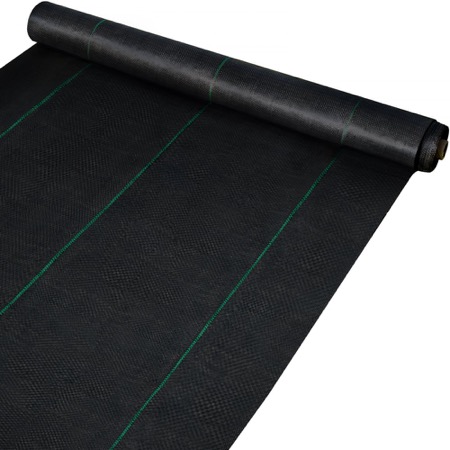
4. VEVOR Woven Weed Barrier, 6.5 x 300 ft: Best for Large Vegetable Plots
Vegetable growers use weed fabric differently from landscapers. They lay wide strips between rows or over whole beds, burn or cut planting holes and pull the fabric up at the end of the season. For that, width and length matter more than weight, and this VEVOR roll is 6.5 feet wide and 300 feet long, covering 1,950 square feet.
It is woven polypropylene with green lines woven in to help you keep rows straight and space transplants. The fabric weighs about 3.0 oz per square yard, the lightest fabric here. VEVOR says the material resists UV and lets water and air through.
The roll weighs 46 lbs and ships half-folded, so it is about 41 inches long in the box. Lighter fabric is easier to cut and handle across a big plot and is fine for seasonal use, but it is not the choice for permanent beds under rock or for areas with tough perennial weeds.
Key Features
- Woven polypropylene
- 6.5 x 300 ft (1,950 sq ft)
- 3.0 oz per sq yd
- Green planting lines
- UV resistant, water and air permeable
- 46 lb roll, half-folded
- Black for soil shading
What We Like
- Covers the most area of any roll here
- Wide strips cover vegetable beds in one pass
- Planting lines help keep rows straight
- Lighter fabric is easy to cut
- Good for seasonal row covering
What We Don’t Like
- At about 3 oz it is the lightest fabric here, so tough perennial weeds and sharp gravel will wear through it sooner.
Overall
The pick for large vegetable gardens, market plots and row crops. For permanent landscaping, choose one of the heavier fabrics above.
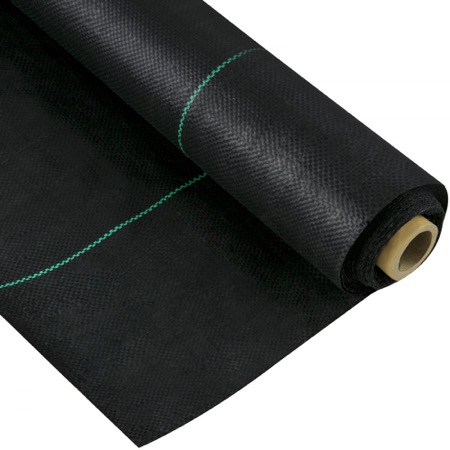
5. VEVOR 5 oz Woven Weed Barrier, 3 x 50 ft: Best for Small Flower Beds
Not every job needs a 300 foot roll. For a foundation bed, a strip along a fence, a few raised beds or the space under a deck, this 3 foot by 50 foot roll covers 150 square feet without leaving you with a heavy leftover roll in the garage.
The fabric is the same 5 ounce per square yard woven polypropylene class as the 250 foot roll, with VEVOR stating it is UV stabilized and permeable to water and air. A green guide line runs along the roll to help with straight cuts. It is a good match for a raised garden bed, where a piece under the bed blocks grass from creeping up into the soil.
The whole roll weighs 5.5 lbs and packs to about 37 inches long, so it fits on a shelf and is easy to carry to the bed. The 3 foot width suits narrow beds and borders; for wider areas you will need to overlap strips.
Key Features
- 5 oz per sq yd
- Woven polypropylene
- 3 x 50 ft (150 sq ft)
- UV stabilized
- Water and air permeable
- Green guide line
- 5.5 lb roll
What We Like
- Right size for small projects
- Same heavy 5 oz weight as larger rolls
- Very light and easy to handle
- Good under raised beds and along fences
- Stores easily
What We Don’t Like
- Its 3 foot width means overlapping strips on anything wider than a narrow border.
Overall
The best pick for small beds, fence lines and raised beds. Buy this when a big roll would be overkill.
Side-by-Side Comparison
| Fabric | Size | Coverage | Weight | Construction | Roll Weight | Price |
|---|---|---|---|---|---|---|
| VEVOR 5.8 oz Dual-Layer | 4 x 100 ft | 400 sq ft | 5.8 oz/sq yd | Woven + needle-punched | 13 lbs | Check price |
| VEVOR 5 oz Woven 4 x 250 | 4 x 250 ft | 1,000 sq ft | 5 oz/sq yd | Woven PP | 34.61 lbs | Check price |
| VEVOR 8 oz Non-Woven | 10 x 100 ft | 1,000 sq ft | 8 oz/sq yd | Non-woven geotextile | 55.56 lbs | Check price |
| VEVOR Woven 6.5 x 300 | 6.5 x 300 ft | 1,950 sq ft | 3.0 oz/sq yd listed | Woven PP | 46 lbs | Check price |
| VEVOR 5 oz Woven 3 x 50 | 3 x 50 ft | 150 sq ft | 5 oz/sq yd | Woven PP | 5.5 lbs | Check price |
Specs come from VEVOR.
How to Choose a Heavy Duty Weed Barrier
Fabric weight
Weed fabric is sold by weight per square yard. Around 3 oz is light duty, fine for seasonal vegetable rows and annual beds. Around 5 oz is the sweet spot for permanent beds under mulch or stone. Heavier fabrics of 6 to 8 oz and up are best under gravel, driveways and anywhere with tough weeds like nutsedge, bindweed or Bermuda grass that push through thinner cloth.
Woven or non-woven
Woven polypropylene is made like a tarp from flat strips, which gives high pull strength and good water flow through the weave, but cut edges fray and very determined weeds can sometimes find gaps. Non-woven fabric is a felt of bonded fibers: it blocks light completely, drains in every direction and resists punctures from stone, but has lower pull strength. Dual-layer fabrics bond both together for the best of each. As a rule, use woven or dual-layer fabric under mulch and in beds, and non-woven under gravel and in drains.
Under mulch, rock or gravel
Under organic mulch, a 5 oz woven or dual-layer fabric works well; just remember mulch breaks down into soil on top of the fabric over a few years, and weeds will root in that layer, so refresh the mulch and pull the odd surface weed. Under decorative rock and river stone, fabric is most valuable because it keeps stones from sinking into mud. Under gravel driveways and paths, use thick non-woven geotextile at least 6 to 8 oz.
Width and roll length
Measure your area and add 10 to 15 percent for overlaps and trimming. Wider rolls mean fewer seams, which are the weak spots where weeds sneak through. Narrow 3 to 4 foot rolls are easier to handle in tight beds; wide rolls save time on big open areas.
How to Install Weed Barrier Fabric
Start by clearing the area completely: pull or cut existing weeds and grass, rake out roots and rocks, and level the soil so the fabric lies flat. Water and feed established plants first, since getting to the soil later is harder. If you plan to edge the bed, install landscape edging now so the fabric can tuck behind it. A heavy duty wheelbarrow makes quick work of moving the soil, rock and mulch.
Unroll the fabric with the fuzzy or shiny side as the manufacturer directs, overlap strips by at least 6 to 12 inches and pin seams and edges every 2 to 3 feet with landscape staples. To plant through it, cut an X just large enough for the root ball, fold the flaps back, plant, then fold them back around the stem. Cover the fabric with 2 to 3 inches of mulch or stone; exposed fabric degrades in sunlight and looks untidy. Water thoroughly, and if water pools rather than soaking in, the fabric or soil is too compacted for that spot.
A Scenario Worth Knowing About
Picture a homeowner who lays the lightest fabric they can find under a new pea-gravel path, pins it down, adds two inches of gravel and calls it done. Two summers later the path is a mess: gravel has worked into the soil in low spots, the fabric has torn under foot traffic, and grass is growing up through the gaps and along every seam where the strips barely overlapped.
The fix is matching the fabric to the job. Under a path or driveway, a heavy non-woven geotextile like the 8 oz VEVOR fabric spreads foot and wheel loads and keeps gravel and soil apart. Wide fabric means fewer seams, overlaps of 6 to 12 inches stop grass from sneaking through, and edging along both sides keeps gravel in and lawn out. For planting beds, a 5 to 5.8 oz woven or dual-layer fabric is a better fit, with mulch on top. And in a vegetable garden or under a high tunnel greenhouse, lighter fabric you replace every few seasons is often the smarter choice.
Frequently Asked Questions
What is the best heavy duty weed barrier?
For most beds and borders, the VEVOR 5.8 oz dual-layer weed barrier is the best all-round choice, combining a woven layer for strength with a needle-punched layer for coverage. For gravel and driveways, the VEVOR 8 oz non-woven geotextile is the better fit.
Does weed barrier fabric really work?
Yes, when it is the right weight for the job, installed on cleared soil, overlapped properly and covered with mulch or stone. It will not stop every weed forever, since seeds blow in and sprout in mulch on top, but it greatly reduces weeding.
Is woven or non-woven landscape fabric better?
Woven fabric is stronger in pull strength and drains well through the weave, making it best for beds under mulch. Non-woven fabric blocks light completely, drains in all directions and resists punctures, making it best under gravel, driveways and in French drains.
What weight weed barrier do I need?
Use about 3 oz for seasonal vegetable rows, around 5 oz for permanent beds under mulch or rock, and 6 to 8 oz or more for gravel paths, driveways and areas with aggressive weeds.
Should I put landscape fabric under mulch?
It helps in shrub and perennial beds, especially with aggressive weeds. In vegetable and annual beds that you dig every year, many gardeners skip fabric under mulch or use a light seasonal fabric they can lift and reuse.
How long does weed barrier fabric last?
Covered with mulch or stone and kept out of direct sun, a quality woven polypropylene fabric typically lasts many years; VEVOR states its woven fabric usually lasts 5 to 10 years under about 2 inches of mulch. Exposed fabric breaks down much faster in sunlight.
The Bottom Line
For flower beds, shrub borders and walkways, the VEVOR 5.8 oz dual-layer weed barrier is the heavy duty fabric to buy, with a woven layer for strength and a needle-punched layer for coverage. For long beds and big gardens, the 5 oz woven 4 by 250 foot roll covers 1,000 square feet with fewer seams.
Under gravel driveways, paths and French drains, use the 8 oz non-woven geotextile. For large vegetable plots, the 6.5 by 300 foot roll covers the most ground, and for a single flower bed or raised bed, the 3 by 50 foot roll is all you need. Clear the soil first, overlap generously, pin every couple of feet and cover the fabric, and keep a heavy duty garden hose handy to water through it. We will add more brands to this page as we review them.