There’s a moment every fall when you’re standing in the yard with a rake, looking at a lawn that’s more leaf than grass, and you do the math on how many Saturdays this is going to take. Raking a quarter acre by hand is a full afternoon. Blowing it into piles is loud, and you still have to bag the piles.
A lawn sweeper skips both steps. Spinning brushes flick leaves, grass clippings, and pine needles up into a big mesh hopper as you walk (or drive) across the lawn, and when the bag’s full you dump it on the compost pile or into a leaf bag. No noise, no fuel, no cords, and no piles to pick up twice.
VEVOR makes one of the widest ranges of sweepers in the US, from a 21-inch push model for townhouse yards to a 50-inch tow-behind for a lawn tractor. We went through the current lineup and picked the four worth buying, plus how to choose the right width and the setting mistake that makes most sweepers look broken.
Our Quick Picks
Best Push Sweeper Overall
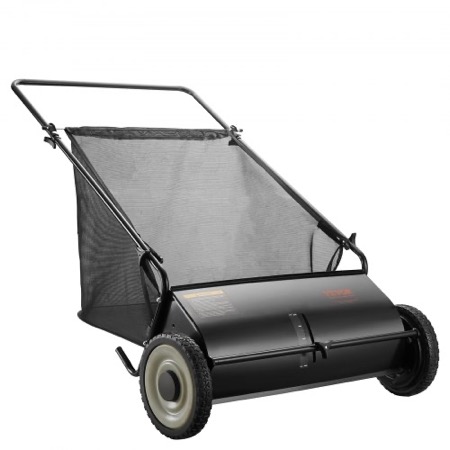
Best for Small Yards
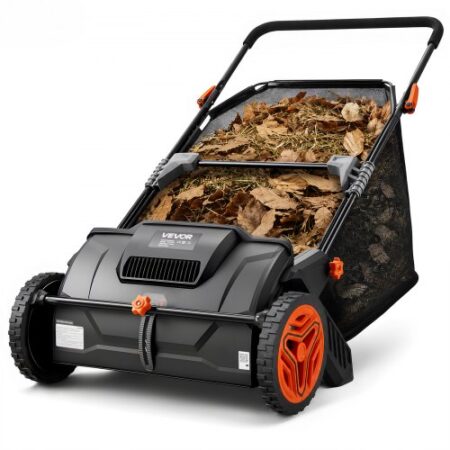
VEVOR 21-Inch Push Lawn Sweeper (3.5 cu ft)
Push · 21 in · 3.5 cu ft
Check Price at VEVORRead the reviewBest for Lawn Tractors
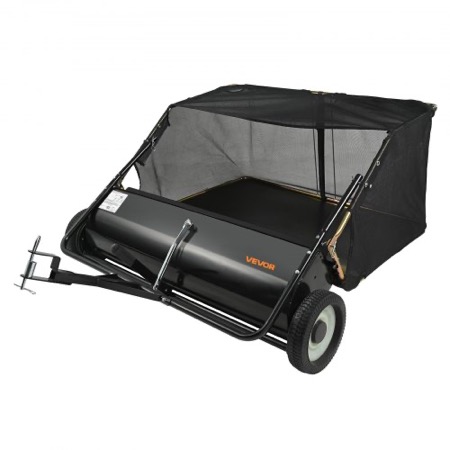
VEVOR 44-Inch Tow-Behind Lawn Sweeper (25 cu ft)
Tow · 44 in · 25 cu ft
Check Price at VEVORRead the reviewBest for Acreage: VEVOR 50-Inch Tow-Behind Lawn Sweeper (26 cu ft)Compare all 4 side by side
Best Lawn Sweepers: Full Reviews
1. VEVOR 26-Inch Push Lawn Sweeper (7 cu ft): Best Push Sweeper Overall
If you have a typical suburban lawn and you’re tired of raking, this is the one. The 26-inch sweep path is wide enough to make real progress on every pass, but the sweeper still turns easily around trees, flower beds, and the swing set.
Underneath are four spinning PP brushes that VEVOR has thickened and packed more densely for extra sweeping force, which is what flicks leaves and clippings up into the bag instead of just pushing them around. A manual knob raises and lowers the brushes without tools, and the adjustment is stepless, so you can drop them for short, tight grass or raise them for a thicker lawn, a bumpy patch or the driveway.
The 7-cubic-foot (198 L) hopper holds a lot more than it looks like, and quick clips on each side let it come off so you can carry it to the compost pile and dump it. The frame is thickened steel, the wheels have rubber treads for grip on damp grass, and assembly needs no special tools (model GT1110).
Key Features
- 26 in sweep width
- 7 cu ft (198 L) hopper bag with quick clips
- 4 thickened PP brushes
- Stepless, tool-free brush height knob
- Rubber-tread wheels
- Thickened steel frame
- Model GT1110
What We Like
- Best balance of width and maneuverability
- Four brushes for a strong sweep
- Stepless height adjustment covers almost any lawn
- Big hopper for a push sweeper
- Rubber wheels grip on damp grass
What We Don’t Like
- Like every brush sweeper, it struggles with wet, matted leaves, so sweep on a dry afternoon.
Overall
For lawns up to about a third of an acre, this is the push sweeper we’d buy. It’s the easiest way to replace an afternoon of raking with 30 minutes of walking.
VEVOR Black Friday
Up to 50% off, plus an extra 8% with code VVOTD (Nov 19 to Nov 30).
2. VEVOR 21-Inch Push Lawn Sweeper (3.5 cu ft): Best for Small Yards
Townhouse lawns, small backyards, patios, and the strip between the sidewalk and the street don’t need a big machine. They need something light that fits through a side gate and hangs on a garage wall. At 14.7 pounds, this 21-inch sweeper is exactly that.
It uses two thickened brushes with the same 1:5 brush-to-wheel ratio VEVOR lists for its tow-behind models, and VEVOR claims it picks up about 80% of the debris in a single pass. A hand knob adjusts the brush height, and it works on hard surfaces too, which makes it handy for sweeping grass clippings off a driveway after mowing.
The 3.5-cubic-foot bag lifts off the frame for dumping. It’s a small, simple machine, and that’s the point.
Key Features
- 21 in sweep width
- 3.5 cu ft nylon mesh hopper
- 2 spinning brushes, 1:5 brush-to-wheel ratio
- Knob-adjusted brush height
- 9.8 in wheels
- 14.7 lb
What We Like
- Light enough for anyone to push and lift
- Fits through narrow gates and around tight beds
- Works on driveways and patios as well as grass
- Stores easily on a wall hook
What We Don’t Like
- The small hopper fills quickly when leaves are thick, so expect to stop and dump it often.
Overall
If your lawn is small or you mostly need to clean up clippings and patios, the 21-inch model is all the sweeper you need.
3. VEVOR 44-Inch Tow-Behind Lawn Sweeper (25 cu ft): Best for Lawn Tractors
Once you’re mowing with a riding mower or lawn tractor, pushing a sweeper makes no sense. Hitch this 44-inch sweeper (model TC5001E) to the back, drive the same lines you mow, and the lawn’s clean by the time you’ve circled the yard.
A lever on the frame raises and lowers the brushes without tools, so you can switch between lawn, driveway and sidewalk in seconds. The brushes spin at a 1:5 ratio to the 10.5-inch wheels, and VEVOR widened the metal brush interface so it holds its shape against sticks and pine cones. The best part is the dump rope: when the hopper is full, you pull the rope from the seat and the bag tips out.
The hopper holds 25 cubic feet, nearly as much as the 50-inch model, in a frame that is noticeably narrower at about 52 inches across. That makes it the easier of the two tow-behinds to get through a garden gate. It weighs 65.25 pounds.
Key Features
- 44 in sweep width
- 25 cu ft nylon hopper
- Dump rope empties from the tractor seat
- Tool-free lever brush height
- 1:5 brush-to-wheel ratio
- 10.5 in wheels
- 65.25 lb, about 67 x 52 x 28 in
What We Like
- Empties without getting off the tractor
- Matches common 42 to 46-inch mower decks
- Almost the same hopper size as the 50-inch
- Narrower frame for gates and sheds
- Metal brush interface resists bending
What We Don’t Like
- It does not fold, so it needs a full parking spot’s worth of floor space in the off season.
Overall
If you already own a lawn tractor and have a half acre or more, this is the most efficient way to clean up leaves and clippings.
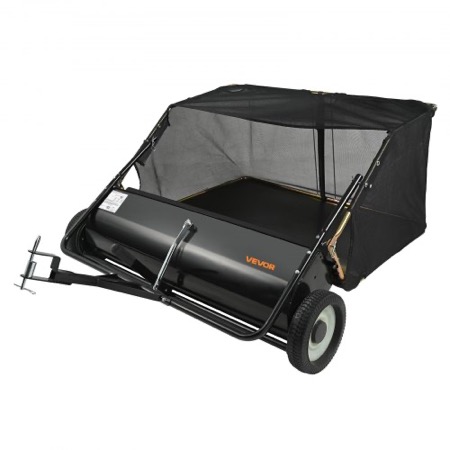
4. VEVOR 50-Inch Tow-Behind Lawn Sweeper (26 cu ft): Best for Acreage
On an acre or more, the limiting factor isn’t how fast you can drive. It’s how often you have to stop and dump, and how many laps it takes to cover the ground. This 50-inch sweeper (model TC5001F) handles both: a wide sweep path that keeps pace with bigger mower decks, and a 26-cubic-foot hopper.
The brushes turn five times for every turn of the wheels, so pickup holds up at tractor speed, and the brush interface is metal rather than plastic so it resists bending when it hits sticks or small rocks. Brush height adjusts by hand, and the dump rope runs to the seat so you can tip the hopper without climbing off. The 10.5-inch wheels are listed as puncture resistant, and the universal hitch fits a range of tractors.
When the season’s over, the frame folds for storage, which matters for something that measures about 70 by 67 inches assembled. It weighs 72.75 pounds.
Key Features
- 50 in sweep width
- 26 cu ft nylon hopper
- 1:5 brush-to-wheel ratio, metal brush interface
- Dump rope empties from the tractor seat
- Hand-adjusted brush height
- 10.5 in puncture-resistant wheels
- Folds for storage, 72.75 lb
What We Like
- Covers the most ground per pass
- Big hopper means fewer dump stops
- Folds to fit in a shed or garage
- Matches 50 to 54-inch mower decks
- Metal brush mounts resist bending
What We Don’t Like
- Assembly takes some patience, so set aside an hour before the first cleanup.
Overall
For big properties and anyone mowing with a wide deck, the 50-inch tow-behind is the fastest way to clear a lawn.
Side-by-Side Comparison
| Sweeper | Type | Sweep Width | Hopper | Height Adjust | Weight | Price |
|---|---|---|---|---|---|---|
| VEVOR 26″ Push | Push | 26 in | 7 cu ft | Stepless knob | Not listed | Check price |
| VEVOR 21″ Push | Push | 21 in | 3.5 cu ft | Knob | 14.7 lb | Check price |
| VEVOR 44″ Tow-Behind | Tow | 44 in | 25 cu ft | Lever | 65.25 lb | Check price |
| VEVOR 50″ Tow-Behind | Tow | 50 in | 26 cu ft | Hand adjust | 72.75 lb | Check price |
Specs are from VEVOR.
Push or Tow-Behind: Which Lawn Sweeper Do You Need?
- Under a quarter acre: A 21 or 26-inch push sweeper. Light, easy to store, and fast enough for small lawns.
- A quarter to half an acre: The 26-inch push sweeper with its big 7 cu ft bag, or a 44-inch tow-behind if you already mow with a tractor.
- Half an acre and up: A tow-behind. Match the sweeper width to your mower deck so you can follow your mowing lines: 42 to 46 inches for most lawn tractors, 50 to 54 inches for bigger decks.
Hopper size matters as much as width. A sweeper loses pickup as the bag fills, so a bigger hopper doesn’t just mean fewer trips. It means better results in the second half of each run.
How Lawn Sweepers Work
A lawn sweeper is a simple machine. The wheels drive a set of gears that spin a row of stiff brushes much faster than the wheels turn. That’s the brush-to-wheel ratio you’ll see on spec sheets, and 1:5 (five brush turns for every wheel turn) is the standard for good pickup. The spinning brushes flick debris up and back into the hopper.
Because the brushes only spin when the sweeper moves, walking speed matters. A steady, brisk walk gives the best pickup. Creeping along slowly lets leaves fall back out.
Sweeper vs. Leaf Blower vs. Rake
- Lawn sweeper: Best for collecting. Picks leaves and clippings up off open lawn and bags them in one step. Quiet, no fuel or battery.
- Leaf blower: Best for moving. Clears beds, corners, decks, and gutters where a sweeper can’t reach. See our cordless leaf blower guide.
- Rake: Still useful for tight spots and wet, matted leaves. Our heavy duty leaf rake picks cover the best ones.
The fastest fall cleanup uses all three: blow leaves out of the beds onto the lawn, sweep the lawn, and rake whatever’s left in the corners. If you want to shrink the pile, run the hopper contents through a leaf mulcher before bagging them in reusable leaf bags.
A Scenario Worth Knowing About
Your new sweeper worked great the first time. A week later you run it over the same lawn, and it’s leaving a trail of leaves behind it and barely filling the bag. It’s easy to assume the brushes are already worn out.
They almost never are. Three things cause nearly every “it stopped picking up” complaint. First, moisture: morning dew or yesterday’s rain makes leaves stick to the grass and to each other, and no brush sweeper handles wet, matted leaves well. Wait until mid-afternoon on a dry day. Second, a full hopper: once the bag is about three-quarters full, leaves start bouncing back out. Dump it earlier than you think you need to. Third, brush height: set too high and the brushes skim over the leaves, set too low and they drag in the turf and slow down.
The right height is the lowest setting where the brush tips just touch the top of the grass without digging in. Check it every time you switch from lawn to driveway, and sweep more often in peak season. A sweeper handles a few inches of leaves easily. A foot-deep blanket is a job for the blower first.
Frequently Asked Questions
Do lawn sweepers really work?
Yes, on dry leaves, grass clippings, pine needles, and small twigs on reasonably even lawns. They’re far faster than raking. They don’t do well on wet leaves or very bumpy ground.
Can a lawn sweeper pick up pine needles?
Yes. Pine needles are light and sweep up well, as long as the brushes are set low enough to reach them. VEVOR specifically lists pine needles for its push sweepers.
Will a lawn sweeper pick up acorns and sweet gum balls?
Partly. Heavy nuts and seed pods are harder for standard brushes to throw into the hopper. Lower the brush height and slow down slightly. VEVOR says its 44-inch tow-behind can pick up pine cones, but expect a few passes on heavy nuts with any brush sweeper.
Can I use a lawn sweeper on a driveway or gravel?
On pavement, yes, it works well for clippings and leaves. On gravel, raise the brushes so they don’t fling stones into the hopper, which can tear the bag and wear the brushes.
What width lawn sweeper do I need for my tractor?
Pick a sweeper close to your mower deck width so you can follow your mowing pattern. A 44-inch sweeper matches most entry-level lawn tractors with 42 to 46-inch decks, and a 50-inch sweeper suits 50 to 54-inch decks.
How do I store a lawn sweeper?
Empty and shake out the hopper, brush off the brushes, and store it somewhere dry. Push sweepers hang on a wall hook. The 50-inch tow-behind folds to save floor space.
How fast should I drive with a tow-behind sweeper?
About the speed you mow at, or a little slower. The brushes are driven by the wheels, so they need some ground speed to throw leaves into the hopper, but racing across the lawn bounces the sweeper and leaves strips behind. Slow down on bumpy ground and on turns, and overlap each pass by a few inches the way you would when mowing.
Can a lawn sweeper pick up grass clippings after mowing?
Yes, and it’s one of the best uses for one. Dry clippings are light and sweep up easily, which keeps them from matting on the lawn or getting tracked into the house. Let freshly cut grass dry for an hour or two first; wet clippings clump and stick to the brushes. If your mower already bags, a sweeper is still handy for the clippings blown onto driveways and walks.
Should I sweep or mulch my leaves into the lawn?
A light layer of leaves can be mulched into the grass with a mower and left to break down. Once the leaves cover more than about half the lawn, mulching leaves a thick mat that smothers the turf, and that is when a sweeper earns its keep. Many people do both: mulch the early, light drops and sweep up the heavy late-fall pile.
The Bottom Line
For most suburban lawns, the VEVOR 26-inch push sweeper is the one to buy: wide enough to be fast, light enough to handle, and adjustable for almost any lawn. Small yards should save money and storage space with the 21-inch model. If you mow with a tractor, skip the push sweepers entirely and hitch up the 44-inch or, on acreage, the 50-inch tow-behind.
Sweep on dry afternoons, dump before the bag is full, and keep the brushes just kissing the grass. Do that, and fall cleanup goes from a weekend to an hour. And while you’re out there, make sure the leaves aren’t ending up in the gutters too. Our gutter guard guide covers that side of the job.