The power goes out at 9 p.m. in January. Within an hour the house is cooling, the sump pit is filling and the freezer full of meat starts its slow countdown. A small camping generator will not save you here. You need a heavy duty portable generator that can carry a refrigerator, a furnace blower, a sump pump and some lights at the same time, and keep doing it through the night on one tank.
This guide covers eight picks. Four are gas and dual-fuel generators from VEVOR, from a 13,500 watt dual-fuel unit with a 50 amp outlet down to a 4,200 watt inverter quiet enough for an RV park. The other five are battery generators from FOSSiBOT, Jackery, BLUETTI and GEYOTO for people who want backup power with no fuel, no fumes and no pull cord, from a 7,200 watt, 240V home backup unit to a solar generator kit you can recharge in the sun. We will add other brands to this page as we review them.
For each generator you get running and peak watts, fuel and runtime, outlets, noise, weight and one honest drawback. After the reviews there is a buying guide on sizing a generator to your house, gas versus propane, inverter versus conventional, connecting to your panel safely and keeping carbon monoxide out of the house.
Our Quick Picks
Best Overall Heavy Duty Portable Generator
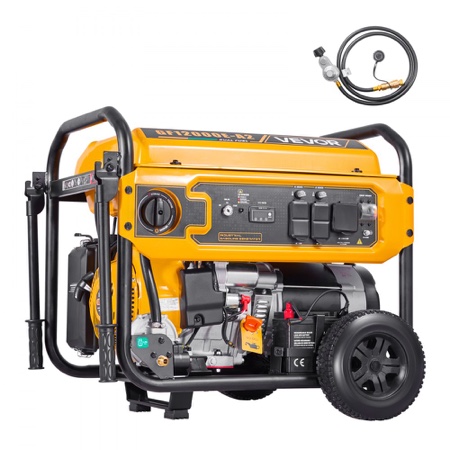
VEVOR 13500W Dual Fuel Generator
Conventional, dual fuel · 9,000 (gas) / 8,100 (LPG) · 13,500 / 12,000
Check Price at VEVORRead the reviewBest Value for Home Backup
Best Quiet High-Output Inverter
Best for RVs and Camping: VEVOR 4200W Dual Fuel Inverter GeneratorBest Battery Alternative for Whole-Home Backup: FOSSiBOT F7200Best Battery Option for Job Sites: Jackery HomePower 1000 Plus v2Best Solar Generator Kit: FOSSiBOT F1800 Solar Generator KitBest Battery Generator for Fast Recharging: BLUETTI Elite 200 V2Best Compact Battery Alternative to a Gas Generator: GEYOTO N1000 Portable Power StationCompare all 9 side by side
Best Heavy Duty Portable Generators: Full Reviews
At a glance
- Type
- Conventional, dual fuel
- Running Watts
- 9,000 (gas) / 8,100 (LPG)
- Peak Watts
- 13,500 / 12,000
- Fuel / Capacity
- 9.2 gal gas or propane
1. VEVOR 13500W Dual Fuel Generator: Best Overall Heavy Duty Portable Generator
This is the generator to buy if you want to back up most of a house, not just a refrigerator. The VEVOR GF12000E-A2 is rated at 9,000 running watts and 13,500 peak watts on gasoline, and 8,100 running and 12,000 peak on propane. That is enough to carry a refrigerator, a chest freezer, a sump pump, a furnace blower, a well pump and lights at the same time, with room left for a microwave or a window air conditioner.
It runs a 500cc four-stroke engine and puts out both 120V and 240V, including a 120/240V 50 amp outlet. That 50 amp outlet is the one that matters for home backup: it is how you feed a properly installed transfer switch or inlet box and run 240V loads like a well pump. Electric key start means no pull cord on a cold night, and the dual-fuel design lets you switch to a propane tank when gas stations are closed or you would rather not store gasoline.
The 9.2 gallon tank gives a rated 9.5 hours at half load and 5.5 hours at full load on gasoline. VEVOR fits it with a CO sensor, AVR (automatic voltage regulation), a fuel gauge and overload protection, and says total harmonic distortion is under 25 percent. It is big: 234.8 lb on its wheels and about 30 x 29 x 27 inches, and VEVOR rates noise at 85 dB or less from 23 feet. This is a generator you roll out of the garage, not one you lift into a truck.
Key Features
- 9,000 running / 13,500 peak watts on gasoline
- 8,100 running / 12,000 peak watts on propane
- 500cc four-stroke engine, 120V and 240V output
- 120/240V 50A outlet plus household outlets
- 9.2 gal tank: 9.5 hours at half load, 5.5 hours at full load
- Electric key start, CO sensor, AVR, fuel gauge, overload protection
- 234.8 lb, 29.9 x 28.7 x 27.4 in
What We Like
- Most power in this guide
- 50 amp outlet for transfer switch or inlet box
- Runs on gasoline or propane
- Electric start, no pull cord
- Large tank for overnight runtime
What We Don’t Like
- At 234.8 lb, it needs a flat path and two people to move up a step or into a truck bed.
Overall
The best pick for whole-house backup without a permanent standby system. If you want to run 240V loads and most of your essentials at once, start with the VEVOR 13500W Dual Fuel.
VEVOR Black Friday
Up to 50% off, plus an extra 8% with code VVOTD (Nov 19 to Nov 30).
At a glance
- Type
- Conventional, gas
- Running Watts
- 7,000
- Peak Watts
- 9,625
- Fuel / Capacity
- 8.7 gal gas
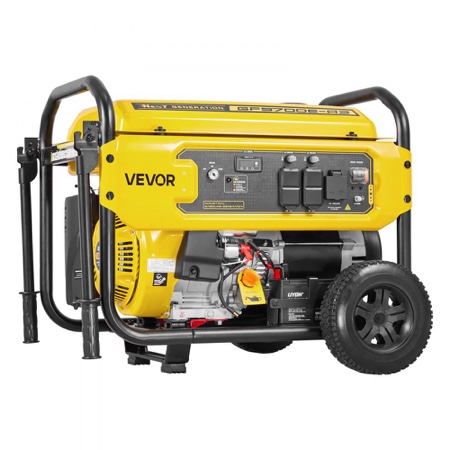
2. VEVOR 9625W Gas Generator: Best Value for Home Backup
Not every house needs 13,500 watts. The VEVOR GF9700E-A2 is rated at 7,000 running and 9,625 peak watts from a 420cc four-stroke engine, which covers the core outage list for most homes: refrigerator, freezer, sump pump, furnace blower, lights, Wi-Fi and phone charging, with enough headroom to start a well pump or run a microwave between other loads.
Its outlets are set up for home backup. You get a 120/240V 30 amp twist-lock, which matches the common 30 amp generator inlet boxes and manual transfer switches, plus two 120V 20 amp household outlets for extension cords. It is gasoline only, which keeps it simpler and lighter than the dual-fuel models, and it has electric key start with a battery included.
The 8.7 gallon tank is rated for 12 hours at half load and 6.5 hours at full load, the longest half-load runtime of the gas generators here. VEVOR includes a CO sensor, AVR, a fuel indicator and overload protection, and VEVOR rates it at 85 dB or less from 23 feet. At 185.2 lb with two wheels and a folding handle, it is about 50 lb lighter than the 13,500 watt model.
Key Features
- 7,000 running / 9,625 peak watts
- 420cc four-stroke gas engine, 120V and 240V output
- 120/240V 30A twist-lock plus two 120V 20A outlets
- 8.7 gal tank: 12 hours at half load, 6.5 hours at full load
- Electric key start, battery included
- CO sensor, AVR, fuel indicator, overload protection
- 185.2 lb, 29.9 x 27 x 24.8 in, wheels and folding handle
What We Like
- Right size for most home outages
- 30 amp twist-lock for a transfer switch
- Longest half-load runtime of the gas picks
- Lighter than the 13,500 watt model
- Simple gasoline-only design
What We Don’t Like
- Gasoline only, so you need to store fuel with stabilizer and cannot switch to propane in a long outage.
Overall
The best value for home backup. If a 30 amp transfer switch and your essentials are the goal, the VEVOR 9625W does the job with a long runtime per tank.
At a glance
- Type
- Inverter, gas
- Running Watts
- 6,800
- Peak Watts
- 10,000
- Fuel / Capacity
- 5.3 gal gas
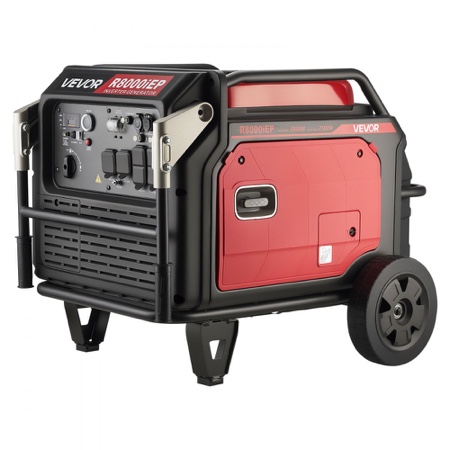
3. VEVOR 10000W Inverter Generator: Best Quiet High-Output Inverter
Most big generators are loud and produce rougher power. The VEVOR R8000iEP is different: it is an inverter generator, so it builds clean, stable power suited to computers, TVs, smart appliances and other sensitive electronics, and it is far quieter. VEVOR rates noise under 70 dB from 23 feet, roughly the level of normal conversation, compared with 85 dB for the conventional models above.
It still makes serious power. The 420cc engine is rated at 6,800 running and 10,000 peak watts, rated for 120V and 240V. Outlets include two 120V duplex outlets, a 120V three-prong outlet, a 120V four-prong outlet that VEVOR says connects to RV electrical systems, a 12V 8.3A socket and two USB ports. You can start it with the remote, the electric start or by hand.
The 5.3 gallon tank is rated for 8.5 hours at 50 percent load and 4.5 hours at full power. It has a CO sensor, fuel indicator and overload protection. The trade-off is size: at 208.3 lb and about 34 x 29 x 27 inches, it is the largest machine here, and it runs on gasoline only.
Key Features
- 6,800 running / 10,000 peak watts
- Inverter output for sensitive electronics
- Under 70 dB from 23 ft
- Remote start, electric start and manual start
- Two 120V duplex, 120V three-prong, 120V four-prong RV outlet, 12V and USB
- 5.3 gal tank: 8.5 hours at 50% load, 4.5 hours at full load
- CO sensor, fuel indicator, overload protection; 208.3 lb
What We Like
- Clean inverter power for electronics
- Much quieter than conventional generators
- Remote start from inside the house
- RV-ready four-prong outlet
- High output for an inverter
What We Don’t Like
- It does not list a 240V twist-lock outlet the way the conventional VEVOR models do, so check that its outlets match your transfer switch or inlet box before you buy.
Overall
The pick when noise and clean power matter as much as watts. For neighborhoods, home offices and big RVs, the VEVOR 10000W Inverter gives you heavy duty output without the roar.
At a glance
- Type
- Inverter, dual fuel
- Running Watts
- 3,200 (gas) / 2,900 (LPG)
- Peak Watts
- 4,200
- Fuel / Capacity
- 2.3 gal gas or propane
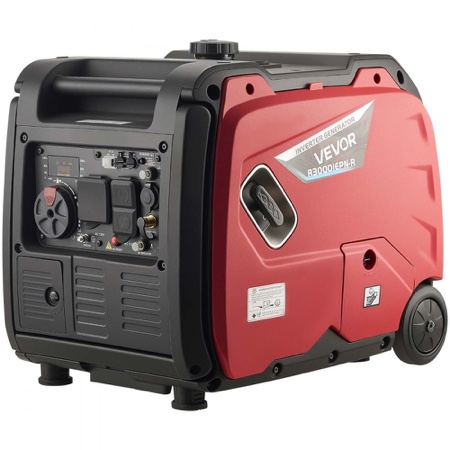
4. VEVOR 4200W Dual Fuel Inverter Generator: Best for RVs and Camping
Not everyone needs to back up a whole house. If you want a generator for an RV, a cabin, tailgating or running a refrigerator and a few circuits in an outage, the VEVOR R3000iEPN-R is the right size. Its 212cc engine is rated at 3,200 running watts on gasoline and 2,900 on propane, with 4,200 peak watts to start a refrigerator compressor or a small RV air conditioner.
It is an inverter, so the power is clean enough for laptops and phones, and it is the quietest gas generator here: VEVOR rates it under 66 dB from 23 feet. Outlets include a 120V duplex outlet, a 120V three-prong outlet and a 12V 8.3A socket, plus the propane connection. Electric start makes it easy to fire up.
The 2.3 gallon tank is rated for 8.5 hours at 50 percent load and 5 hours at full load on gasoline. It has CO monitoring, a fuel display and overload protection. At 100.3 lb and about 23 x 18 x 20 inches it is the most portable gas generator here, though still a two-person lift. VEVOR notes that oil is not included; it calls for SAE 10W-30.
Key Features
- 3,200 running watts on gas, 2,900 on propane; 4,200 peak
- 212cc four-stroke engine, dual fuel
- Inverter output, under 66 dB from 23 ft
- 120V duplex, 120V three-prong, 12V 8.3A socket
- 2.3 gal tank: 8.5 hours at 50% load, 5 hours at full load
- Electric start, CO monitoring, fuel display, overload protection
- 100.3 lb, 23.2 x 18.0 x 20.1 in
What We Like
- Quietest gas generator here
- Runs on gasoline or propane
- Clean inverter power
- Most portable of the gas picks
- Good fit for RVs and cabins
What We Don’t Like
- At 3,200 running watts, it cannot run a central air conditioner or a well pump, and it has no 240V output.
Overall
The pick for RVs, camping and light home backup. If you want a quiet dual-fuel generator you can actually move around, the VEVOR 4200W Dual Fuel Inverter is the one.
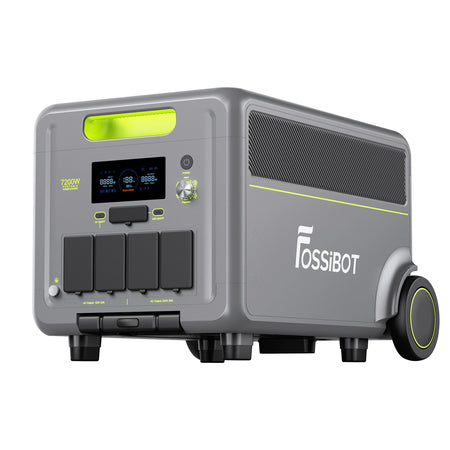
At a glance
- Type
- Battery, 120V/240V
- Running Watts
- 7,200
- Peak Watts
- 9,000
- Fuel / Capacity
- 5,222 Wh, expands to 15.66 kWh
5. FOSSiBOT F7200: Best Battery Alternative for Whole-Home Backup
A gas generator has to sit outside, needs fuel and makes noise. A battery generator does not, and the FOSSiBOT F7200 is one of the few that can stand in for a big gas unit. It stores 5,222 Wh in EVE LiFePO4 cells and puts out 7,200 watts continuous with a 9,000 watt surge, and it supplies both 120V and 240V, so it can run 240V loads like a well pump when connected through a transfer switch installed by an electrician.
Capacity expands to 15.66 kWh with FOSSiBOT’s FB5222 expansion batteries, enough for several days of essentials. Recharging is fast for a battery this large: up to 3,000 W from the wall fills it in about 2.2 hours, and it accepts up to 3,700 W of solar, enough for a full charge in about 1.5 hours of ideal sun. It also charges from a car, or from AC and solar at the same time.
A UPS mode switches to battery in under 10 ms, carrying up to 1,800 W at 120V or 7,200 W at 240V, so computers and routers stay on when the grid drops. The cells are rated for more than 6,500 cycles, the BrightEMS app handles monitoring and settings, it rolls on wheels, and FOSSiBOT backs it with a 5-year warranty. Because it makes no exhaust, it can sit in a garage or utility room instead of out in the weather.
Key Features
- 5,222 Wh EVE LiFePO4, 6,500+ cycles
- Expandable to 15.66 kWh with FB5222 batteries
- 7,200 W continuous, 9,000 W surge, 120V and 240V
- 3,000 W AC input, about 2.2 hours to full
- Up to 3,700 W solar input
- Under 10 ms UPS switchover
- Wheels, BrightEMS app, 5-year warranty
What We Like
- 240V output for well pumps and heavy circuits
- No fuel, no fumes, no noise
- Huge capacity that still expands
- Very fast solar and AC charging
- Long warranty
What We Don’t Like
- Once the battery is drained it needs a wall outlet, solar or a generator to recharge, so for a week-long outage with no sun it still needs a backup fuel source.
Overall
The best battery alternative to a big gas generator. If you want 240V backup with no fuel to store and no exhaust, the FOSSiBOT F7200 is the one to get.
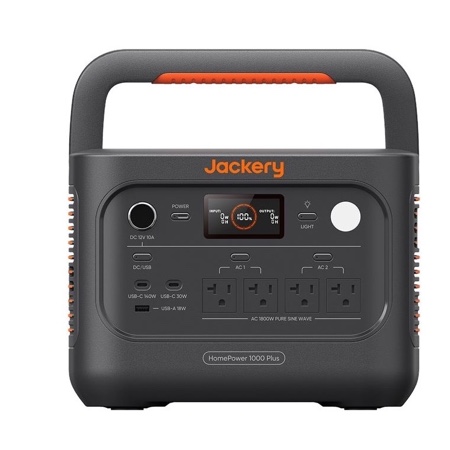
At a glance
- Type
- Battery
- Running Watts
- 1,800
- Peak Watts
- 3,600
- Fuel / Capacity
- 1,024 Wh, expands to 11 kWh
6. Jackery HomePower 1000 Plus v2: Best Battery Option for Job Sites
The HomePower 1000 Plus v2 is the battery option for people who need power they can carry. It weighs 23.8 lb and measures 12.4 x 7.9 x 9.2 inches, so it goes in a truck cab or up a ladder. Yet it is rated at 1,800 watts continuous with a 3,600 watt peak, and Jackery says it runs corded drills, hammer drills, angle grinders, chainsaws and table saws while also charging cordless tool batteries.
Capacity starts at 1,024 Wh and expands to 11 kWh with up to five Battery Pack 2000 Plus v2 add-ons, which turns it into a real home backup system when you need one. It recharges fast: 1,600 W from the wall for a full charge in about 50 minutes, up to 400 W of solar, 400 W from a vehicle alternator with a DC-DC charger, or straight from a gas generator. That makes it a good partner to any of the VEVOR generators above.
Output is pure sine wave, it runs under 30 dB in Silent Mode, and it switches to battery in under 10 ms if the grid drops, so computers and routers stay on. There is a 140 W USB-C port for laptops, 3 kV surge protection and LiFePO4 cells rated for 6,000 cycles. Jackery’s app adds power monitoring, time-of-use charging and load prioritization.
Key Features
- 1,024 Wh, expandable to 11 kWh
- 1,800 W continuous, 3,600 W peak
- 23.8 lb, 12.4 x 7.9 x 9.2 in
- AC charging 1,600 W, full in about 50 minutes
- Up to 400 W solar and 400 W alternator charging
- Pure sine wave, under 10 ms UPS switchover, under 30 dB
- 140 W USB-C, LiFePO4 6,000 cycles
What We Like
- Light enough to carry one-handed
- Runs corded power tools
- Very fast wall charging
- Expands into a home backup system
- Quiet enough for indoor use
What We Don’t Like
- The base unit’s 1,024 Wh runs out quickly under heavy tool loads, so all-day work needs add-on batteries or a recharge source.
Overall
The pick for contractors and anyone who wants portable battery power that can grow. For job sites, vans and short outages, the Jackery HomePower 1000 Plus v2 is light, quick to charge and easy to expand.
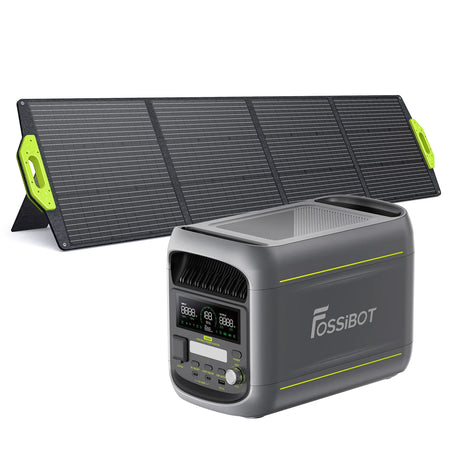
At a glance
- Type
- Battery + solar panel
- Running Watts
- 1,800
- Peak Watts
- Not listed
- Fuel / Capacity
- 1,024 Wh
7. FOSSiBOT F1800 Solar Generator Kit: Best Solar Generator Kit
Some people say solar generator and mean a power station plus panels in one box. The FOSSiBOT F1800 kit is exactly that: the F1800 power station bundled with a folding FOSSiBOT solar panel, with a choice of one 200 W panel, two 200 W panels or one 420 W panel. It is the simplest way to get backup power you can refill without a gas can.
The F1800 holds 1,024 Wh in EVE LiFePO4 cells rated for 4,000 cycles to 80 percent capacity and puts out 1,800 W, enough for a refrigerator, a microwave or a sump pump on a 120V circuit. It takes up to 500 W of solar, which FOSSiBOT says fills it in about 2 hours, and it charges from the wall in about 68 minutes at 1,200 W, from a gas generator, or from AC and solar together.
Seven output ports cover AC, USB and DC devices, a UPS function switches over in under 10 ms, and ECO mode prioritizes solar and battery power. An output memory feature turns your outlets back on after a low-battery shutdown, handy for a freezer overnight. The F1800 weighs 24.8 lb, the FOSSiBOT app shows its status, and it carries a 5-year full-device warranty. If you order a kit, the panels ship separately from the power station.
Key Features
- F1800: 1,024 Wh EVE LiFePO4, 4,000 cycles to 80%
- 1,800 W AC output, 7 output ports
- Kit options: 1 x 200 W, 2 x 200 W or 1 x 420 W solar panel
- Up to 500 W solar, about 2 hours to full
- About 68 minutes on 1,200 W AC; generator charging
- Under 10 ms UPS, ECO mode, output memory
- 24.8 lb, app control, 5-year warranty
What We Like
- Panels included, ready for long outages
- Fast solar and AC charging
- Runs a fridge or sump pump
- Restores outlets after shutdown
- Long warranty
What We Don’t Like
- It is 120V only, so it cannot run a 240V well pump or dryer.
Overall
The best pick if you want a ready-to-go solar generator for outages, camping and RVs. For 240V loads or a whole home, step up to the FOSSiBOT F7200.
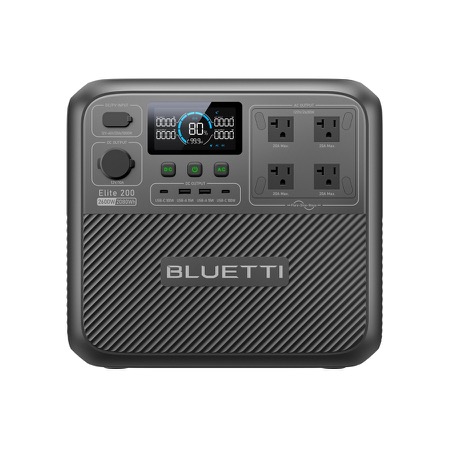
At a glance
- Type
- Battery
- Running Watts
- 2,600
- Peak Watts
- 3,900 (resistive loads)
- Fuel / Capacity
- 2,080 Wh
8. BLUETTI Elite 200 V2: Best Battery Generator for Fast Recharging
A battery generator is only useful in a long outage if you can refill it quickly between uses, from the wall when power flickers back or from solar during the day. The BLUETTI Elite 200 V2 takes up to 1,800 W from a wall outlet and reaches 80 percent in about 1.1 hours, with a full charge in about 1.4 hours, quicker than most 2 kWh battery units.
It stores 2,080 Wh in automotive-grade LiFePO4 cells and puts out 2,600 watts continuous, enough for a refrigerator, a sump pump, lights and a router at the same time. A power lifting mode runs pure resistive loads up to 3,900 watts, such as a kettle, an electric blanket or a hair dryer. It powers up to 9 devices at once.
Solar input reaches 1,000 W at 12 to 60 V, and it also charges from a car, or from AC and solar together. The battery management system watches the cells in real time, the BLUETTI app lets you check and control it from your phone, and BLUETTI backs it with a 5-year warranty.
Key Features
- 2,080 Wh LiFePO4 battery
- 2,600 W continuous output
- 3,900 W lifting mode for resistive loads
- 1,800 W AC input: 80% in about 1.1 hours
- Up to 1,000 W solar input
- Car and dual AC plus solar charging
- 5-year warranty
What We Like
- Fast wall recharge between outages
- Runs a fridge and sump pump together
- No fuel, fumes or noise from an engine
- Safe to run indoors
- Long warranty
What We Don’t Like
- It supplies 120 V only and cannot add expansion batteries, so it will not run 240 V loads or a whole house.
Overall
The best battery generator for people who want a mid-size backup they can refill fast between outages, from the wall or the sun.
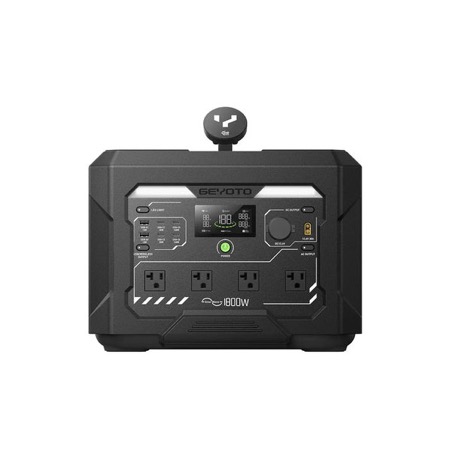
9. GEYOTO N1000 Portable Power Station: Best Compact Battery Alternative to a Gas Generator
If you mostly need to keep a refrigerator, lights, internet and phones going through an outage, a 1 kWh battery is often enough, and it can sit inside the house where a gas generator never can. The GEYOTO N1000 pairs a 1,024 Wh LiFePO4 battery with a 1,800 W pure sine wave inverter that surges to 3,000 W, so a fridge compressor starts without tripping it.
It has 13 outputs: four AC outlets, four USB-C ports sharing up to 140 W, two USB-A ports, a 12V car socket, a 378 W XT60 port and a 25 W wireless pad. Recharging runs up to 1,500 W from the wall and up to 800 W from solar panels, which matters in a multi-day outage when the grid is down. A UPS mode keeps a router or computer running through the switchover.
There is no fuel, no exhaust and no oil to change, and the cells are rated for 4,000 cycles with up to a 5-year warranty from GEYOTO. The trade-off against the VEVOR gas units is total energy: a full tank of gas outlasts 1,024 Wh many times over, so for whole-home backup the FOSSiBOT F7200 or a gas generator is still the better fit.
Key Features
- 1,024 Wh LiFePO4 battery, 4,000 cycles
- 1,800 W pure sine wave AC, 3,000 W peak
- 4 AC outlets, 4 USB-C (140 W max), 2 USB-A
- XT60 (378 W) and 12V car outputs, 25 W wireless pad
- 1,500 W AC charging, up to 800 W solar
- UPS backup mode, Wi-Fi and Bluetooth app
- 25.6 lb, 13.8 x 18.8 x 10.2 in
What We Like
- Safe to run indoors, no fumes or fuel
- Starts a fridge with 3,000 W surge
- Up to 800 W solar recharge in long outages
- Fast 1,500 W wall charging
- UPS mode for routers and PCs
What We Don’t Like
- 1,024 Wh will not carry a whole house through a long outage.
Overall
The pick for apartment dwellers and anyone who wants quiet, indoor backup for essentials instead of a gas generator.
Side-by-Side Comparison
| Generator | Type | Running Watts | Peak Watts | Fuel / Capacity | Runtime | Noise | Weight | Price |
|---|---|---|---|---|---|---|---|---|
| VEVOR 13500W Dual Fuel | Conventional, dual fuel | 9,000 (gas) / 8,100 (LPG) | 13,500 / 12,000 | 9.2 gal gas or propane | 9.5 h at half load | 85 dB at 23 ft | 234.8 lb | Check price |
| VEVOR 9625W Gas | Conventional, gas | 7,000 | 9,625 | 8.7 gal gas | 12 h at half load | 85 dB at 23 ft | 185.2 lb | Check price |
| VEVOR 10000W Inverter | Inverter, gas | 6,800 | 10,000 | 5.3 gal gas | 8.5 h at 50% load | Under 70 dB at 23 ft | 208.3 lb | Check price |
| VEVOR 4200W Dual Fuel Inverter | Inverter, dual fuel | 3,200 (gas) / 2,900 (LPG) | 4,200 | 2.3 gal gas or propane | 8.5 h at 50% load | Under 66 dB at 23 ft | 100.3 lb | Check price |
| FOSSiBOT F7200 | Battery, 120V/240V | 7,200 | 9,000 | 5,222 Wh, expands to 15.66 kWh | Depends on load | Not listed | Not listed (wheeled) | Check price |
| Jackery HomePower 1000 Plus v2 | Battery | 1,800 | 3,600 | 1,024 Wh, expands to 11 kWh | Depends on load | Under 30 dB | 23.8 lb | Check price |
| FOSSiBOT F1800 Solar Generator Kit | Battery + solar panel | 1,800 | Not listed | 1,024 Wh | Depends on load | Not listed | 24.8 lb (station) | Check price |
| BLUETTI Elite 200 V2 | Battery | 2,600 | 3,900 (resistive loads) | 2,080 Wh | Depends on load | Not listed | Not listed | Check price |
| GEYOTO N1000 | Battery | 1,800 | 3,000 | 1,024 Wh | Depends on load | Not listed | 25.6 lb | Check price |
Specs come from VEVOR, FOSSiBOT, Jackery, BLUETTI and GEYOTO. Runtime is each maker’s own figure; real runtime depends on load. Noise figures are measured at different distances by each maker, so compare the gas generators with each other and the battery units with each other.
How to Choose a Heavy Duty Portable Generator
Running Watts vs Starting Watts
Every generator has two watt ratings. Running (rated) watts is what it can supply continuously. Peak (starting or surge) watts is the short burst it can deliver for a second or two when a motor starts. Refrigerators, freezers, sump pumps, well pumps and air conditioners all draw two to three times their running watts for a moment at start-up, so size the generator so that your total running load fits under its running watts and your largest motor’s start-up surge fits under its peak.
Typical running watts for common outage loads: refrigerator 700 to 800, chest freezer 500 to 700, sump pump (1/2 hp) 1,000 to 1,050, furnace blower (1/2 hp) 800, well pump (1 hp) 1,000 to 1,500, window air conditioner (10,000 BTU) 1,200, microwave 1,000, lights and electronics a few hundred. Add up what you must run at the same time, add the start-up surge of the biggest motor, and leave 20 percent of headroom. Most homes land between 5,000 and 9,000 running watts for essentials; whole-house backup with central air needs far more.
Gas, Propane or Dual Fuel
Gasoline is easy to find but goes stale in a few months without stabilizer, and stations may close in a widespread outage. Propane stores for years, burns cleaner and is easy to keep on hand in 20 lb tanks, but it produces about 10 percent less power, as the VEVOR 13500W’s specs show (13,500 peak watts on gas versus 12,000 on propane). Dual-fuel generators let you run either, which is the most flexible choice for long outages. A 20 lb propane tank generally runs a mid-size generator for several hours at half load, so plan on several tanks for a multi-day outage.
Inverter vs Conventional
Conventional generators run the engine at a fixed speed and produce power directly from the alternator. They are cheaper per watt and make the most power, but they are louder and their output is rougher. Inverter generators convert the power electronically into a clean, stable sine wave, and they can throttle the engine down at light loads, which saves fuel and noise. For computers, smart TVs, modern furnaces with electronic controls and medical devices, inverter power or a generator with AVR and low distortion is the safer choice.
Connecting to Your House
Never plug a generator into a wall outlet to backfeed the house. It can electrocute utility workers and destroy the generator when power returns. The safe options are heavy extension cords run to individual appliances, or a licensed electrician installing a manual transfer switch or an inlet box with an interlock on your main panel. Match the generator’s outlet to the inlet: 30 amp twist-lock generators like the VEVOR 9625W pair with 30 amp inlets, and 50 amp generators like the VEVOR 13500W pair with 50 amp inlets. For cord runs, use outdoor-rated cords of the right gauge; our guide to 100 ft heavy duty extension cords explains which gauge to use for long runs.
Battery Power Stations vs Gas Generators
Battery generators like the FOSSiBOT and Jackery units here are silent, produce no exhaust and can run indoors, which makes them ideal for apartments, overnight use and keeping internet and medical devices on. Their limit is stored energy: once the battery is empty, you need sun, a wall outlet or a generator to recharge. For long outages, a folding panel such as the Renogy 220W portable solar suitcase can refill a battery station during the day with no fuel at all. Gas and propane generators can run as long as you have fuel. Many households pair the two: a gas generator outside runs for a few hours a day, and a battery station charged from it carries the house quietly overnight. For more battery options, see our guides to portable power stations and Jackery power stations compared.
Generator Safety: Carbon Monoxide and Placement
Portable generators produce carbon monoxide, an odorless gas that can kill within minutes. Run a generator outdoors only, at least 20 feet from the house, with the exhaust pointed away from doors, windows and vents. Never run one in a garage, basement, shed or carport, even with the door open. Install battery-powered CO alarms inside the house. All four VEVOR generators here have CO sensors that shut the engine down when levels rise, which is a useful backstop, not a replacement for safe placement.
Keep the generator dry under an open canopy or generator tent, never under an enclosed cover. Let it cool before refueling, store fuel away from the house, and change the oil after the first few hours of break-in and then at the intervals in the manual. Run it for 15 to 20 minutes every month or two so it starts when you need it. If you plan to heat with propane during outages, our guide to portable propane heaters covers heaters with low-oxygen shutoff.
A Scenario Worth Knowing About
Picture a family in a rural house on a private well during a three day ice storm outage. They own a 3,500 watt camping generator from years of tailgating. It runs the refrigerator and a few lights, but the 240V well pump will not start on it, so there is no running water and no toilet flushing. The basement sump pump also has to share the small generator with the fridge, and they spend the night unplugging one to run the other.
The fix is sizing to the real loads. A 1 hp well pump alone can need several thousand watts to start, and it needs 240V. A generator like the VEVOR 9625W with a 30 amp twist-lock, connected through an electrician-installed transfer switch, runs the well pump, sump pump, refrigerator, furnace blower and lights together. Add a battery station like the Jackery HomePower 1000 Plus v2 to keep the router and phones charged quietly overnight, and the family could have ridden out that storm with water, heat and a working kitchen.
Frequently Asked Questions
What size generator do I need to run a house?
For essentials like a refrigerator, freezer, sump pump, furnace blower, lights and electronics, most homes need about 5,000 to 9,000 running watts. To add a well pump, central air or an electric water heater, look at 9,000 running watts or more with 240V output, like the VEVOR 13500W Dual Fuel.
Is a dual fuel generator worth it?
For home backup, usually yes. Dual fuel lets you run on propane, which stores for years, when gasoline is scarce or stale. You give up about 10 percent of power on propane, but you gain flexibility in a long outage.
Can I run a generator in my garage with the door open?
No. Carbon monoxide builds up quickly in garages and can seep into the house. Run portable gas generators outdoors only, at least 20 feet from the house with the exhaust pointed away. Battery generators like the FOSSiBOT and Jackery units here are the safe choice for indoor use.
What is the difference between running watts and peak watts?
Running watts is the power a generator supplies continuously. Peak watts is the short burst it can deliver for a second or two when motors start. Size your generator so your total running load fits under its running watts and your biggest motor’s start-up surge fits under its peak watts.
Do I need a transfer switch for a portable generator?
If you want to power hardwired loads like a furnace, well pump or sump pump, yes. A licensed electrician can install a manual transfer switch or an inlet box with an interlock. It is the only safe way to feed your house wiring; never backfeed through a wall outlet.
Are battery power stations as good as gas generators?
For quiet, indoor, fume-free backup of essentials, battery stations are better. For long outages and high loads like well pumps and central air, gas and propane generators can run as long as you have fuel. Many people own both and charge the battery from the generator.
The Bottom Line
For most homes, the VEVOR 13500W Dual Fuel is the heavy duty portable generator to buy: 9,000 running watts, a 50 amp outlet for a transfer switch and the choice of gasoline or propane. If your essentials fit under 7,000 running watts, the VEVOR 9625W gives you a 30 amp twist-lock and 12 hours at half load for less weight. For clean, quieter power, the VEVOR 10000W Inverter is the one, and the 4200W Dual Fuel Inverter covers RVs and camping.
If you want backup with no fuel and no fumes, the FOSSiBOT F7200 covers 240V circuits and a whole house’s essentials, the Jackery HomePower 1000 Plus v2 carries tools to the job site and expands when you need more, the FOSSiBOT F1800 Solar Generator Kit refills from the sun, and the BLUETTI Elite 200 V2 recharges from the wall in about 1.4 hours. Whichever you choose, size it to your real loads, connect it through a transfer switch and keep it outside, well away from the house.