A plastic hoop house is great from April to October. In January, with a foot of snow on the roof and the wind out of the north, it is a different story. A heavy duty greenhouse for winter needs rigid walls that hold heat overnight, a frame that stays put in a storm, and enough ventilation that a sunny afternoon does not cook everything inside. That usually means polycarbonate panels on a metal frame, plus a reliable heater for the coldest nights.
We rebuilt this guide around VEVOR’s US range of polycarbonate greenhouses and greenhouse heaters. The three picks cover an 8 x 10 foot walk-in, a compact 6 x 4 for a patio or small yard, and a 1500 watt PTC heater with a fan to keep frost out. We will add more brands to this page as we review them.
One thing to know before you buy: VEVOR’s own notes on these kits say to close the doors and vents in windy or snowy weather to keep the greenhouse from tipping. That is a light-duty structure by building standards. Placed well, anchored to a proper base and kept clear of heavy snow, it will protect plants through winter. Left loose on open ground in a snow belt, it will not. The buying guide below explains how to set one up for the cold.
Our Quick Picks
Best Overall
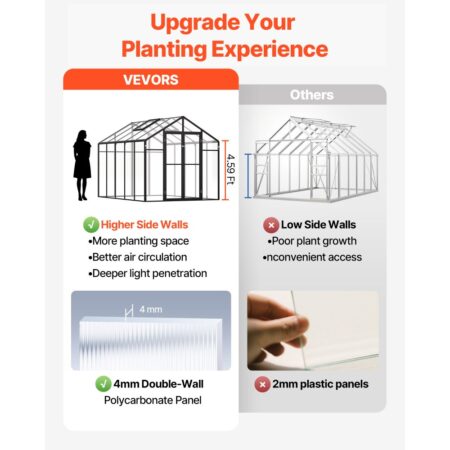
VEVOR 8 x 10 ft Polycarbonate Greenhouse
7.87 x 9.48 x 6.76 ft · Polycarbonate, 89% light · Hinged
Check Price at VEVORRead the reviewBest Compact Winter Greenhouse
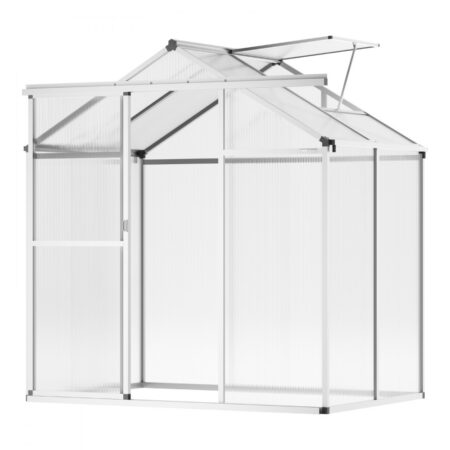
VEVOR 6 x 4 ft Polycarbonate Greenhouse
6.06 x 4.13 x 6.33 ft · 3.6 mm polycarbonate · Sliding
Check Price at VEVORRead the reviewBest Greenhouse Heater
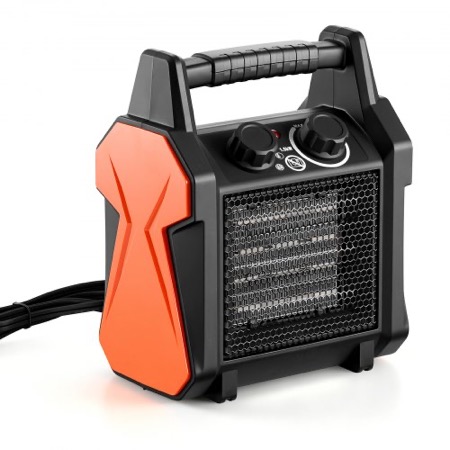
VEVOR 1500W PTC Greenhouse Heater With Fan
8.27 x 5.12 x 10.24 in · Not applicable · Not applicable
Check Price at VEVORRead the reviewBest Heavy Duty Greenhouses for Winter: Full Reviews
At a glance
- Size
- 7.87 x 9.48 x 6.76 ft
- Panels
- Polycarbonate, 89% light
- Door
- Hinged
- Ventilation
- 2 roof vents
1. VEVOR 8 x 10 ft Polycarbonate Greenhouse: Best Overall
If you want a greenhouse you can actually work in through the winter, this is the one to aim for. It measures 7.87 x 9.48 x 6.76 feet, which leaves room for benches on both sides and a center aisle where you can stand upright, but still fits comfortably into a typical suburban yard or beside a garage. It is large enough to overwinter citrus, figs and pots of herbs while starting seedlings in late winter.
The frame is thickened black aluminum held together with stainless steel screws, with two adjustable roof vents and a large hinged door. VEVOR lists 89 percent light transmittance for the polycarbonate panels and rates them from minus 40 to 257 degrees Fahrenheit. Ground stake clips come in the box, though a proper base gives the best results.
The kit ships in two boxes of about 59 and 33 lb. Any polycarbonate greenhouse is a real build, so if you are not mechanically inclined, plan for help. In short: good value, demanding assembly.
Key Features
- 7.87 x 9.48 x 6.76 ft walk-in space
- Polycarbonate panels with 89 percent light transmittance
- Thickened aluminum frame with stainless steel screws
- Two adjustable roof vents
- Large hinged door
- Panels rated from minus 40 to 257 F
- Model AM035
What We Like
- Walk-in space in a smaller footprint
- Rigid aluminum frame will not rust or rot
- Good light levels for winter growing
- Two roof vents release heat on sunny days
- Easy to fit beside a garage or fence
What We Don’t Like
- Assembly is slow and fiddly, so check every part on arrival.
Overall
For most gardeners who want to grow through the cold months, the 8 x 10 is the one to buy. Put it on a level timber or block base, anchor it, and it gives you a real winter growing room without taking over the yard.
VEVOR Black Friday
Up to 50% off, plus an extra 8% with code VVOTD (Nov 19 to Nov 30).
At a glance
- Size
- 6.06 x 4.13 x 6.33 ft
- Panels
- 3.6 mm polycarbonate
- Door
- Sliding
- Ventilation
- 1 roof vent, 3 settings
2. VEVOR 6 x 4 ft Polycarbonate Greenhouse: Best Compact Winter Greenhouse
Not everyone has room for a full walk-in. This 6.06 x 4.13 x 6.33 foot greenhouse fits on a patio, against a south-facing wall or in a corner of a small yard, and is still tall enough to step into. It is ideal for overwintering a handful of tender perennials, keeping herbs going and starting seed trays in late winter.
The polycarbonate is 3.6 mm thick. The panels carry a UV coating and the same 89 percent light transmittance and minus 40 to 257 degree Fahrenheit rating as the 8 x 10. Instead of a hinged door, it has a sliding door measuring 1100 x 1645 mm (about 43 x 65 inches), plus a single roof vent of 600 x 620 mm with three settings and a rain gutter that collects water.
It ships in two boxes of about 28 and 13 lb, so one person can manage it, and one person can build it alone over a few afternoons. The large lower panels are the weak point in winter, so clear snow and anchor it well. Small greenhouses heat and cool quickly, so this one benefits most from a thermostat-controlled heater on cold nights.
Key Features
- 6.06 x 4.13 x 6.33 ft footprint
- 3.6 mm polycarbonate panels
- Aluminum frame
- Sliding door, about 43 x 65 in
- Roof vent with 3 settings
- Rain gutter for collecting water
- Iron stakes and anchoring accessories, model SNG190-2
What We Like
- Fits patios and small yards
- Light enough for one person to assemble
- Sliding door saves space
- Rain gutter is a useful extra
- Quick to heat with a small heater
What We Don’t Like
- The lower panels are vulnerable in winter, so it needs careful snow and wind management.
Overall
For a small space, this is the most practical way to keep plants alive through winter. Set it against a sheltered south wall and pair it with a heater for the coldest nights.
At a glance
- Size
- 8.27 x 5.12 x 10.24 in
- Panels
- Not applicable
- Door
- Not applicable
- Ventilation
- Heat and fan modes, 99 CFM
3. VEVOR 1500W PTC Greenhouse Heater With Fan: Best Greenhouse Heater
Polycarbonate holds heat well during the day, but on a clear winter night the temperature inside an unheated greenhouse can fall close to the outside temperature. A heater is what keeps it above freezing. This VEVOR unit is a 1500 watt, 120 volt PTC heater sold for small greenhouses, grow tents and flower rooms, with a fan that pushes 99 CFM (169 cubic meters per hour) at up to 3 m/s through a wide outlet so the warmth spreads past the front of the heater.
It has a heating mode with low and high settings and a fan-only mode for moving air in warmer months. Safety features are an overheat shutoff that cuts power if the inside gets too hot, a tip-over switch that shuts it off if it is knocked over, and a flame-retardant PP housing. At 3.1 lb and 8.27 x 5.12 x 10.24 inches, it sits on a bench or the floor and moves easily by its handle, and the base has extra grip.
There is no adjustable thermostat. It runs on low or high until you switch it off, so for unattended frost protection plug it into a separate plug-in thermostat controller rated for its 1500 W load. Like any space heater, it needs a dedicated, properly rated circuit.
Key Features
- 1500W PTC heating element, 120V
- Low and high heat settings
- Fan-only mode for air circulation
- 99 CFM airflow, 3 m/s maximum air speed
- Overheat shutoff and tip-over shutoff
- Flame-retardant PP housing
- 3.1 lb, model BGP2001-15
What We Like
- Very light and easy to move between spaces
- Tip-over shutoff for a busy bench or floor
- Fan mode is useful in summer
- Wide outlet spreads heat beyond the vent
- Small enough for a 6 x 4 greenhouse or grow tent
What We Don’t Like
- No adjustable thermostat, so it needs a separate plug-in thermostat controller to hold a set temperature.
Overall
If you plan to grow through freezing nights, budget for a heater like this from the start, along with a thermostat controller. It turns a cold frame into a true winter greenhouse.
Side-by-Side Comparison
| Model | Size | Panels | Door | Ventilation | Shipping Weight | Price |
|---|---|---|---|---|---|---|
| VEVOR 8 x 10 ft | 7.87 x 9.48 x 6.76 ft | Polycarbonate, 89% light | Hinged | 2 roof vents | About 59 + 33 lb | Check price |
| VEVOR 6 x 4 ft | 6.06 x 4.13 x 6.33 ft | 3.6 mm polycarbonate | Sliding | 1 roof vent, 3 settings | About 28 + 13 lb | Check price |
| VEVOR 1500W PTC heater | 8.27 x 5.12 x 10.24 in | Not applicable | Not applicable | Heat and fan modes, 99 CFM | 3.1 lb | Check price |
Specs are VEVOR’s own figures at the time of writing. Greenhouse kits ship in two packages, frame and panels.
Why Polycarbonate Is the Winter Choice
Most low-cost greenhouses use a polyethylene film cover over a steel hoop frame. Film is light and cheap, and it works well from spring to autumn, but a single layer loses heat quickly at night and can tear or flap in winter wind. Rigid polycarbonate panels are stiffer, resist hail and impacts, and when they are twin-wall, the air gap between the layers acts as insulation.
Glass lets in the most light, but it is heavy, breakable and needs a stronger frame. For a backyard winter greenhouse, polycarbonate is the practical middle ground: good light, better insulation than film, and panels you can replace one at a time if one cracks. If you prefer a tunnel for the growing season, see our guide to high tunnel greenhouses.
Setting Up a Greenhouse for Winter
Build a Proper Base
The base matters more than anything else. A level foundation of pressure-treated timber, concrete blocks or pavers on compacted gravel keeps the frame square, which matters for fitting the panels and for keeping them from popping out in wind. It also gives you something solid to screw the frame to. Fixing brackets at every wall post into a timber perimeter is far stronger than ground clips alone.
Choose a Sheltered, Sunny Spot
In winter, sunlight is limited, so put the long side of the greenhouse facing south where you can. Shelter matters just as much: a spot beside a fence, hedge or building that blocks the prevailing wind will lose less heat and be far less likely to suffer wind damage. Avoid places where snow slides off a roof or where branches can fall.
Seal and Insulate
Check that every panel is seated and that the door closes snugly. On very cold nights, a layer of horticultural bubble wrap fixed inside the panels adds insulation while still letting light through. Water barrels painted black and placed along the north wall soak up heat during the day and release it overnight.
Heating a Winter Greenhouse Safely
A thermostat-controlled electric heater is the simplest choice for a backyard greenhouse. Set the thermostat a few degrees above freezing for frost protection, or higher if you are growing tender plants. The VEVOR heater on this page has low and high heat settings but no adjustable thermostat, so plug it into a plug-in thermostat controller rated for at least 1500 W if you want it to cycle on and off by itself. Keep any heater away from water and plant debris, and plug it into a properly rated outdoor circuit with GFCI protection.
How Much Heater Do You Need?
Heat loss depends on the surface area of the walls and roof, how well the panels insulate and how cold it gets outside, not just on floor space. A small 6 x 4 polycarbonate greenhouse loses heat quickly but has little air to warm, so a 1500 W heater on its low setting is usually enough for frost protection. A walk-in 8 x 10 has far more glazing, and on the coldest nights one 1500 W heater may only hold it a few degrees above freezing rather than at growing temperatures.
If you need more than frost protection in a walk-in, cut heat loss before adding heat: bubble wrap on the inside of the panels, weatherstripping around the door and vents, and black water barrels along the north wall. A heater running on a standard 15 amp household circuit should be the only large load on that circuit, so plan the power supply before the first cold night.
- Run a dedicated outdoor-rated circuit or a heavy duty cord rated for the heater’s load, such as our pick of heavy duty extension cords.
- Place the heater on a stable, level surface away from walls, panels and plant material.
- Use a thermometer at plant height to check that the heater is keeping the whole space warm.
- Open a vent briefly on sunny days to release humidity, which reduces mold and disease.
- Do not use unvented fuel heaters inside a closed greenhouse without proper ventilation.
For bigger heated spaces such as a garage workshop, our guides to electric garage heaters and ceramic space heaters cover more powerful options.
Snow and Wind Care
Light-duty greenhouse kits are not designed to carry heavy snow. Brush snow off the roof with a soft broom after each storm, working from the outside so you do not push panels in. Never let ice build up on the roof. In high wind, close the door and vents, as VEVOR advises, so wind cannot get inside and lift the structure. After a storm, check that panels are still seated and that the frame is square.
A good snow shovel or pusher helps you keep a clear path to the door, and an insulated tarp can protect plants and soil bags stored nearby.
What to Grow in a Winter Greenhouse
In an unheated or lightly heated greenhouse, cold-hardy crops do best: spinach, kale, lettuce, chard, mache, arugula, scallions and herbs like parsley and cilantro. With a heater keeping it above freezing, you can overwinter citrus, figs, geraniums and other tender perennials, and start tomato and pepper seedlings in late winter for spring planting. Raised beds or staging benches keep pots off the cold ground, which helps roots stay warmer.
A Scenario Worth Knowing About
Here is a common winter failure. A gardener builds a new 8 x 10 polycarbonate greenhouse in autumn, sets it straight on the lawn with the supplied ground clips and fills it with potted citrus. In December, a storm drops wet snow overnight and the wind picks up. By morning, snow has piled on the roof, a couple of roof panels have bowed and popped out, and the cold has reached the plants.
The fix is mostly done before winter starts. Build the greenhouse on a level timber or block base and screw the frame to it. Brush snow off the roof during and after storms rather than waiting until morning. Close the door and vents before high winds. And put a thermostat-controlled heater inside, set a few degrees above freezing, so a cold snap does not undo a season of growing.
Frequently Asked Questions
Can you use a polycarbonate greenhouse in winter?
Yes. Polycarbonate panels, especially twin-wall panels, hold heat better than film and stand up to cold. VEVOR rates its panels from minus 40 to 257 degrees Fahrenheit. Light-duty kits still need a solid base, wind anchoring and snow clearing.
Do I need a heater in a winter greenhouse?
For cold-hardy greens, not always. To keep tender plants alive or start seedlings during freezing weather, yes. A thermostat-controlled electric heater rated for damp locations is the simplest option.
How warm does a greenhouse stay in winter without heat?
On sunny days it can be much warmer than outside, even in November. On clear nights an unheated greenhouse can drop close to the outside temperature, which is why a heater or thermal mass helps.
How do I stop a greenhouse from blowing over?
Build it on a level base, screw the frame to that base, add ground anchors and close the door and vents during high winds. Choose a sheltered spot when you can.
How thick should greenhouse polycarbonate be for winter?
Thicker twin-wall panels insulate better. VEVOR’s 6 x 4 kit uses 3.6 mm panels. Commercial winter greenhouses often use thicker panels still.
What size greenhouse should I buy for winter growing?
A walk-in around 8 x 10 or 8 x 12 feet gives room for benches and working space. Smaller greenhouses heat up and cool down faster, so a compact model benefits most from a thermostat-controlled heater.
The Bottom Line
For most gardeners, the VEVOR 8 x 10 ft polycarbonate greenhouse is the winter greenhouse to buy. It has room to stand and work, polycarbonate panels with 89 percent light transmittance, two roof vents and an aluminum frame that will not rust, in a footprint that fits most yards. The 6 x 4 is the practical choice for patios and small yards.
Whichever you choose, the setup decides how well it survives winter: a level, anchored base, a sheltered sunny spot, snow cleared promptly and steady heat on freezing nights. The VEVOR 1500W PTC heater supplies that heat, and a plug-in thermostat controller lets it hold a set temperature on its own. Get those right and you can keep growing straight through the cold season.