Every fall the same thing happens: leaves pile up faster than a cheap plastic rake can move them, the tines snap on the first wet clump, and you spend more time bending to scoop leaves into bags than actually raking. A heavy duty rake, and a smarter way to bag what you rake, turns a weekend chore into an afternoon job.
This guide covers the best heavy duty garden leaf rakes for real yard cleanup: a GreatBuddy rake and leaf bag combo, a 30 inch VEVOR lawn leveling rake for smoothing the lawn after cleanup, and a 36 inch VEVOR aluminum landscape rake for big lawns, gravel and pond edges. We will add more brands as we review them. The buying guide below covers tine type, head width, handle length and the technique that saves your back.
Our Quick Picks
Best Overall Leaf Cleanup Kit
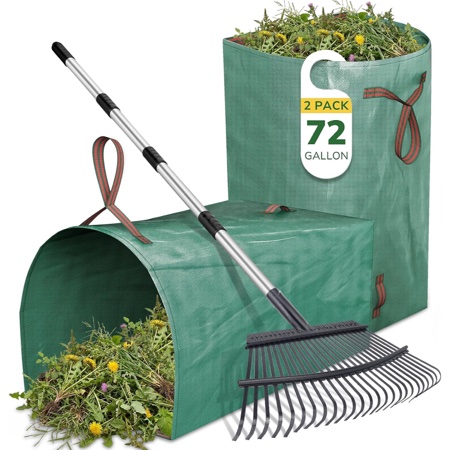
GreatBuddy Leaf Rake and Leaf Bags Combo (25 Tines, 2 x 72 Gallon Bags)
Standard leaf rake head · 25 metal · 29 to 72 in, stainless steel
Check Price on AmazonRead the reviewBest for Leveling and Topdressing After Cleanup
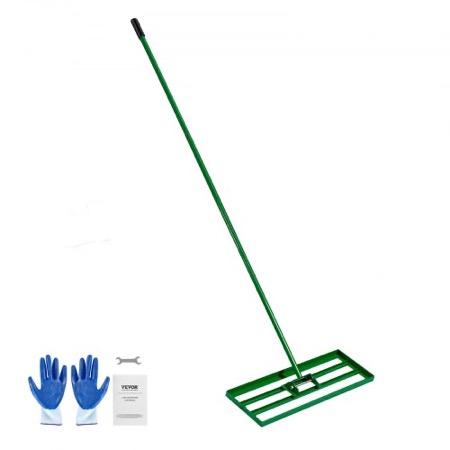
VEVOR 30 x 10 Inch Lawn Leveling Rake (78 Inch Steel Handle)
30 in · None, flat frame · 78 in, steel
Check Price at VEVORRead the reviewBest Wide Rake for Big Lawns, Gravel and Ponds
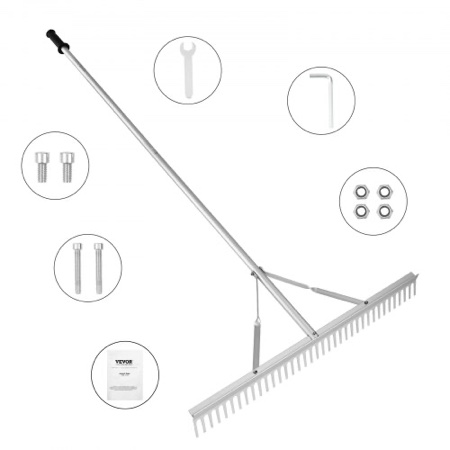
VEVOR 36 Inch Aluminum Landscape Rake (75 Inch Handle)
36 in · 37 aluminum · 75 in, aluminum
Check Price at VEVORRead the reviewBest Heavy Duty Garden Leaf Rakes: Full Reviews
At a glance
- Head width
- Standard leaf rake head
- Tines
- 25 metal
- Handle
- 29 to 72 in, stainless steel
- Extras
- 2 x 72 gal dustpan leaf bags
1. GreatBuddy Leaf Rake and Leaf Bags Combo (25 Tines, 2 x 72 Gallon Bags): Best Overall Leaf Cleanup Kit
Raking is only half the job. The other half is getting a pile of leaves into something without scooping handful after handful. This GreatBuddy kit solves both: an adjustable 25-tine metal leaf rake plus two 72 gallon reusable leaf bags, so you can rake and bag in one pass.
The bags are the clever part. Each one stands up on its own for hands-free filling, or lays flat to act as a giant dustpan, so you rake leaves straight into the opening without bending. GreatBuddy makes them from tear-resistant PP fabric with carry handles, and they fold flat for storage when the season ends.
The rake itself has an aluminum-coated metal head with 25 tines and a stainless steel handle that sets to four lengths: 29, 43, 57 or 72 inches. The short setting reaches under shrubs and into flower beds, and the full length lets taller people rake upright. It comes apart quickly to store in a shed or car trunk.
Key Features
- 25-tine metal leaf rake with aluminum-coated head
- Stainless steel handle, 4 lengths: 29, 43, 57, 72 in
- 2 reusable 72 gallon leaf bags
- Bags stand up for filling or lay flat as a dustpan
- Tear-resistant PP fabric bags with handles
- Rake comes apart for storage
- Bags fold flat
What We Like
- Rake and bags in one kit
- Dustpan bags mean far less bending
- Handle adjusts for short or tall users
- Reusable bags replace paper and plastic
- Stores compactly
What We Don’t Like
- A metal tine rake is louder and less forgiving on delicate beds than a plastic one.
Overall
The best all-in-one leaf cleanup kit for most yards. Its adjustable handle also makes it a good everyday rake for beds and borders long after the leaves are bagged.
VEVOR Black Friday
Up to 50% off, plus an extra 8% with code VVOTD (Nov 19 to Nov 30).
At a glance
- Head width
- 30 in
- Tines
- None, flat frame
- Handle
- 78 in, steel
- Extras
- Gloves and wrench
2. VEVOR 30 x 10 Inch Lawn Leveling Rake (78 Inch Steel Handle): Best for Leveling and Topdressing After Cleanup
Once the leaves are off the lawn, fall is the best time to fix what they were hiding: low spots, bumps and thin patches. A lawn leveling rake is the tool for that job. Instead of tines, it has a flat 30 by 10 inch frame that you push and pull across the grass to spread topdressing, sand or compost evenly and fill dips without burying the turf.
The frame is welded all the way around to the handle rather than spot welded, so it holds up to being dragged through heavy, damp soil. The ground plate is 2.5 mm thick, and the 78 inch handle is Q235 steel in three screw-in sections with a slip-proof rubber grip. The head turns 180 degrees, so you can work in both directions without lifting and flipping the plate at the end of each pass.
It suits overseeding season well: rake up the leaves, spread a thin layer of compost or sand, then work it into the low spots with this leveler before you seed. It also smooths soil for new beds and levels sand under pavers or a play area. It comes with gloves and a wrench, and the handle comes apart for storage. It is not a leaf rake, so pair it with one of the GreatBuddy rakes or the wide VEVOR rake for the leaves themselves.
Key Features
- 30 x 10 in leveling frame, 2.5 mm plate
- 78 in Q235 steel handle, 3 screw-in sections
- Full welds between frame and handle
- 180 degree rotating head for back-and-forth passes
- Slip-proof rubber grip
- Spreads topdressing, sand, soil, compost and moss
- Model LJY9001, gloves and wrench included
What We Like
- Fills low spots after fall cleanup
- Wide plate covers ground quickly
- Sturdy welded frame
- Works both directions without lifting
- Breaks down for storage
What We Don’t Like
- It levels material rather than gathering it, so it does not replace a leaf rake.
Overall
The best add-on for anyone who topdresses, overseeds or fixes bumpy turf after the leaves are gone. Use it with a leaf rake, not instead of one.
3. VEVOR 36 Inch Aluminum Landscape Rake (75 Inch Handle): Best Wide Rake for Big Lawns, Gravel and Ponds
For a big lawn, a long driveway edge or a beach of gravel, an 18 inch leaf rake takes forever. The VEVOR landscape rake has a 36 inch aluminum head with 37 teeth, double the width, so each pull moves far more leaves, thatch, gravel or soil.
It is all aluminum alloy, so the whole tool weighs just 3.53 lb despite the wide head and the 75 inch handle. That long handle lets you rake upright across open ground, and it reaches out into a pond or lake edge to pull weeds and floating debris, which VEVOR designs it for alongside lawn care and soil work.
The teeth are 0.14 inch thick, stiffer than a typical leaf rake, so it handles packed leaves, mulch spreading and loosening topsoil. It assembles in a few steps. The trade-off is maneuverability: a 36 inch head is too wide for flower beds and tight spaces, where the GreatBuddy rake works better.
Key Features
- 36 in aluminum head, 37 teeth
- 0.14 in thick teeth
- 75 in handle
- All aluminum alloy, 3.53 lb
- Rakes leaves, thatch, gravel and soil
- Reaches into ponds and lake edges for weeds
- Model CY-SF13, quick assembly
What We Like
- Twice the width of a standard leaf rake
- Very light for its size
- Stiff teeth handle packed debris
- Long reach for ponds and slopes
- Works for spreading mulch and gravel
What We Don’t Like
- Its 36 inch head is too wide for flower beds and tight spaces.
Overall
The best rake here for big lawns, gravel and pond edges. Use a GreatBuddy rake for beds and borders.
Side-by-Side Comparison
| Rake | Head width | Tines | Handle | Extras | Best for | Price |
|---|---|---|---|---|---|---|
| 1. GreatBuddy rake and bags combo | Standard leaf rake head | 25 metal | 29 to 72 in, stainless steel | 2 x 72 gal dustpan leaf bags | Raking and bagging in one go | Check price |
| 2. VEVOR 30 x 10 in lawn leveling rake | 30 in | None, flat frame | 78 in, steel | Gloves and wrench | Leveling and topdressing | Check price |
| 3. VEVOR 36 in landscape rake | 36 in | 37 aluminum | 75 in, aluminum | None | Big lawns, gravel, pond edges | Check price |
Specs come from GreatBuddy and VEVOR.
How to Choose a Heavy Duty Leaf Rake
Metal, plastic or bamboo tines
Metal tines last the longest and handle wet, heavy leaves without snapping, which is why we focus on them here. Plastic tines are quieter and gentler on delicate beds but can crack in cold weather. Bamboo is light and traditional but wears out fastest. For a heavy duty rake, look for spring-steel or coated metal tines with flat, thin tips that slide under leaves.
Head width
A wider head moves more leaves per stroke. Around 18 inches is a good all-round width for lawns, beds and borders. Wide landscape rakes of 30 to 36 inches clear open ground fastest but are clumsy around plants. Many homeowners own one of each.
Handle length and material
An adjustable handle lets short and tall users rake upright, which saves your back, and shortens for work under shrubs. Stainless steel and aluminum resist rust and stay light. A handle around 1 inch in diameter gives a solid grip without tiring your hands.
Bagging and collecting
Raking is often the easy part. Reusable stand-up leaf bags, especially ones that lay flat as a dustpan, cut the bending and scooping that makes fall cleanup so tiring. A tarp works too: rake leaves onto it and drag the whole pile to the curb or compost.
Types of Rakes Explained
- Leaf rake: a fan-shaped head with long, springy tines for gathering leaves and grass clippings without tearing up turf. The GreatBuddy rake here is a leaf rake.
- Landscape rake: a wide, straight head with short, stiff teeth for leveling soil, spreading gravel or mulch and clearing big open areas. The VEVOR rake is this type.
- Bow rake: short, rigid steel tines on a bow-shaped frame for breaking up soil, moving rocks and spreading heavy material. It is too aggressive for leaves on a lawn.
- Lawn leveling rake: a flat steel frame instead of tines, pushed and pulled to spread topdressing, sand or soil evenly and fill low spots. The VEVOR leveler here is this type.
- Thatch rake: sharp blades that cut and pull dead thatch out of a lawn in spring or fall. It is a lawn repair tool, not a leaf tool.
- Shrub rake: a narrow leaf rake, around 8 inches wide, that reaches between plants and under shrubs. A leaf rake with a short handle setting covers much of this job.
Leaf Rake or Leaf Blower?
A leaf blower is faster on a big, flat, open lawn, but it is loud, needs fuel or batteries, and tends to scatter leaves rather than gather them neatly. It also struggles with wet, matted leaves, which a metal rake handles fine.
A good rake is quiet, needs no power, works in any weather and gives you more control around beds, decks and fences. Many homeowners use both: a blower to push leaves off patios and out of beds, then a rake and dustpan bags to gather and bag them. For small and medium yards, a heavy duty rake on its own is usually enough.
Caring for Your Rake
- Clean after use: knock off wet leaves and soil so they do not hold moisture against the tines.
- Dry before storing: let the rake dry before putting it away, even if the handle and head resist rust.
- Hang it up: store rakes hanging or head-up so the tines do not bend under their own weight or get stepped on.
- Check the joints: tighten screw-together handle sections at the start of each season so they do not loosen mid-job.
- Empty and dry bags: shake out reusable leaf bags and let them dry fully before folding, which prevents mildew.
Raking Technique That Saves Your Back
- Rake dry leaves: wet leaves weigh far more and stick together. Rake after a dry afternoon if you can.
- Stand tall: set the handle long enough that you rake with your arms and shoulders, not by bending at the waist.
- Switch sides: alternate your lead hand every few minutes to spread the work across both sides of your body.
- Work with the wind: rake downwind and into rows, then into piles, instead of fighting gusts.
- Bag or tarp in place: bring the bag or tarp to the pile instead of carrying leaves across the yard. A heavy duty wheelbarrow helps for big loads.
What to Do With All Those Leaves
Leaves are a free resource. Shredded leaves make excellent mulch for beds and a great brown layer for compost, and they break down far faster than whole leaves. One of our electric leaf mulchers can reduce a pile of leaves to a fraction of its size. Spread shredded leaves around shrubs and perennials, under a layer of weed barrier fabric or behind tidy landscape edging, and they protect roots through winter and feed the soil in spring.
If you bag leaves for pickup, check your town’s rules. Many require paper yard waste bags or reusable containers rather than plastic, which is another reason reusable leaf bags make sense.
A Scenario Worth Knowing About
Picture a homeowner with a half-acre lot and three big maples who buys a cheap plastic rake and a box of plastic bags. By the second weekend the rake has lost four tines on wet leaves, every bag means kneeling to scoop leaves by hand, and the job still is not done when the next windstorm drops another layer.
A metal 25-tine rake with an adjustable handle, a wide aluminum rake for the open lawn, and stand-up dustpan bags turn the same job into a few focused hours. Matching the rake to the space, a wide head for open ground and a narrower one for beds, and bagging in place, is what makes fall cleanup manageable.
Frequently Asked Questions
What makes a leaf rake heavy duty?
Metal tines that do not snap on wet leaves, a rust-resistant handle that does not bend, and a solid connection between head and handle. Adjustable handles and wider heads add comfort and speed.
Is a metal rake bad for my lawn?
Not if the tines have flat, flexible tips and you rake with light strokes. Metal rakes are only harsh when you dig in hard, which is better done with a dedicated thatching or bow rake.
What size leaf rake should I buy?
An 18 inch head suits most yards and handles beds and borders. For large open lawns, add a 30 to 36 inch landscape rake to clear ground faster.
Are reusable leaf bags worth it?
Yes, if you rake every fall. They replace dozens of disposable bags, stand up on their own for easy filling, and dustpan-style bags save a lot of bending.
Can I use a leaf rake on gravel?
A light leaf rake can clear leaves off gravel, but a stiffer, wider landscape rake like the VEVOR model works better for spreading and leveling gravel itself.
How often should I rake leaves in fall?
Once a week during peak leaf drop is a good rhythm for most yards. Smaller, regular sessions are easier on your back than one huge cleanup, and they keep leaves from matting down and smothering the grass after rain.
Can I rake wet leaves?
Yes, with a metal rake. Wet leaves are heavier and clump together, so use shorter strokes, make smaller piles and bag as you go. Plastic and bamboo rakes often bend or snap on wet leaves, which is one of the main reasons to choose metal tines.
Should I rake leaves or leave them?
A light layer of shredded leaves can feed your lawn, but a thick layer smothers grass and invites mold. Rake heavy piles, then mulch or compost them.
The Bottom Line
For most yards, the GreatBuddy leaf rake and leaf bags combo is the best heavy duty leaf rake setup: a sturdy 25-tine adjustable rake plus two 72 gallon dustpan bags that cut out the bending. If you plan to topdress or overseed once the leaves are gone, the VEVOR 30 inch lawn leveling rake spreads compost and sand evenly and fills the low spots.
For big lawns, gravel or pond edges, the 36 inch VEVOR aluminum landscape rake clears twice the width per stroke. Once the leaves are gone, it is time to think about winter: see our guide to snow shovels.