
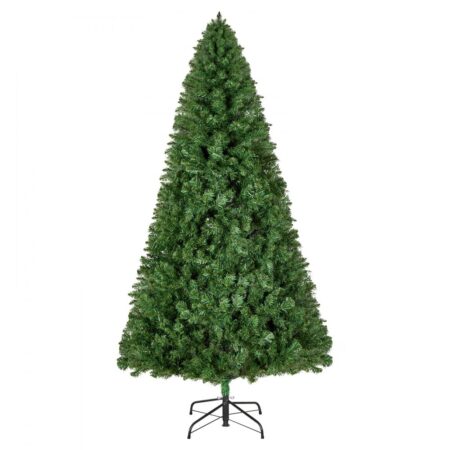
Every year the same thing happens with a pre-lit tree. Somewhere around year three or four, a section goes dark, you spend an evening pushing bulbs into sockets, and you end up wrapping a new strand over the old one anyway. An unlit tree skips all of that. The tree is just the tree, and the lights are a separate thing you can swap, upgrade or replace for the price of a few strands.
That is the real case for an unlit artificial Christmas tree: control. You pick warm white or multicolor, big C9 bulbs or tiny fairy lights, 300 lights or 900. You can change your mind next year without buying another tree. And because there is no wiring running through the trunk, the frame itself tends to outlast its pre-lit twin.
We narrowed this list to three VEVOR unlit trees from 6 to 7.5 feet. All three use flame-retardant PVC tips on metal branches with a metal stand, and each one fits a different room. We compared them on VEVOR’s published specs and buyer reviews, not hands-on testing, and gave each a clear job. Below the reviews you will find the part most guides skip: how many lights an unlit tree actually needs and how to put them on without hating it.
Guide Navigation Table of Contents
- Our Quick Picks
- Best Unlit Artificial Christmas Trees: Full Reviews
- Side-by-Side Comparison
- Unlit vs Pre-Lit: Which Should You Buy?
- How Many Lights Does an Unlit Tree Need?
- LED or Incandescent Lights?
- How to Light an Unlit Tree Without the Frustration
- A Scenario Worth Knowing About
- Frequently Asked Questions
- The Bottom Line
Our Quick Picks
- Best overall: VEVOR 7.2 ft Unlit Tree, 1,346 Tips
- Best for 8 ft ceilings: VEVOR 6 ft Unlit Tree, 1,250 Tips
- Best for tall ceilings: VEVOR 7.5 ft Unlit Tree, 1,346 Tips
Best Unlit Artificial Christmas Trees: Full Reviews
1. VEVOR 7.2 ft Unlit Tree, 1,346 Tips: Best Overall
This is the tree we would point most families toward. At 7.2 feet tall it clears a standard 8 foot ceiling with room for a modest topper, and at 4.5 feet across at the bottom it has the wide, traditional shape that fills a living room corner without looking skinny. The 1,346 branch tips work out to about 187 tips per foot of height, which is enough that the lights and ornaments sit inside the tree rather than hanging off bare wire.
Every tip has a metal wire core, so you can bend each one in a different direction. That is what turns a flat-looking tree out of the box into a full one, and it also gives you little hooks to tuck light strands behind. The trunk sections drop into a 21.6 inch metal stand, and the whole tree weighs about 21.6 lb, light enough for one person to carry the sections up from the basement.
VEVOR lists a 4.5 star rating across 16 reviews, though those reviews are shared with the other sizes and lit versions in the same product family. Buyers praise the fullness and the low shedding. The complaints are the ones you see on most budget trees: a few reports of a snapped branch or rust on a hinge after storage. Keep the box dry and you avoid most of that.
Key Features
- 7.2 ft tall, about 4.5 ft wide
- 1,346 flame-retardant PVC branch tips
- Metal wire in every tip for shaping
- 21.6 in metal stand
- About 21.6 lb
- No lights included, so you choose your own
- Model TCH59075U-1346
What We Like
- Wide, classic shape for a living room
- Good tip density for the size
- Fits under an 8 ft ceiling with a small topper
- Light enough to set up alone
- Same tree family as VEVOR’s pre-lit versions, so the shape is proven
What We Don’t Like
- Tips are all PVC, which looks flatter up close than PE molded tips
Overall
If you want one tree that suits most homes and gives you a blank canvas for any light style, start here. It has the width of a much pricier tree and enough tips to hide a full set of lights.
2. VEVOR 6 ft Unlit Tree, 1,250 Tips: Best for 8 ft Ceilings
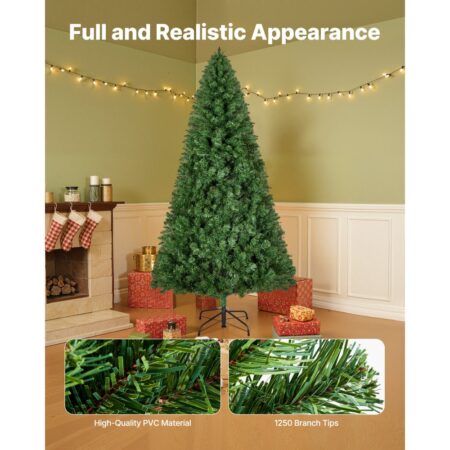
The 6 ft tree is the dense one. It packs 1,250 tips into 6 feet of height, about 208 tips per foot, which is the highest density on this list. On a smaller tree that matters, because you stand closer to it and gaps are easier to spot. Fluffed properly, it looks like a bigger tree that has been scaled down rather than a sparse tree that has been cut short.
It measures 6 feet tall by 3.74 feet wide and sits on a 19.7 inch metal stand. That footprint suits apartments, a dining room corner or a front window where a 7.5 footer would block half the glass. It weighs about 16.8 lb. Under a standard 8 ft ceiling you have a full two feet left over, so you can use a tall star or a big bow topper without worrying about it scraping.
It shares its review pool with the 7.2 ft model above, at 4.5 stars across 16 reviews. Several buyers mention putting it on a raised surface such as a window ledge or a riser, which is a good trick if you want height without a bigger tree. Expect about 30 to 45 minutes of fluffing the first time.
Key Features
- 6 ft tall, about 3.74 ft wide
- 1,250 flame-retardant PVC branch tips
- About 208 tips per foot of height
- 19.7 in metal stand
- About 16.8 lb
- Wire-core tips you can shape
- Model TCH59065U-1250
What We Like
- Densest tree on this list
- Leaves plenty of room for a tall topper
- Easy fit for apartments and smaller rooms
- Lightest tree here to haul and store
- Needs fewer lights to look full
What We Don’t Like
- At 6 ft it can look small in a room with vaulted or 9 ft ceilings
Overall
Pick this one if your room is on the smaller side or your ceiling is a true 8 feet and you want a big topper. It is the fullest looking tree per foot, and it needs fewer light strands to look finished.
3. VEVOR 7.5 ft Unlit Tree, 1,346 Tips: Best for Tall Ceilings
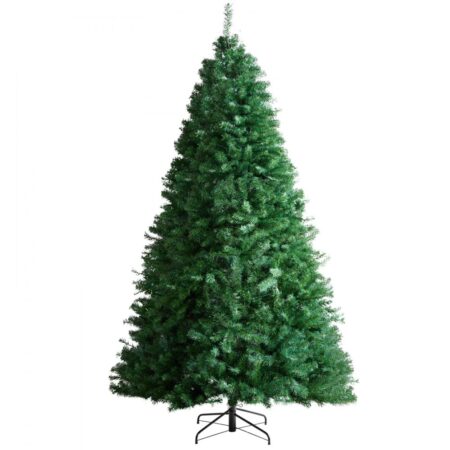
If your ceiling is 9 feet or higher, or you have a two-story entry, the extra few inches on this tree make a difference. It stands 7.5 feet tall, spreads 4.2 feet at the base and has the same 1,346 tip count as the 7.2 ft model, spread over a slightly taller and narrower frame. That gives it a more upright, elegant cone shape.
What sets it apart is the build. At about 28.4 lb it is the heaviest tree here by nearly 7 lb, with hinged metal branches that drop into place when you lift each section onto the trunk, and a wide 21.7 inch metal stand. It is the unlit version of the SX-2886 frame that VEVOR also sells pre-lit, which we cover in our pre-lit artificial Christmas tree guide. If you like that tree’s shape but want to choose your own lights, this is the way to get it.
VEVOR shows a 4.8 star rating from 8 reviews, a small sample but a clean one, with no low scores. The catch is availability. This listing has come in and out of stock, so if it shows as unavailable, the 7.2 ft tree above is the closest substitute.
Key Features
- 7.5 ft tall, about 4.2 ft wide
- 1,346 flame-retardant PVC branch tips
- Hinged metal branches
- 21.7 in metal stand
- About 28.4 lb, the sturdiest frame here
- Same SX-2886 frame as VEVOR’s pre-lit 7.5 ft tree
- Model SX-2886-7.5ft
What We Like
- Heaviest, sturdiest frame on the list
- Tall, graceful cone shape
- Hinged branches speed up setup
- Wide stand for a heavy ornament load
- Strong early ratings
What We Don’t Like
- Stock comes and goes, so it is not always available
Overall
Choose this tree for rooms with 9 ft ceilings or more, or if you load a tree with heavy glass ornaments and want the stoutest frame. When it is in stock, it is the most substantial unlit tree VEVOR sells.
Side-by-Side Comparison
| Tree | Height x Width | Branch Tips | Tips per Foot | Stand | Weight |
|---|---|---|---|---|---|
| VEVOR 7.2 ft Unlit | 7.2 x 4.5 ft | 1,346 | About 187 | 21.6 in metal | About 21.6 lb |
| VEVOR 6 ft Unlit | 6 x 3.74 ft | 1,250 | About 208 | 19.7 in metal | About 16.8 lb |
| VEVOR 7.5 ft Unlit | 7.5 x 4.2 ft | 1,346 | About 179 | 21.7 in metal | About 28.4 lb |
Specs come from VEVOR’s US product listings as of November 2026. Tips per foot is our own calculation (tips divided by height) and is a rough guide to fullness.
Unlit vs Pre-Lit: Which Should You Buy?
A pre-lit tree wins on convenience. You plug in one cord and you are done, which is why it is the most popular choice. If that is what you want, our pre-lit tree picks cover warm white and multicolor options.
An unlit tree wins on flexibility and lifespan. The most common reason people throw out an artificial tree is not the branches, it is the built-in lights failing. With an unlit tree, a dead strand costs you one strand. You can also mix light types: warm white mini lights deep in the branches, larger globe bulbs near the tips, and a few strands of twinkle lights on top. That layered look is very hard to get from a pre-lit tree.
There is also storage. Unlit sections are lighter and pack flatter because there are no wires or plugs on the branches. If you store your tree in a tight attic or a closet, that matters more than you might expect.
How Many Lights Does an Unlit Tree Need?
A common rule of thumb is 100 mini lights for every foot of tree height for a full, bright look. Go with 50 per foot if you prefer a softer glow or you are using larger bulbs, and push to 150 per foot if you want a showpiece. For the trees on this list, that works out like this:
- 6 ft tree: about 300 lights for a soft look, 600 for full, 900 for bold
- 7.2 ft tree: about 350 for soft, 700 for full, 1,050 for bold
- 7.5 ft tree: about 375 for soft, 750 for full, 1,100 for bold
Wide trees eat more lights than narrow ones of the same height. The 7.2 ft tree is wider than the 7.5 ft, so it can take nearly as many lights despite being shorter. If you are between two numbers, buy the higher one. Having a spare strand left over is far better than running out with the top third of the tree still dark.
LED or Incandescent Lights?
For most people, LED is the better buy. LED mini lights use a small fraction of the power of incandescent ones, stay cool to the touch and usually last for many seasons. The bigger practical advantage is that you can connect many more LED strands end to end before hitting the limit printed on the plug, which makes lighting a big tree much simpler.
Incandescent lights still have fans because of their warm, slightly golden glow. If you go that route, check the maximum number of strands you can connect on the tag near the plug, which is often only three or so, and never exceed it. Whatever you buy, look for a UL or ETL listing on the packaging.
How to Light an Unlit Tree Without the Frustration
- Fluff first, light second. Shape every tip before a single bulb goes on. Fluffing after lighting pulls strands loose.
- Test every strand before it goes on the tree. Plug each one in on the floor. Finding a dead strand on the tree means unwinding it.
- Start at the bottom, near the outlet. Put the plug end at the base of the trunk so you never have a cord running down the outside of the tree.
- Work in vertical sections, not spirals. Picture the tree as three or four wedges and zigzag each strand up and down within its wedge. It is easier to fix later and uses lights more evenly.
- Go deep, then go out. Run some lights along the inner branches near the trunk and some near the tips. That is what gives a tree depth instead of a flat outline.
- Plan the power. If your tree is far from an outlet, use a properly rated cord, like the ones in our heavy-duty extension cord guide, and keep it out of walkways.
A Scenario Worth Knowing About
Here is how a lot of first unlit trees go. Someone sets up a 7.5 ft tree, buys three boxes of 100 lights because it seems like plenty, and wraps them around in a neat spiral starting from the top. Two problems show up at once. The tree looks thin and dark, because 300 lights on a 7.5 ft tree is less than half of what it needs. And the plug end of the last strand is now dangling near the top of the tree, three feet from the nearest outlet.
The fix means stripping the tree and starting over, usually the night before guests arrive. The better plan takes ten minutes of math before you shop: multiply the height by 100, round up, and buy lights that can be connected end to end. Then start at the bottom with the plug end at the trunk and work up. Do that once and every year after is easy, because you can store each strand labeled by section and put it back in the same place.
Frequently Asked Questions
How many lights do I need for a 7.5 ft unlit tree?
About 750 mini lights gives a full, bright look on a 7.5 ft tree, based on the 100 lights per foot rule of thumb. Use around 375 for a softer look, and closer to 1,100 if you want it to be the brightest thing in the room.
Do VEVOR unlit trees come with lights?
No. All three trees on this list ship without lights, which VEVOR states on each listing. You will need to buy light strands separately. They do come with a metal stand.
Is an unlit artificial Christmas tree cheaper than a pre-lit one?
The tree itself usually is, since the same VEVOR frame typically costs less without lights. Once you add good LED strands, the total ends up close. The real savings come later, because you never have to replace the whole tree when the lights fail.
How long does it take to set up an unlit tree?
Assembly takes 5 to 10 minutes: stack the sections, then fold or drop the branches into place. Fluffing the tips takes another 30 to 45 minutes the first year and less after that. Plan on 30 to 60 minutes more for lighting, depending on how many strands you use.
What is the difference between PVC and PE branch tips?
PVC tips are cut from flat sheets, so the needles look flatter and more uniform. PE tips are molded from real branches and look more lifelike up close, but cost more. All three trees here use PVC tips, which is normal at this price, and a layer of lights and ornaments hides most of the difference.
How should I store an unlit artificial tree?
Keep each section in its own bag or wrap it loosely so the tips do not crush, and store everything somewhere dry. Damp garages and basements are the main cause of rust on the branch hinges. A large lidded tote, like the ones in our heavy-duty storage tote guide, keeps lights tidy and dry between seasons.
The Bottom Line
For most homes, the VEVOR 7.2 ft unlit tree is the one to get: wide, full, and short enough to fit under a standard ceiling with a topper. The 6 ft tree is the pick for smaller rooms and looks the fullest for its size, and the 7.5 ft tree brings the heaviest frame for tall rooms when you can find it in stock.
Whichever you choose, the lights are where an unlit tree really pays off. Do the 100 lights per foot math, test every strand, and start at the bottom. If you would rather skip the lighting job entirely, our pre-lit tree guide and our snow-flocked tree picks are the next places to look.