

Finding the right heavy duty paper shredder depends on how much paper you actually process, how long you need the machine to run, and whether you prefer manual feeding or the convenience of loading a stack and walking away. A small home office may be well served by a 12-sheet machine, while a busy workplace can benefit from continuous-duty shredding or an automatic feeder capable of processing hundreds of sheets.
Security also matters. The models reviewed here include P-4 cross-cut and micro-cut shredders as well as a P-5 micro-cut option for buyers who want smaller particles. Several models can also handle staples, paper clips, credit cards, and other common office materials, although the exact capabilities vary between automatic and manual feed modes.
We reviewed options ranging from compact home-office machines to large departmental shredders with continuous-duty motors and oversized waste bins. The goal is to help you match the shredder to your real workload rather than simply choosing the machine with the largest capacity.
Quick Answer
Pick a model that matches your typical workload: choose a 12–20 sheet manual shredder for light daily use, a 120–200 sheet auto-feed model for regular bulk jobs, or a 300-sheet auto-feed for frequent large cleanouts. For higher security choose micro-cut (smaller particle size); for convenience choose larger auto-feed trays and longer continuous runtimes.
In This Guide
This guide compares compact personal units through large auto-feed office shredders. For each model we summarize sheet capacity (manual and auto), security level (P-4 cross-cut or micro-cut), continuous runtime/cooldown, bin size, and special features (auto feed, anti-jam, manual slot for cards/staples, casters, noise rating, and LEDs). Use the "Who It’s Best For" notes to match a shredder to your workload and security needs.
Guide Navigation Table of Contents
Recommended Picks
Top Picks at a Glance
These picks highlight the best options by use case from the products reviewed in this guide.
-
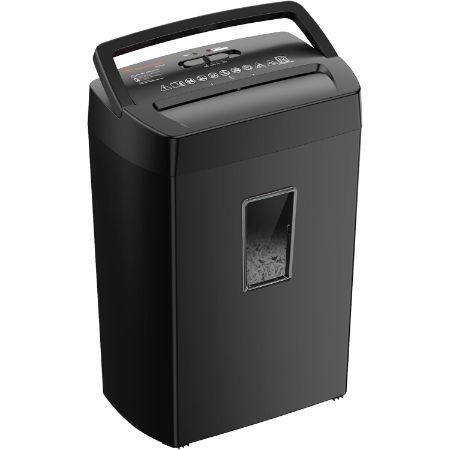 Best small daily shredder Bonsaii 12-Sheet Cross-Cut Paper Shredder (C275-A) 12-sheet capacity, P-4 cross-cut security, handles staples/cards, and compact size for home-office use as described on the page.Check on Amazon
 -
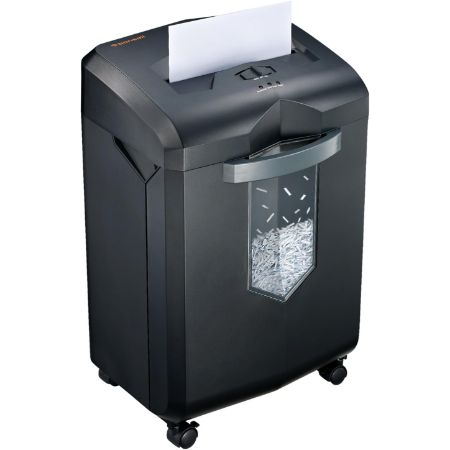 Best long-runtime manual shredder Bonsaii 18-Sheet Cross-Cut Heavy Duty Paper Shredder (C149-C) 18-sheet feed plus up to 60 minutes continuous operation and a pull-out bin make it ideal for sustained manual shredding as detailed on the page.Check on Amazon
 -
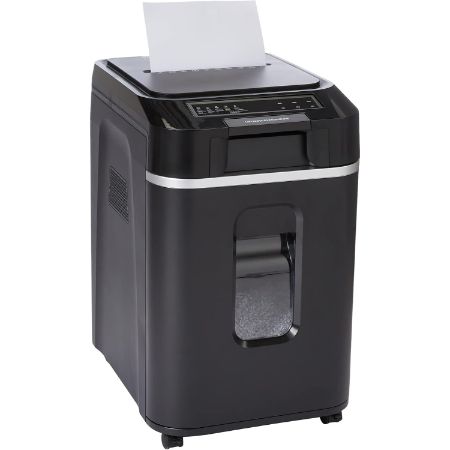 Best hands-off bulk shredding Amazon Basics 200-Sheet Auto Feed Cross-Cut Paper Shredder 200-sheet automatic feeder with 60-minute auto runtime and large 8.5-gallon bin emphasizes unattended bulk shredding per the page.Check on Amazon
 -
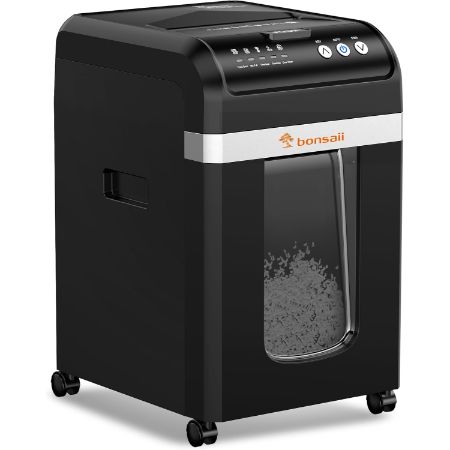 Best micro-cut auto-feed Bonsaii 200-Sheet Auto Feed Micro-Cut Heavy Duty Paper Shredder (C283-A) Pairs 200-sheet auto feed with P-4 micro-cut (4 x 12 mm) and a 12-sheet manual slot for cards/staples—good balance of security and automation.Check on Amazon
 -
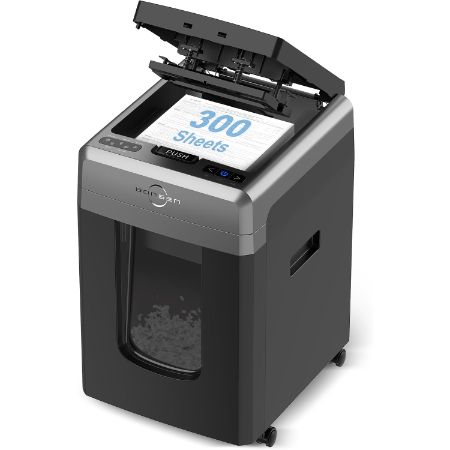 Best very large auto-feed BONSEN 300-Sheet Auto Feed Heavy Duty Paper Shredder (S3113) 300-sheet auto tray plus 12-sheet manual slot and 60-minute auto runtime targets very large, frequent cleanouts as described on the page.Check on Amazon
Heavy Duty Paper Shredder Reviews
Bonsaii 12-Sheet Cross-Cut Paper Shredder (C275-A)
The Bonsaii C275-A is a practical choice for households and home offices that need P-4 document security without the size of a commercial machine. It handles up to 12 sheets per pass and can also shred credit cards, staples, and paper clips. Its six-minute continuous runtime is better suited to routine document disposal than long archive-cleaning sessions.
Key Features
- 12-sheet cross-cut capacity.
- P-4 security level with approximately 5 x 20 mm particles.
- Up to 6 minutes of continuous shredding followed by a 40-minute cooldown.
- Handles paper, credit cards, staples, and paper clips.
- 5.5-gallon (21-liter) wastebasket with a transparent window.
- Auto start/stop plus manual forward and reverse controls.
- Jam detection automatically reverses paper.
- Overheat protection and automatic stopping when the shredder head is lifted.
- Portable handle on the shredder head.
- Approximately 12.6 x 7.91 x 18.3 inches.
- Includes the shredder and instruction manual.
- 1-year limited warranty.
What We Like
- P-4 security: The cross-cut mechanism provides useful protection for everyday confidential household and office paperwork.
- Handles common office materials: You do not have to remove every staple or paper clip before shredding, and it can also dispose of credit cards.
- Useful 12-sheet capacity: It processes small stacks rather than forcing you to feed pages individually.
- Jam-management features: Automatic reversing helps make overloaded or difficult feeds easier to deal with.
- Compact format: Its size is easier to accommodate in a home office than larger commercial shredders.
What We Don’t Like
- Shorter duty cycle: Six minutes of continuous operation followed by a 40-minute cooldown makes it less convenient for large document backlogs.
- Lift-off design: Removing the shredder head to empty the basket is less convenient than the pull-out bins found on larger machines.
Who It’s Best For
This model makes sense for households, home offices, and small workspaces that shred modest quantities of sensitive paperwork at a time. It is especially suitable when you want P-4 cross-cutting and the ability to handle staples and cards without needing a large floor-standing machine.
Overall
The C275-A balances security, manageable dimensions, and a useful 12-sheet capacity. It is a sensible everyday shredder, but buyers planning long, uninterrupted shredding sessions should look toward one of the longer-runtime models below.
Bonsaii 18-Sheet Cross-Cut Heavy Duty Paper Shredder (C149-C)
The Bonsaii C149-C moves into heavier workloads with an 18-sheet manual capacity and up to 60 minutes of continuous operation. It combines P-4 cross-cut security with a 6-gallon pull-out bin, automatic reversing, and casters, making it a practical step up for busy home offices and smaller businesses.
Key Features
- Shreds up to 18 sheets of 20-pound letter-size paper per pass.
- P-4 cross-cut security.
- Approximately 5 x 25 mm shred particles.
- Up to 60 minutes of continuous operation.
- 10-minute cooldown after overheating.
- Handles paper, staples, paper clips, credit cards, and CDs.
- 6-gallon (23-liter) pull-out wastebasket.
- Manufacturer states the bin can hold more than 400 shredded A4 sheets.
- Transparent bin window.
- Rated operating noise of 62 dB.
- Auto start/stop and automatic reverse.
- Overload and overheat protection.
- Safety stop when the wastebasket is removed.
- Four casters for mobility.
- 2-year service support.
What We Like
- Long 60-minute runtime: It is far better equipped for large cleanup sessions than short-duty personal shredders.
- 18-sheet capacity: Larger manual batches reduce the number of feeds needed to dispose of a stack.
- Versatile shredding: Paper, cards, staples, clips, and CDs can all be processed.
- Convenient pull-out basket: Emptying the 6-gallon bin is straightforward, and the window helps you monitor fill level.
- Jam and overload management: Automatic reversing and overload detection help protect the machine during demanding sessions.
What We Don’t Like
- More capacity than occasional users may need: Its longer runtime and larger construction make the most sense if you regularly have significant amounts of paper to process.
- Cross-cut rather than micro-cut: Buyers specifically seeking smaller particles may prefer one of the micro-cut alternatives in this list.
Who It’s Best For
The C149-C is suited to busy home offices, small businesses, and anyone clearing accumulated files who wants long runtime without moving to an automatic-feed machine.
Overall
This Bonsaii model offers a useful combination of high manual capacity and sustained operation. It is particularly appealing if a small personal shredder frequently forces you to stop for cooldown periods.
Amazon Basics 200-Sheet Auto Feed Cross-Cut Paper Shredder
This Amazon Basics shredder is aimed at buyers who would rather load a large stack and let the machine do the repetitive work. It accepts up to 200 sheets through the automatic feeder, offers P-4 cross-cut security, and can run for as long as 60 minutes in auto-feed mode. A separate 10-sheet manual feed is available for smaller jobs.
Key Features
- Up to 200 sheets in automatic-feed mode.
- Up to 10 sheets in manual-feed mode.
- P-4 cross-cut security.
- Approximately 4 x 20 mm shred particles.
- 60-minute runtime in auto-feed mode.
- 10-minute runtime in manual mode.
- 45-minute cooldown.
- Ordinary staples do not need to be removed from paper.
- Four-position control: Auto/On, Off, Forward, and Reverse.
- Anti-jam automatic reverse.
- Energy-saving sleep mode.
- Automatic overheat shutoff.
- 8.5-gallon pull-out waste bin.
- LED indicators for feed errors, full bin, open door, overload, and overheating.
- Approximately 18.35 x 14.02 x 22.83 inches.
- Metallic credit cards should not be shredded.
What We Like
- Hands-off bulk shredding: The 200-sheet automatic feeder can save substantial time when disposing of accumulated paperwork.
- 60-minute auto-feed runtime: The duty cycle is well matched to the large feeder.
- Large 8.5-gallon bin: More waste capacity means fewer interruptions to empty the machine.
- Useful status indicators: The LEDs make it easier to identify an open door, full bin, overload, feed problem, or overheating condition.
- P-4 document security: Cross-cutting provides a useful security level for many routine confidential documents.
What We Don’t Like
- 45-minute cooldown: Once the duty cycle is exhausted, you may have a substantial wait before continuing.
- Manual mode is more limited: Its 10-sheet, 10-minute manual mode is secondary to the automatic feeder.
- Larger footprint: This is more suitable for a dedicated office location than a small desk area.
Who It’s Best For
This shredder is a good match for small businesses, home businesses, and offices that periodically accumulate large stacks of documents. It is particularly useful for record cleanouts where manually feeding every batch would consume too much time.
Overall
The 200-sheet automatic feeder is the main reason to choose this model. Combined with its 60-minute auto runtime, large pull-out bin, anti-jam reverse, and clear status indicators, it offers a convenient approach to bulk document disposal.
Bonsaii 200-Sheet Auto Feed Micro-Cut Heavy Duty Paper Shredder (C283-A)
The Bonsaii C283-A combines a 200-sheet automatic feeder with P-4 micro-cutting and a separate 12-sheet manual slot. Its 60-minute automatic runtime makes it suitable for substantial paperwork, while the manual feed provides a way to shred credit cards and documents containing staples or paper clips.
Key Features
- Automatic feeder holds up to 200 sheets of letter-size 20-pound paper.
- 12-sheet manual-feed capacity.
- P-4 micro-cut security.
- Approximately 4 x 12 mm particles.
- Up to 60 minutes of automatic-feed operation.
- Up to 30 minutes of manual-feed operation.
- Manual mode handles credit cards, staples, and paper clips.
- Automatic feed is intended for letter-size paper.
- 8.1-gallon pull-out wastebasket.
- Manufacturer states the basket holds roughly 700 shredded sheets.
- Rated noise level of 58 dB or less.
- Automatic sleep after 10 minutes of inactivity.
- Four casters for mobility.
- Includes 12 lubricant sheets.
- Includes the shredder and user manual.
What We Like
- Convenient unattended shredding: The 200-sheet tray reduces the need to stand beside the shredder during large jobs.
- Capable secondary feed: A 12-sheet manual slot gives you a practical option for cards and paper containing staples or clips.
- Small P-4 particles: The 4 x 12 mm micro-cut output is finer than the output of several P-4 cross-cut machines in this group.
- Large pull-out bin: The 8.1-gallon basket complements its high-volume design.
- Office-friendly features: Casters, automatic sleep, and a stated noise level of 58 dB or less are useful in shared spaces.
What We Don’t Like
- Auto feed is designed for letter-size paper: Other materials need to be handled through the manual slot.
- Fasteners and cards require manual feeding: Staples, clips, and credit cards should not simply be mixed into the automatic-feed stack.
- Requires more floor space: The large bin and automatic feeder make this a more substantial machine than a personal shredder.
Who It’s Best For
The C283-A is suited to businesses and professional home offices that routinely dispose of large amounts of sensitive letter-size paperwork. It is particularly useful if you want automatic bulk processing but still need a capable manual slot for mixed materials.
Overall
This model pairs high-volume automation with P-4 micro-cutting and a useful 12-sheet manual feed. For recurring office shredding rather than occasional cleanup, that combination can significantly reduce the amount of hands-on time required.
Bonsaii 120-Sheet Auto Feed Micro-Cut Heavy Duty Paper Shredder (C233-B)
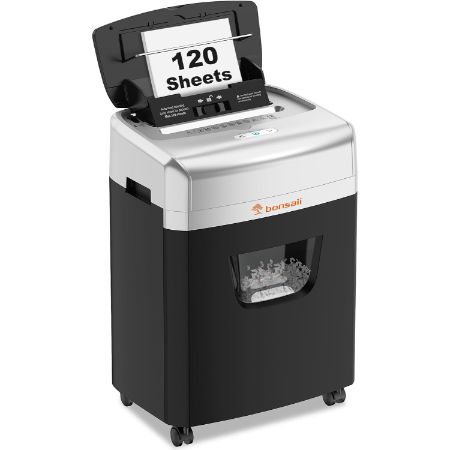
The Bonsaii C233-B fills the gap between conventional manual shredders and larger 200- to 300-sheet automatic machines. It accepts up to 120 sheets through its automatic feeder, provides a separate 12-sheet manual slot, and uses P-4 micro-cutting. The 30-minute automatic runtime is useful for moderate workloads, although its 60-minute cooldown needs to be considered for very large cleanouts.
Key Features
- Up to 120 sheets in automatic-feed mode.
- Up to 12 sheets through the manual slot.
- P-4 micro-cut security.
- Approximately 4 x 12 mm shred particles.
- 30-minute automatic-feed runtime followed by 60 minutes off.
- 10-minute manual runtime followed by 60 minutes off.
- Shredding speed of 71 inches per minute.
- Manual slot handles paper, credit cards, paper clips, and staples.
- Automatic mode is for paper.
- 6-gallon (23-liter) pull-out bin.
- Transparent waste-bin window.
- Bin-full sensor stops operation at approximately 80% capacity.
- Automatic forward/reverse functionality.
- Paging wheel reverses for 2–3 seconds to help reduce jams.
- Safety lock.
- Rated at approximately 62 dB.
- 360-degree casters.
What We Like
- Useful 120-sheet automatic feeder: It provides hands-off shredding without moving all the way to a 200- or 300-sheet machine.
- P-4 micro-cutting: The small particles provide useful security for confidential paperwork.
- Separate 12-sheet manual feed: The secondary slot is handy for quick jobs and materials that cannot go through the automatic feeder.
- Jam-management features: Automatic forward/reverse operation helps keep longer sessions moving.
- Easy waste handling: The pull-out bin, transparent window, full-bin sensor, and casters add everyday convenience.
What We Don’t Like
- Long cooldown: A 60-minute rest period can interrupt very large shredding projects.
- Auto feeder is for paper: Cards, staples, and clips need to be handled through the manual slot.
- 30-minute auto runtime: It is adequate for moderate workloads but less suited to marathon sessions than 60-minute or continuous-duty machines.
Who It’s Best For
This Bonsaii is a practical fit for home offices, professionals, and small businesses with moderate stacks of confidential paperwork. It is especially attractive if you want automatic feeding but do not regularly need a 200- or 300-sheet tray.
Overall
The C233-B offers a useful middle ground: significantly less manual work than a traditional shredder, but without the very large capacity of the biggest auto-feed models. Its P-4 micro-cut output and flexible manual slot strengthen that balance.
BONSEN 20-Sheet Cross-Cut Heavy Duty Paper Shredder (S3104)
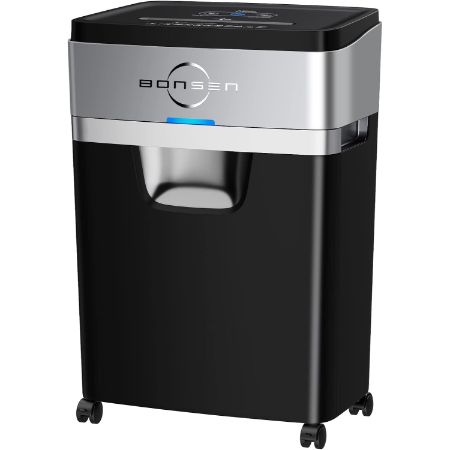
The BONSEN S3104 focuses on sustained manual shredding rather than automatic stack feeding. It handles up to 20 sheets at once, runs for as long as 60 minutes, and provides P-4 cross-cut security. A 6.6-gallon pull-out bin and casters make it well suited to a busy home office or workplace.
Key Features
- Up to 20 sheets per pass.
- P-4 cross-cut security.
- Approximately 13/64 x 63/64-inch particles.
- Up to 60 minutes of continuous operation.
- Cooldown of up to 20 minutes.
- Handles paper, credit cards, paper clips, and staples.
- Nitrided steel cutter.
- 6.6-gallon (25-liter) pull-out waste bin.
- Manufacturer states the bin holds approximately 520 shredded sheets.
- Anti-jam system.
- Rated operating noise of 60 dB or less.
- Casters for easier movement.
- Approximately 15.7 x 10.7 x 23.2 inches.
- Includes the shredder and user manual.
- 1-year warranty with customer service support.
What We Like
- High manual capacity: Twenty sheets per pass lets you work through paperwork quickly without preparing tiny batches.
- 60-minute runtime: It can handle sustained sessions that would overwhelm many personal shredders.
- Minimal document preparation: Staples and clips can remain in the paperwork, and the shredder also handles credit cards.
- Convenient waste basket: The 6.6-gallon pull-out bin provides useful capacity and easier emptying.
- Office-friendly design: Casters and a stated noise rating of 60 dB or less are helpful in shared workspaces.
What We Don’t Like
- No automatic bulk feeder: Every stack needs to be fed manually, which matters if you routinely have hundreds of pages waiting.
- Cross-cut rather than micro-cut: Buyers prioritizing smaller particles should consider one of the micro-cut models.
Who It’s Best For
The S3104 is well suited to busy home offices and workplaces that prefer a straightforward manual-feed shredder but need more capacity and runtime than a typical personal model.
Overall
The combination of a 20-sheet feed, 60-minute runtime, P-4 security, and 6.6-gallon pull-out bin gives the S3104 strong fundamentals for frequent manual shredding without the complexity of an automatic feeder.
BONSEN 300-Sheet Auto Feed Heavy Duty Paper Shredder (S3113)
The BONSEN S3113 is designed around hands-off bulk shredding. Its automatic tray holds up to 300 sheets of letter-size paper, while a separate 12-sheet manual feed handles smaller jobs and materials such as credit cards, staples, and paper clips. It combines P-4 shredding with a 60-minute automatic runtime and a large 8.1-gallon bin.
Key Features
- Automatic feeder holds up to 300 sheets of letter-size paper.
- 12-sheet manual-feed capacity.
- P-4 security level.
- Approximately 5/32 x 15/32-inch particles.
- Up to 60 minutes of operation in auto-feed mode.
- Up to 30 minutes in manual-feed mode.
- Manual feed handles paper, credit cards, staples, and paper clips.
- 8.1-gallon pull-out waste bin.
- Anti-jam system.
- Rated operating noise of 58 dB.
- LED indicators for feed error, full bin, open door, overload, and overheating.
- Automatic sleep after 10 minutes of inactivity.
- 360-degree casters.
- Includes the BONSEN S3113 and user manual.
- 1-year customer support.
What We Like
- Very large automatic feeder: A 300-sheet tray dramatically reduces the amount of active feeding required for bulk jobs.
- Useful 12-sheet manual slot: It handles smaller batches plus credit cards, staples, and paper clips.
- Long auto-feed runtime: Sixty minutes of operation is useful for accumulated records and office cleanouts.
- Helpful monitoring: Dedicated LEDs quickly communicate common conditions such as overloads, overheating, or a full bin.
- Designed for office use: The large pull-out bin, casters, sleep mode, and 58 dB rating complement the high-capacity feeder.
What We Don’t Like
- Automatic mode is primarily about paper: Cards and other supported mixed materials need to go through the manual slot.
- Needs dedicated floor space: The 300-sheet feeder and large bin make it a substantial office machine rather than a compact shredder.
Who It’s Best For
The S3113 is suited to busy offices, professional practices, and home businesses that frequently have large stacks of documents waiting to be destroyed. It is particularly useful when minimizing hands-on feeding time is a priority.
Overall
The 300-sheet automatic feeder is the defining feature here. Combined with a long runtime, separate manual feed, large bin, anti-jam system, and office-friendly controls, it is built around making high-volume paper disposal less labor-intensive.
Aurora Commercial Grade 200-Sheet Auto Feed High-Security Micro-Cut Paper Shredder (AU200MA)
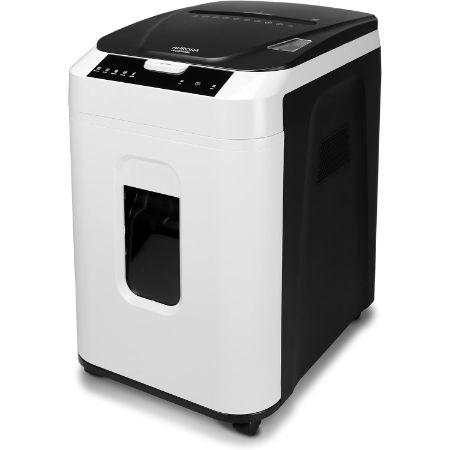
The Aurora AU200MA combines automatic bulk feeding with P-5 micro-cut security. It can process up to 200 sheets through its automatic feeder, while a 10-sheet manual slot handles smaller batches. Its 2 x 12 mm particles are notably smaller than those produced by the P-4 machines reviewed here, making it particularly relevant to buyers prioritizing finer document destruction.
Key Features
- Up to 200 sheets through the automatic feeder.
- Up to 10 sheets through the manual feed.
- P-5 high-security micro-cut shredding.
- Approximately 2 x 12 mm (5/64 x 15/32-inch) particles.
- Approximately 2,592 particles per letter-size sheet.
- Up to 60 minutes of continuous operation.
- Anti-jam automatic reverse.
- Handles credit cards, staples, and paper clips.
- 8.5-gallon pull-out waste bin.
- LED indicators for standby, overheating, full bin, overload, and open door.
- Overload and overheat protection.
- Automatic power-sleep function.
- Approximately 18.35 x 14.02 x 22.83 inches.
- Approximately 38.1 pounds.
- 120V, 60Hz operation.
- Includes the shredder and user manual.
What We Like
- P-5 micro-cut security: The 2 x 12 mm particles make this especially relevant for confidential financial, professional, and business paperwork.
- 200-sheet automatic feeder: Large stacks can be processed with much less hands-on work than a manual shredder requires.
- 60-minute runtime: The extended operating period supports substantial record-disposal jobs.
- Large pull-out bin: An 8.5-gallon basket is well matched to the machine’s bulk-shredding purpose.
- Good protection and monitoring: Auto reverse, overload and overheat protection, and multiple status indicators help manage longer jobs.
What We Don’t Like
- 10-sheet manual capacity: Buyers who expect to feed most documents manually may prefer a higher-capacity manual machine.
- Substantial size and weight: At nearly 23 inches tall and about 38 pounds, it makes more sense in a dedicated location than as a shredder you regularly store away.
Who It’s Best For
The AU200MA is particularly suited to offices, professional practices, and home businesses that combine high document volume with a preference for smaller P-5 particles. It also makes sense for buyers who want to load a stack and leave the machine to process it automatically.
Overall
The Aurora AU200MA stands out for combining a 200-sheet automatic feeder with P-5 micro-cutting. Its long runtime, anti-jam reverse, large bin, and status indicators round out a package aimed at high-volume confidential record disposal.
Fellowes Powershred 225Ci 22-Sheet Cross-Cut Commercial Paper Shredder
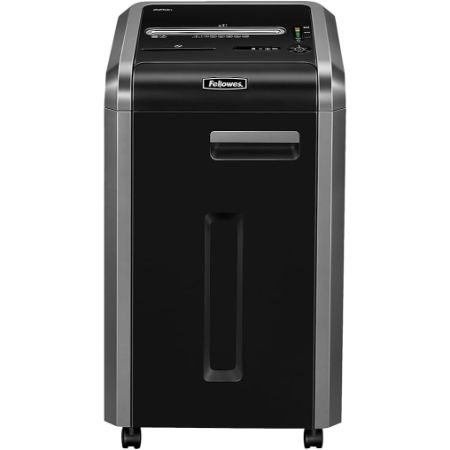
The Fellowes Powershred 225Ci takes a different approach from the auto-feed machines. It is a commercial manual-feed shredder with a 22-sheet capacity and a continuous-duty motor, so it can keep processing documents without a scheduled cooldown. Its 16-gallon bin, SafeSense protection, and Jam Proof system are aimed at shared workplaces where a shredder may be used repeatedly throughout the day.
Key Features
- Up to 22 sheets per pass.
- P-4 cross-cut security.
- Approximately 5/32 x 1-1/2-inch particles.
- Approximately 397 particles per letter-size sheet.
- Continuous-duty motor for nonstop shredding.
- Handles paper, staples, paper clips, plastic credit cards, CDs/DVDs, and junk mail.
- 100% Jam Proof System.
- Auto-reverse functionality for jams.
- SafeSense technology stops shredding when hands touch the paper-entry area.
- SilentShred technology for quieter operation in shared workspaces.
- Energy Savings System.
- 16-gallon pull-out waste bin.
- LED bin-full indicator.
- Includes a manual, sample oil, five bags, and casters.
- 2-year product and service warranty.
- Lifetime cutter warranty.
What We Like
- Continuous operation: The continuous-duty motor avoids the routine cooldown interruptions associated with many smaller shredders.
- 22-sheet manual capacity: Large batches can be processed without dividing every stack into just a few pages.
- Broad material support: Staples, clips, cards, CDs/DVDs, and junk mail can all be shredded.
- Large 16-gallon bin: The waste capacity makes sense for a machine intended for frequent shared use.
- Safety and jam management: SafeSense and the Jam Proof system address two important concerns for a commercial shredder used by multiple people.
What We Don’t Like
- Requires manual feeding: Continuous operation does not eliminate the need for someone to keep supplying document batches.
- P-4 cross-cut output: Organizations specifically requiring finer P-5 or higher-security particles should choose an appropriate micro-cut model.
- Large commercial format: Its 16-gallon capacity is better suited to a dedicated workspace than a compact home office.
Who It’s Best For
The Powershred 225Ci is designed for shared offices, businesses, and workgroups where the shredder may be used throughout the day. It makes the most sense when continuous operation, a high manual capacity, and support for mixed office materials are more important than unattended stack feeding.
Overall
The 225Ci is a serious manual-feed workgroup shredder. Its continuous-duty motor, 22-sheet capacity, 16-gallon bin, SafeSense system, and broad material compatibility make it particularly well equipped for frequent shared-office use.
Fellowes Powershred 425Ci 30-Sheet Cross-Cut Commercial Paper Shredder
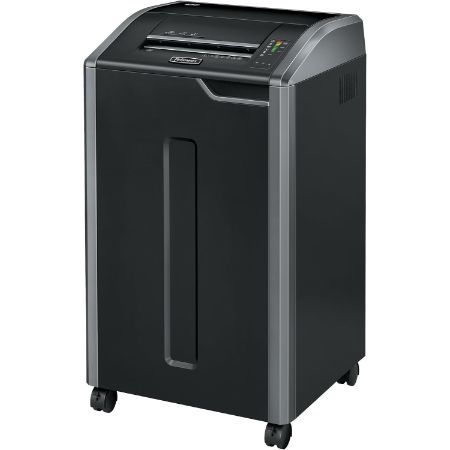
The Fellowes Powershred 425Ci is a departmental shredder built for workplaces with substantial ongoing shredding demands. It processes up to 30 sheets per pass, uses a continuous-duty motor, and pairs that capacity with a huge 30-gallon waste basket. This is a dedicated commercial machine for shared environments rather than a typical home-office shredder.
Key Features
- Up to 30 sheets per pass.
- P-4 cross-cut security.
- Approximately 5/32 x 1-1/8-inch particles.
- Approximately 503 particles per sheet.
- Continuous-duty motor for nonstop shredding.
- Handles paper, staples, paper clips, plastic credit cards, CDs/DVDs, and junk mail.
- 100% Jam Proof System.
- SafeSense Technology stops shredding when hands touch the paper-entry area.
- 30-gallon removable waste basket.
- LED bin-full indicator.
- 12-inch paper entry.
- Energy Savings System.
- Designed and assembled in the USA.
- TAA compliant.
- Designed for departmental and shared-workspace use.
- 2-year product and service warranty.
- Lifetime cutter warranty.
What We Like
- High 30-sheet capacity: Large manual batches make it easier to work through demanding office workloads.
- Continuous-duty operation: There is no routine scheduled cooldown interrupting sustained shredding sessions.
- Huge waste capacity: The 30-gallon basket reduces the frequency of emptying during high-volume use.
- Handles mixed office materials: Staples, paper clips, cards, CDs/DVDs, and junk mail can all be processed.
- Commercial safety and jam features: SafeSense and the Jam Proof System are valuable on a powerful machine shared by multiple employees.
What We Don’t Like
- Manual feed only: Its impressive capacity does not provide the walk-away convenience of a large automatic feeder.
- P-4 rather than finer micro-cut security: Workplaces with stricter particle-size requirements should choose a shredder designed for that security level.
- Requires dedicated space: A 30-gallon departmental shredder is unnecessary for most households and small home offices.
Who It’s Best For
The 425Ci is intended for departments, larger offices, and shared workgroups that need a central shredder capable of frequent use. It is particularly relevant when high manual throughput, continuous operation, and a very large waste basket matter more than automatic feeding.
Overall
The Powershred 425Ci is built around departmental workloads. Its 30-sheet capacity, continuous-duty motor, 30-gallon basket, Jam Proof System, and SafeSense protection give it a very different role from smaller home and small-office shredders.
Recommendations by Use Case
For Occasional Home-Office Shredding
The Bonsaii C275-A is the most compact option in this group and provides a 12-sheet capacity, P-4 cross-cutting, and support for staples, clips, and credit cards. Its six-minute runtime is appropriate when shredding is done in short sessions. If you regularly build up large piles of paperwork, one of the longer-runtime models will be more convenient.
For High-Capacity Manual Shredding
The BONSEN S3104 offers a useful combination of a 20-sheet feed and 60-minute runtime for buyers who prefer straightforward manual operation. The Bonsaii C149-C follows a similar approach with an 18-sheet capacity and 60-minute runtime. Both are better suited to sustained manual jobs than short-duty personal shredders.
For Hands-Off Bulk Shredding
The BONSEN S3113 has the largest verified automatic feeder in this group at 300 sheets. If you regularly accumulate large stacks and want to minimize the time spent standing at the shredder, that capacity is a significant advantage. The Bonsaii C283-A and Amazon Basics models provide 200-sheet alternatives, while the Bonsaii C233-B offers a smaller 120-sheet option for more moderate workloads.
For Finer P-5 Micro-Cut Security
The Aurora AU200MA is the P-5 model in this reviewed group. It reduces documents to approximately 2 x 12 mm particles while providing a 200-sheet automatic feeder and 60-minute runtime. Buyers who specifically need a finer security classification should pay close attention to security level rather than choosing solely by sheet capacity.
For Shared Commercial Workspaces
The Fellowes Powershred 225Ci and 425Ci are designed around frequent shared use and continuous-duty operation. The 225Ci processes up to 22 sheets and has a 16-gallon bin, while the larger 425Ci increases manual capacity to 30 sheets and waste capacity to 30 gallons. Their manual-feed design makes sense where users shred documents throughout the day rather than loading large unattended stacks.
Heavy Duty Paper Shredder Buying Guide
A heavy duty paper shredder should match both the volume and pattern of your workload. A machine that looks powerful on paper can still be frustrating if its duty cycle, feeding method, bin size, or security level does not match how you actually shred documents.
Manual Feed vs. Automatic Feed
Manual-feed shredders require you to insert each batch yourself. Their advertised sheet capacity tells you approximately how many supported sheets can go through in a single pass. Models such as the BONSEN S3104, Bonsaii C149-C, and Fellowes commercial machines follow this approach.
Automatic-feed shredders are designed differently. You place a larger stack into a tray and let the machine process the sheets progressively. The Bonsaii C233-B accepts up to 120 sheets automatically, several models accept 200 sheets, and the BONSEN S3113 holds up to 300 sheets.
Auto feed is especially useful when your time matters more than maximum manual-feed capacity. However, check what can actually go into the automatic tray. Some machines restrict auto mode to ordinary paper while requiring staples, clips, cards, or other materials to be fed through a separate manual slot.
Pay Attention to Runtime and Cooldown
Sheet capacity gets plenty of attention, but runtime can have an even bigger effect on large jobs. The Bonsaii C275-A, for example, is designed for six minutes of continuous operation followed by a much longer cooling period. That is reasonable for routine household paperwork but inconvenient if you have several boxes of old files.
Several heavier models can run for 30 or 60 minutes, while the Fellowes 225Ci and 425Ci use continuous-duty motors. If you routinely shred for extended periods, a longer duty cycle can be more useful than gaining a few additional sheets of per-pass capacity.
Understand P-4 vs. P-5 Security
The reviewed shredders primarily use P-4 security, but particle dimensions still vary between models. P-4 cross-cut machines cut documents in two directions, while several P-4 micro-cut models in this list produce smaller pieces.
The Aurora AU200MA moves to P-5 and produces approximately 2 x 12 mm particles. If your workplace follows a specific document-destruction policy, choose according to the required security classification rather than assuming that every product described as “high security” produces the same result.
Consider What Else You Need to Shred
Office waste is rarely limited to clean sheets of printer paper. Staples and paper clips are common, and some users also need to destroy plastic credit cards, CDs, or DVDs. The exact capabilities vary considerably.
The Fellowes 225Ci and 425Ci support staples, clips, plastic credit cards, CDs/DVDs, and junk mail. Other machines handle cards and fasteners but not optical media. With auto-feed models, also check whether those materials are supported only through the manual slot.
Choose a Bin That Matches the Workload
A high-capacity shredder paired with a tiny wastebasket can create unnecessary interruptions. The smaller Bonsaii C275-A has a 5.5-gallon basket, while many office models move into the 6- to 8.5-gallon range. Commercial Fellowes models go considerably larger, with 16 gallons on the 225Ci and 30 gallons on the 425Ci.
Pull-out bins are generally convenient because you can remove the waste container without lifting the cutting head. Transparent windows and bin-full indicators also help prevent opening the machine simply to check whether it needs emptying.
Look at Jam Prevention and Reverse Functions
Jams become more frustrating as shredding volume increases. Automatic reverse, overload detection, and dedicated anti-jam systems can help when too much material enters the feed opening.
These features do not eliminate the need to respect the machine’s rated capacity. Feeding oversized stacks, unsupported materials, or improperly prepared auto-feed loads can still interrupt a job. Treat maximum sheet capacity as a limit rather than a target you must hit on every pass.
Think About Noise and Placement
Noise matters more when the shredder sits beside desks or in a shared office. Several machines here provide stated operating noise figures around 58–62 dB, while Fellowes uses its SilentShred technology on the 225Ci.
Physical size matters too. Large auto-feed trays and commercial waste bins require dedicated floor space. Casters can make repositioning easier, but a departmental machine is still unlikely to be something you want to move in and out of storage every day.
Do Not Overbuy for a Small Workload
A 200- or 300-sheet automatic feeder sounds appealing, but it may provide little practical benefit if you only shred a handful of documents each week. Similarly, a 30-gallon continuous-duty commercial shredder is difficult to justify in a small home office unless the workload genuinely calls for it.
Start with your typical weekly volume and your largest realistic cleanup job. Then consider how much active feeding time you are willing to spend. Those two questions usually make it easier to decide between a compact manual shredder, a longer-runtime manual model, and an automatic-feed machine.
Frequently Asked Questions
What makes a paper shredder heavy duty?
There is no single specification that defines every heavy duty paper shredder. In practical use, heavier-duty machines generally combine higher sheet capacity, longer runtimes, larger waste bins, stronger jam-management features, or automatic bulk feeding. Commercial models may also use continuous-duty motors designed for frequent shared use.
Is an auto-feed shredder better than a manual-feed shredder?
It depends on the workload. Auto-feed shredders are particularly convenient for large stacks because you can load the tray and allow the machine to process the paper progressively. Manual shredders require more attention but can offer high per-pass capacity, straightforward operation, and, in commercial models such as the Fellowes 225Ci and 425Ci, continuous-duty operation.
How many sheets should a heavy duty shredder handle?
For manual shredding, the models reviewed here range from 12 to 30 sheets per pass. Automatic-feed capacities range from 120 to 300 sheets. The appropriate capacity depends on how much paperwork you process and whether you prefer actively feeding batches or loading a larger stack for automatic shredding.
What is the difference between cross-cut and micro-cut shredding?
Both cut paper in more than one direction, but micro-cut shredders generally produce smaller particles. Particle size and security classification are more useful comparisons than the marketing term alone. The reviewed products include P-4 cross-cut and micro-cut models as well as the P-5 Aurora AU200MA.
Is P-4 security enough for confidential documents?
P-4 shredders are commonly used for confidential personal and business paperwork, but the appropriate security level depends on your organization’s requirements and the sensitivity of the material. If a policy or regulatory requirement specifies a particular security level or particle size, follow that requirement rather than choosing based only on general product descriptions.
Can heavy duty shredders handle staples and paper clips?
Many can, including several models reviewed here, but support varies. Automatic-feed models may allow staples or clips only through the manual slot. Check the intended feed method before loading a stack containing fasteners.
Can these shredders destroy credit cards?
Several reviewed models can shred credit cards, although the correct feed slot varies. Some automatic shredders require cards to be inserted through the manual feed rather than the automatic tray. Also pay attention to manufacturer restrictions on metallic cards.
Why does shredder cooldown time matter?
The motor generates heat during operation. A shredder with a short duty cycle may need a lengthy rest before you can continue, turning a large cleanup into a much longer job. If you expect sustained use, look for a 30- or 60-minute runtime or a continuous-duty commercial machine.
How large should the waste bin be?
Match bin capacity to shredding volume. A 5- to 6-gallon basket can be practical for a home office, while high-volume automatic shredders commonly benefit from larger 8-gallon-class bins. Departmental machines can go much larger; the Fellowes 425Ci, for example, uses a 30-gallon basket.
Do paper shredders need maintenance?
Shredders have moving cutting components, so following the manufacturer’s maintenance and lubrication instructions is important. Requirements differ by model. Use the recommended maintenance method and avoid putting unsupported materials through the cutters.
Key Takeaways
- Choose capacity according to your actual workload rather than automatically buying the machine with the highest sheet count.
- Automatic feeders are especially useful for large stacks because they reduce active feeding time.
- Runtime and cooldown can matter as much as sheet capacity during large shredding jobs.
- P-4 and P-5 are different security classifications, and actual particle dimensions also vary between shredders.
- Check whether staples, clips, credit cards, CDs, and other materials are supported before feeding them.
- On auto-feed machines, materials supported by the manual slot may not necessarily be suitable for the automatic tray.
- Pull-out bins, bin-full indicators, casters, anti-jam systems, and automatic reverse functions can make frequent shredding easier.
- Continuous-duty commercial shredders make the most sense for workplaces where shredding happens repeatedly throughout the day.
Buying Checklist
What to Check Before Buying
- Estimate average and peak stack sizes you’ll shred (sheets per session).
- Decide between manual feed or auto-feed based on hands-on time you can spare.
- Choose security level: P-4 cross-cut for routine confidential docs, micro-cut for higher-security disposal.
- Look for continuous runtime and cooldown cycle suitable for your busiest sessions.
- Confirm the machine accepts staples/cards if you want to avoid pre-sorting.
- Check bin capacity and whether it’s pull-out with window and sensors.
- Verify noise rating and mobility (casters) for shared spaces.
- Confirm warranty and basic service/support period.
Conclusion
The right heavy duty paper shredder depends less on one headline specification and more on how capacity, runtime, security, feeding method, and bin size work together. For modest home-office use, a compact 12-sheet machine may be entirely adequate. Larger manual shredders provide more throughput and longer runtimes without the complexity of an automatic feeder.
If you routinely deal with stacks of paperwork, automatic-feed models can save significant hands-on time. Capacities of 120, 200, or 300 sheets let you choose according to the scale of your workload, while separate manual feeds provide flexibility for smaller jobs and supported non-paper materials.
For shared workplaces with continuous shredding demands, commercial machines such as the Fellowes 225Ci and 425Ci take a different approach, emphasizing nonstop operation, large manual capacities, substantial waste bins, and features designed for multiple users. Buyers prioritizing finer document destruction should also compare security levels carefully, with the P-5 Aurora AU200MA offering smaller particles than the P-4 models reviewed here.
Before choosing, estimate how much paper you normally shred in one session, decide whether you want to stand at the machine or use automatic feeding, and identify the security level your documents require. Matching those needs to the shredder is more useful than simply choosing the largest machine available.