
Jackery makes power stations in sizes from a pocket-sized 99Wh battery for phones and laptops to a 5,040Wh unit that can back up a whole house through a transfer switch. The hard part is not deciding whether Jackery is a good brand. It is picking the right size, because a station that is too small runs out halfway through an outage, and one that is too big costs far more and weighs as much as a suitcase full of bricks.
This guide compares seven current Jackery models side by side, explains what each one can realistically run, and shows a simple way to size one for camping, a home fridge, medical equipment or whole-home backup. If you want to see how Jackery stacks up against Anker, EcoFlow and BLUETTI, read our broader guide to the best portable power stations.
Guide Navigation Table of Contents
Jackery Power Stations at a Glance
| Model | Capacity | AC Output (Surge) | Weight | Max Solar | Best For |
|---|---|---|---|---|---|
| Explorer 100 Plus | 99Wh | 128W USB only | 2.1 lb | Small panel | Phones, laptops, flights |
| Explorer 300 v2 | 288Wh | 300W (600W) | 8.2 lb | 100W | Camping, CPAP for a night |
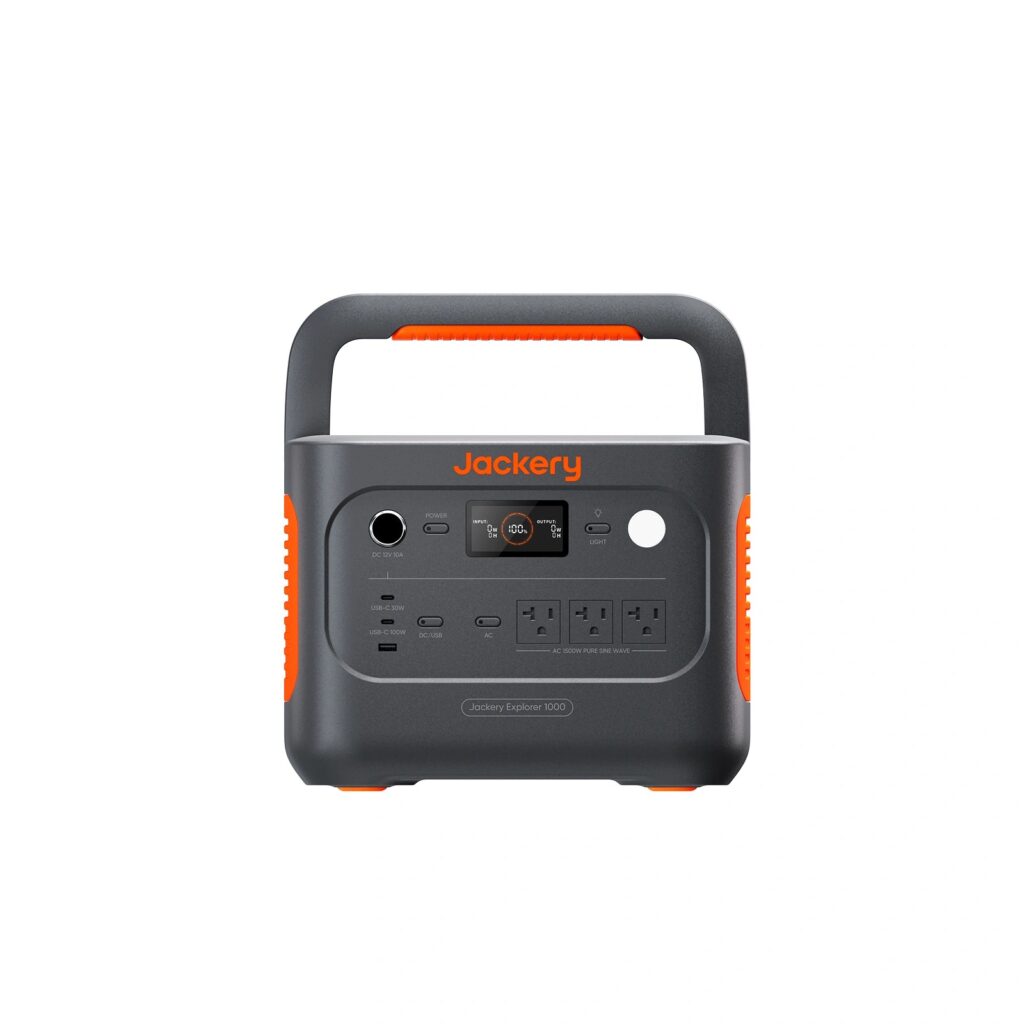
| Explorer 1000 v2 | 1,070Wh | 1,500W (3,000W) | 23.8 lb | 400W | Fridge backup, RV weekends |
| Explorer 1500 v2 | 1,536Wh | 2,000W (4,000W) | 32 lb | 400W | Longer outages, tools |
| Explorer 2000 v2 | 2,042Wh | 2,200W (4,400W) | 39.5 lb | 400W | Big loads in one box |
| HomePower 2000 Plus v2 | 2,048Wh, expands to 12kWh | 2,400W (4,800W) | 41.4 lb | 800W | Home backup you can grow |
| Explorer 5000 Plus | 5,040Wh, expands past 25kWh | 7,200W, 120V/240V | 134.5 lb | High-voltage solar | Whole-home backup |
Which Jackery Size Do You Need?
Start with two numbers for every device you want to run: its running watts, and how many hours a day it runs. Add up the running watts of everything that could be on at the same time. That total has to stay under the station’s continuous AC output. Then multiply each device’s watts by its hours and add them up. That is your daily watt-hour need.
Because some energy is lost converting battery power to AC, plan on getting about 85% of the rated capacity. A 1,070Wh Explorer 1000 v2 gives you roughly 900Wh of usable AC power, which is enough to run a 50W CPAP for about 18 hours, or to keep a modern refrigerator going for most of a day depending on its size and how often it is opened.
- Under 300Wh a day: phones, lights, a laptop or a CPAP for one night. The Explorer 300 v2 fits.
- 500Wh to 1,500Wh a day: a fridge plus lights and devices for a short outage, or a weekend in a van. Look at the Explorer 1000 v2 or 1500 v2.
- 1,500Wh to 3,000Wh a day: fridge, chest freezer, internet and lights through a one or two day outage. The Explorer 2000 v2 or HomePower 2000 Plus v2 with an extra battery.
- Whole circuits or 240V appliances: well pumps, central systems or a multi-day storm outage. Only the Explorer 5000 Plus with a transfer switch is built for this.
The Jackery Lineup Reviewed
1. Jackery Explorer 1000 v2: Best All-Round Size
The Explorer 1000 v2 is the size most households end up needing. At 1,070Wh and 1,500W continuous output, it runs a refrigerator, a coffee maker, a microwave on a lower setting or a circular saw, and it is still light enough at 23.8 pounds for one person to carry to a campsite or a job.
Key Specs
- Capacity: 1,070Wh, LiFePO4 battery rated for 4,000 cycles to 70%
- Output: 1,500W continuous, 3,000W surge, pure sine wave
- Solar input: up to 400W
- UPS switchover: 20 ms, so it can sit between the wall and a modem or freezer
- App control over Wi-Fi and Bluetooth
Good to Know
It is the lightest Jackery that will reliably start a fridge compressor. The trade-off is capacity: for outages longer than a day with a fridge running, you will want solar panels or a larger model.
2. Jackery Explorer 2000 v2: Best Value for Bigger Loads
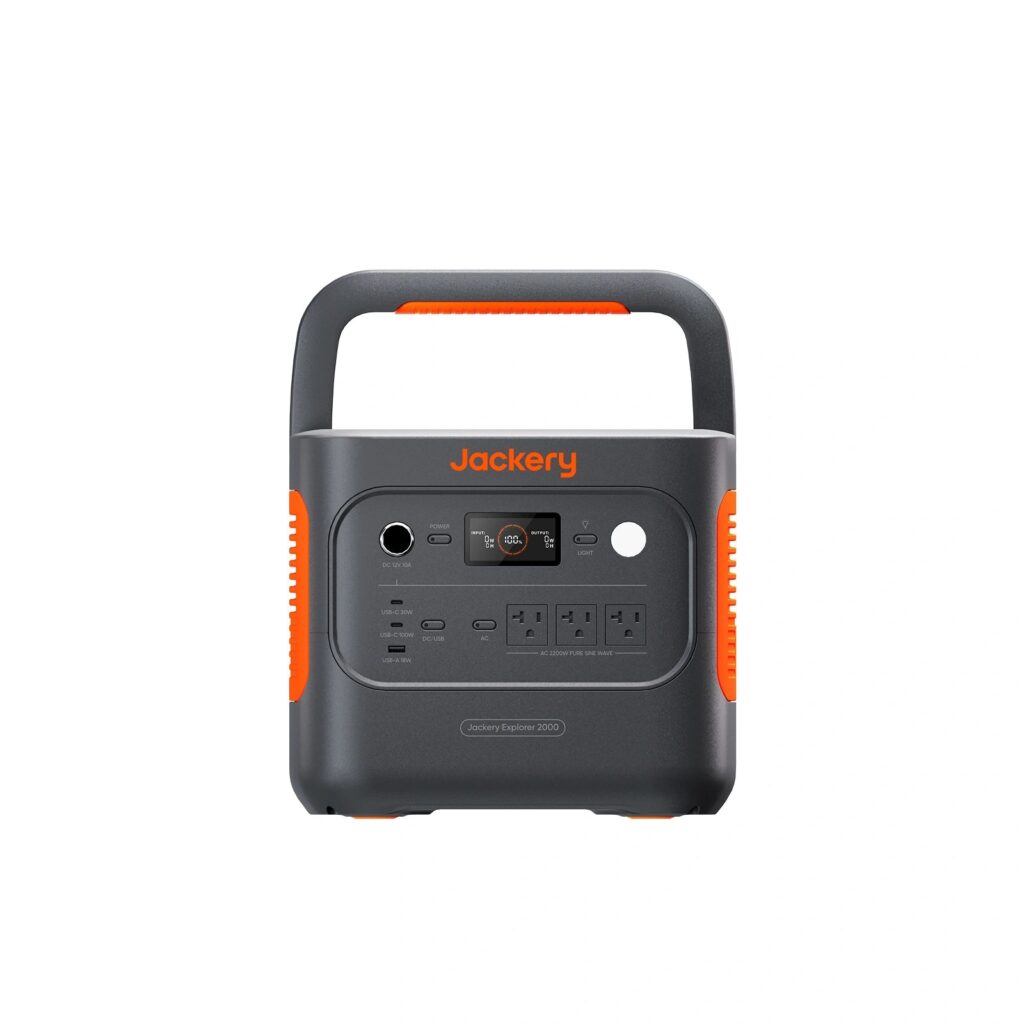
The Explorer 2000 v2 roughly doubles the capacity of the 1000 v2 while adding only about 16 pounds. With 2,042Wh and 2,200W of continuous power, it can run a full-size refrigerator and a chest freezer together, or handle a space heater for a few hours in an emergency.
Key Specs
- Capacity: 2,042Wh, LiFePO4 rated for 4,000+ cycles to 70%
- Output: 2,200W continuous, 4,400W surge
- Three 120V AC outlets, two USB-C (100W and 30W), one USB-A and a 12V car port
- Solar input: up to 400W
- UPS switchover: 20 ms or less
Good to Know
It does not accept add-on batteries, so the capacity you buy is the capacity you keep. If you think you may want more storage later, the HomePower 2000 Plus v2 below is the better long-term choice.
3. Jackery HomePower 2000 Plus v2: Best Expandable Home Backup
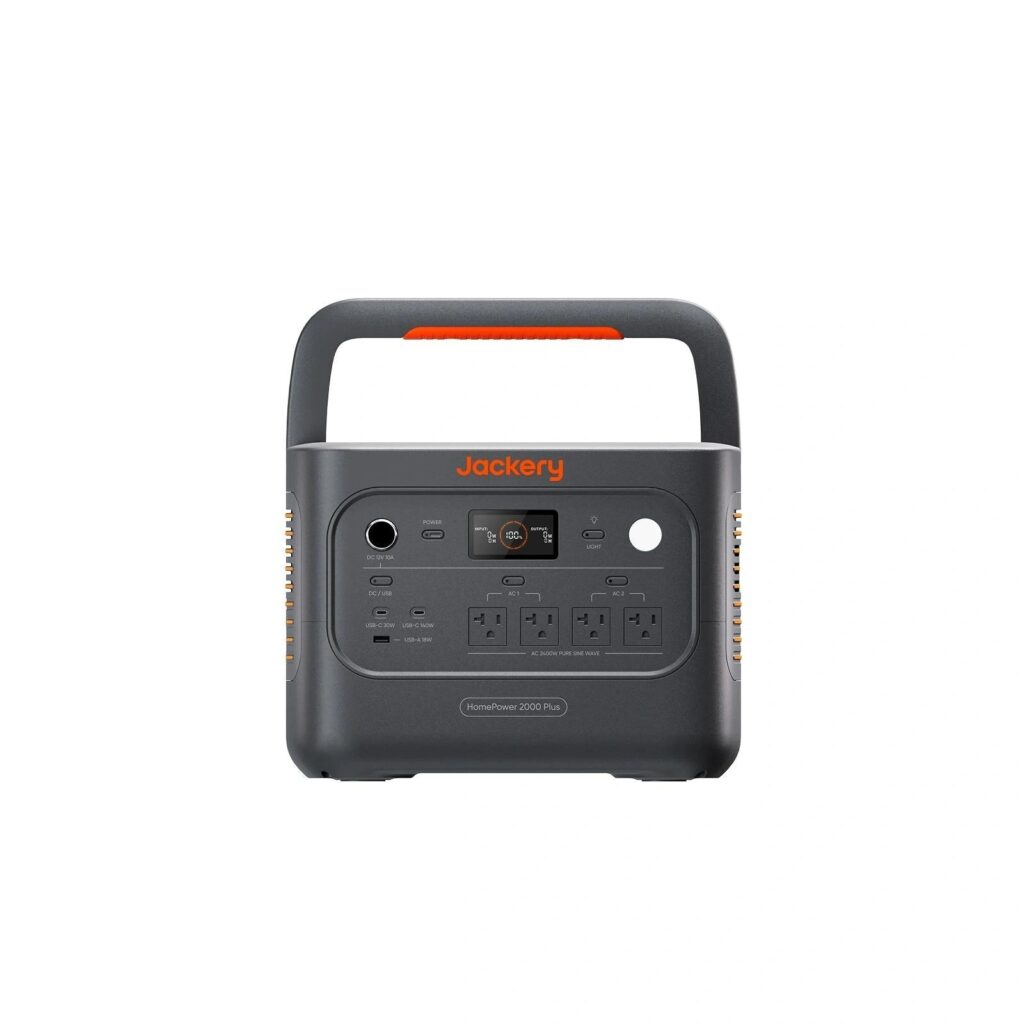
The HomePower 2000 Plus v2 is built for people who want to start with one unit and add batteries over time. It starts at 2,048Wh and expands to about 12kWh with additional battery packs, which is enough to ride out a multi-day outage with careful use.
Key Specs
- Capacity: 2,048Wh, expandable to roughly 12kWh
- Battery: LiFePO4 rated for 6,000 cycles to 70%
- Output: 2,400W continuous, 4,800W peak
- Four AC outlets, plus USB-C up to 140W
- Solar input: up to 800W, double most portable models
- UPS switchover: 10 ms
Good to Know
At about 41 pounds, it is portable in the sense that it has handles, not in the sense that you will want to take it hiking. The 800W solar input is the standout feature: it lets you recharge meaningfully in a single sunny day.
4. Jackery Explorer 1500 v2: The Middle Ground
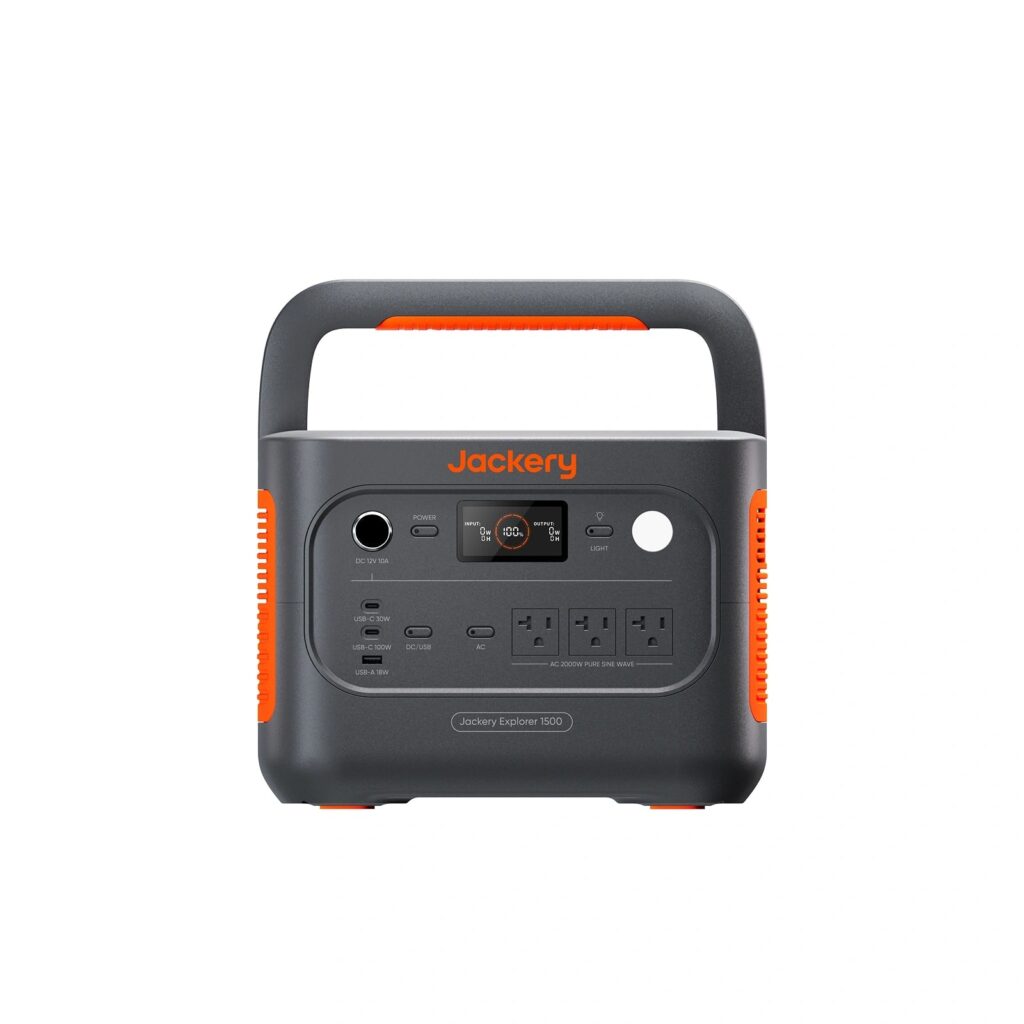
The Explorer 1500 v2 sits between the 1000 v2 and 2000 v2 in both capacity and weight. Its 2,000W output is the main reason to choose it over the 1000 v2: it handles higher-draw tools and appliances such as a small air conditioner or an electric kettle without tripping.
Key Specs
- Capacity: 1,536Wh
- Output: 2,000W rated, 4,000W peak
- Three 120V AC outlets, USB-C up to 100W
- Solar input: up to 400W
- Wall charge in about 80 minutes
- UPS switchover: 10 ms
Good to Know
At around 32 pounds it is still a one-person lift, but only just. If you mainly need fridge backup, the 1000 v2 is lighter. If you need maximum runtime, the 2000 v2 gives more for the extra weight.
5. Jackery Explorer 300 v2: Best for Camping and Overnight Use
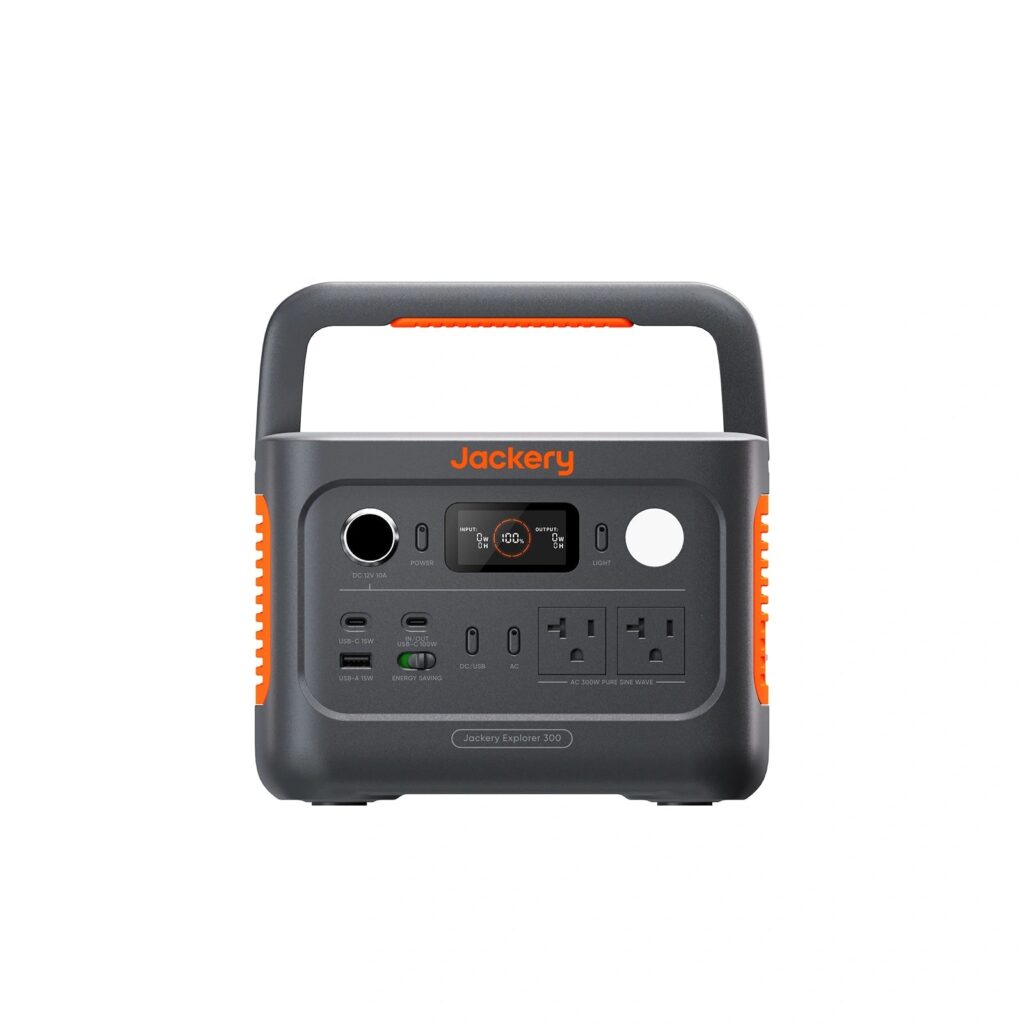
The Explorer 300 v2 is the smallest Jackery with AC outlets, and at about 8 pounds it is easy to take anywhere. It is the right size for phones, lights, a camera, a laptop and small fans, or for running a CPAP without a humidifier through one night.
Key Specs
- Capacity: 288Wh, LiFePO4 rated for 4,000 cycles to 70%
- Output: 300W continuous, 600W peak
- Two AC outlets, USB-C up to 100W, USB-A and a 12V car port
- Solar input: up to 100W
- About 60 minutes to 80% from the wall
Good to Know
300W is not enough for anything with a heating element or a compressor, so do not expect it to run a fridge, hair dryer or coffee maker.
6. Jackery Explorer 5000 Plus: Whole-Home Backup
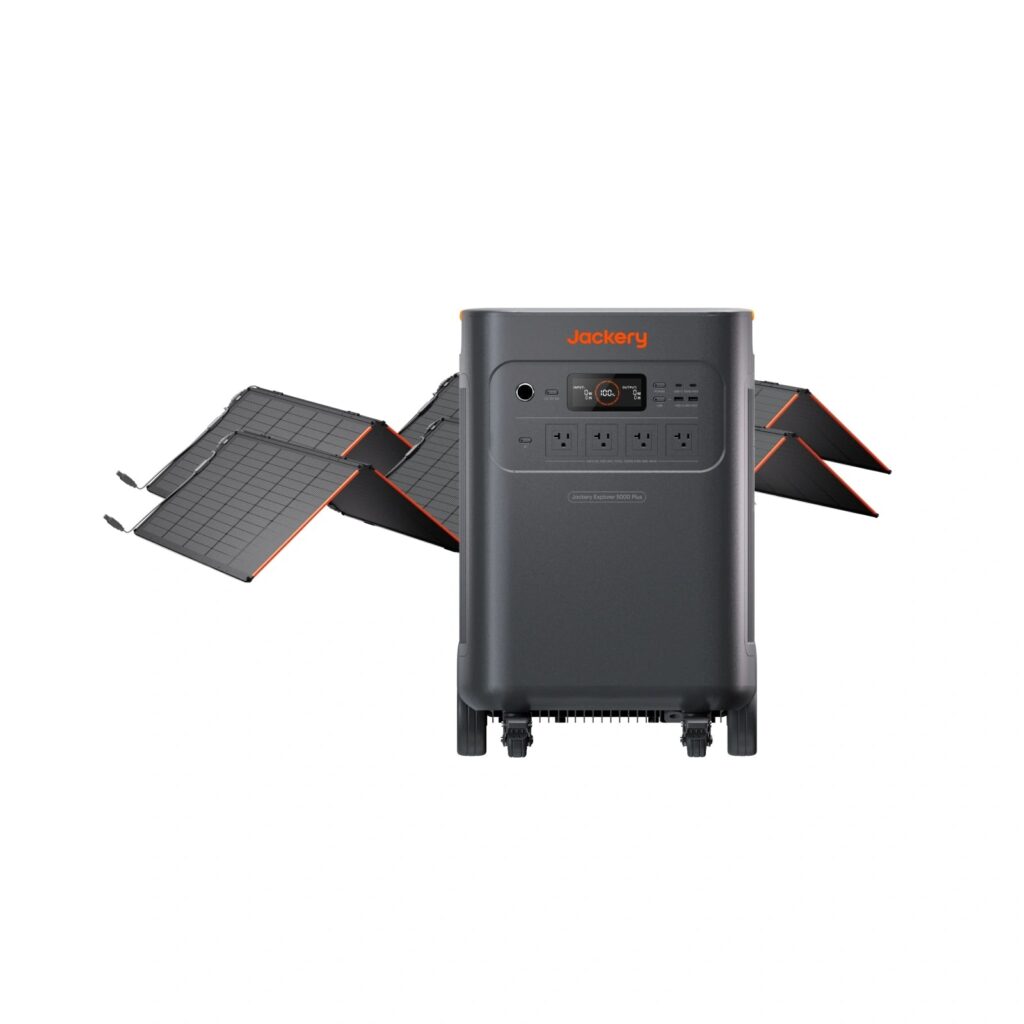
The Explorer 5000 Plus is a different class of product. It delivers 7,200W at both 120V and 240V, which means it can run 240V appliances such as a well pump or electric dryer, and it connects to a home panel through Jackery’s Smart Transfer Switch. With additional battery packs, total storage goes past 25kWh.
Key Specs
- Capacity: 5,040Wh, expandable past 25kWh
- Output: 7,200W continuous at 120V/240V, 14,400W surge
- Battery: LiFePO4 rated for 4,000 cycles to 70%
- Built-in UPS and a 14-50 outlet
- Weight: 134.5 pounds on wheels
Good to Know
Plan for an electrician if you want it wired into your panel through a transfer switch. It is the only model here that replaces a standby generator for most homes, and it is priced accordingly.
7. Jackery Explorer 100 Plus: Best Ultra-Portable
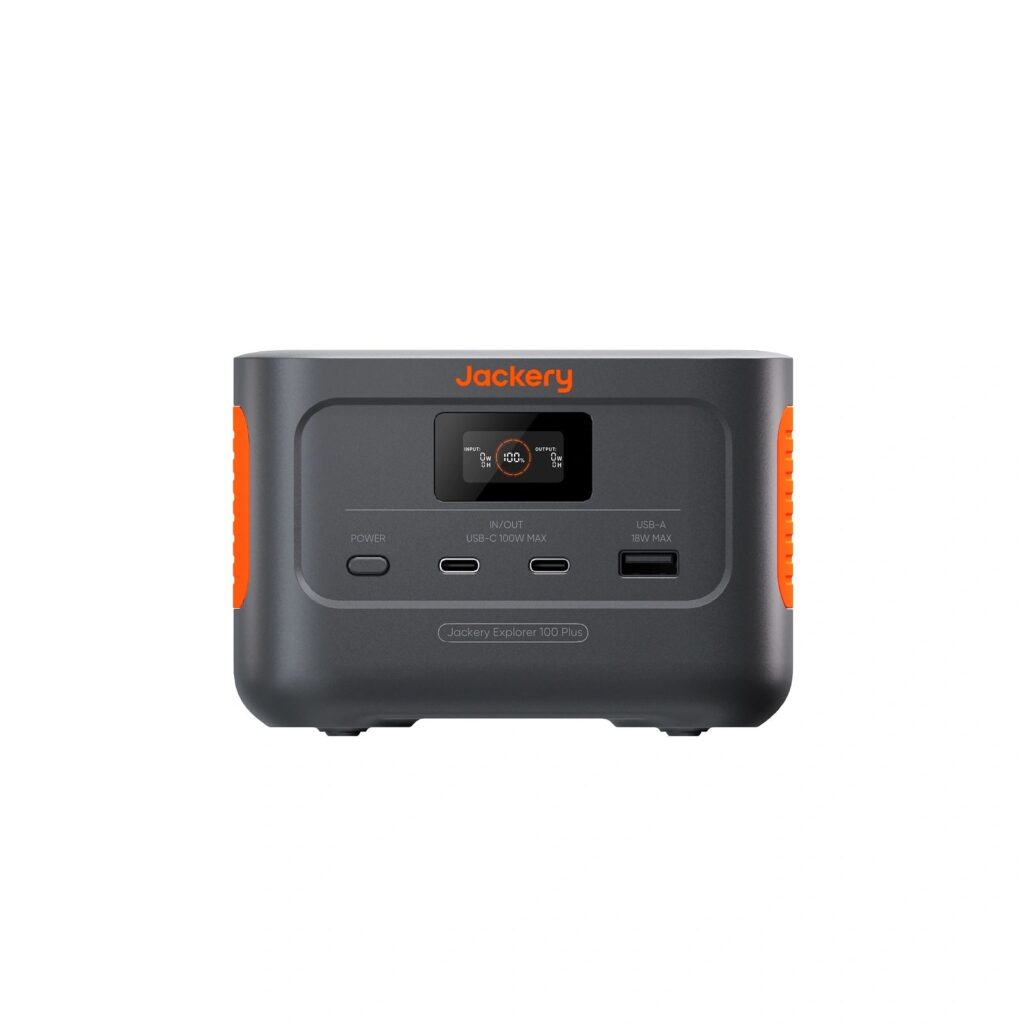
The Explorer 100 Plus is essentially a heavy-duty power bank. At just over 2 pounds and 99Wh, it stays under the common airline limit for carry-on batteries, and it can charge a laptop and a phone at the same time.
Key Specs
- Capacity: 99.2Wh, LFP rated for 2,000 cycles to 80%
- Output: up to 128W combined across two USB-C ports and one USB-A
- No AC outlet
- Weight: about 2.1 pounds
Good to Know
Because it has no AC outlet, it will not run anything that uses a standard plug. Think of it as a travel companion, not outage backup.
How to Choose Between Jackery Models
Continuous Output Comes First
Check the running watts of the biggest thing you need to power. A refrigerator typically draws 100 to 200W while running but needs a much higher surge to start the compressor, which is why the 1,500W Explorer 1000 v2 is the practical minimum for fridge backup.
Then Match Capacity to Hours
Capacity decides how long it lasts. Use the 85% rule above, and remember that devices like fridges cycle on and off, so their real daily use is lower than their running watts multiplied by 24.
Decide Whether You Will Expand
Only the HomePower 2000 Plus v2 and Explorer 5000 Plus accept extra battery packs. If your needs might grow, start with one of these instead of buying a second standalone unit later.
Factor in Solar Recharging
For outages longer than a day, recharge speed matters as much as capacity. Most Explorer models accept up to 400W of solar, while the HomePower 2000 Plus v2 accepts 800W, which can roughly halve the time needed to refill it on a sunny day.
A Scenario Worth Knowing About
A winter storm knocks out power on a Friday evening, and the utility estimates restoration on Sunday. You need to keep a refrigerator cold, run a CPAP each night, and keep phones and a Wi-Fi router alive. The fridge uses around 1,200 to 1,500Wh a day, the CPAP about 400Wh over a night, and the router and phones another 200Wh. That is roughly 2,000Wh a day for two days.
An Explorer 1000 v2 alone would run out before the first morning is over. An Explorer 2000 v2 covers the first day and part of the second if you keep the fridge door closed. The HomePower 2000 Plus v2 with one extra battery pack, or any of these paired with solar panels on a clear day, carries the whole weekend. The lesson: size for the length of your typical outage, not just for what the station can start.
FAQs
Can a Jackery run a refrigerator?
Yes, from the Explorer 1000 v2 upward. These models have enough surge output to start a compressor. Smaller units like the Explorer 300 v2 cannot.
Is it safe to use a Jackery indoors?
Yes. Unlike gas generators, power stations produce no exhaust, so they are safe to run inside your home. Keep them on a stable, dry surface with space around the vents.
How long do Jackery batteries last?
The current v2 and Plus models use LiFePO4 cells rated for 4,000 to 6,000 charge cycles before dropping to 70% capacity. Even with daily use, that is over a decade of service.
Can I charge a Jackery with solar panels?
Yes. Every model here except the 100 Plus accepts solar input through dedicated ports, from 100W on the Explorer 300 v2 to 800W on the HomePower 2000 Plus v2.
Conclusion
For most homes, the Jackery Explorer 1000 v2 is the right first power station: it runs a fridge and essentials, and one person can carry it. If your outages last more than a day, step up to the Explorer 2000 v2 or the expandable HomePower 2000 Plus v2. Choose the Explorer 5000 Plus only if you need 240V circuits or true whole-home backup. For camping and overnight use, the Explorer 300 v2 is all most people need.
Need more power than a battery can store? Our guide to the best heavy-duty portable generators compares fuel-powered options for bigger loads.